012 min
Who said bundling and unbundling make money?
In August 1995, Netscape was at the end of a tour to sell its shares to investors before going public. The last stop was a room of British investment bankers at the Savoy hotel in London. Netscape made a web browser, the program you use to open websites, and one banker wanted to know how the company could be sure Microsoft wouldn't just build a browser into its own software.
Jim Barksdale, the company's chief executive, answered the banker's question in a rush. "Gentlemen, there's only two ways I know of to make money: bundling and unbundling." As the team walked out, Netscape's chief financial officer, Peter Currie, told him the bankers had looked at him as if he were crazy.
Here is what Barksdale meant. Bundling is packing several products into one offer, so a buyer gets them together. Microsoft could pack a browser into Windows, the software that runs a computer's basic functions, and then Netscape would be selling something that came already included in someone else's package. Unbundling is the reverse: someone pulls one part out of a package and sells it alone, usually doing that one job better.
The worry was fair. Microsoft's first Internet Explorer shipped inside an add-on pack for Windows 95. In May 1998 the US Department of Justice brought an antitrust case against Microsoft over its browser, a lawsuit claiming a company is blocking fair competition. Netscape did not wait for a ruling. AOL bought it in 1999 in a deal worth about $10 billion. Bundling and unbundling can each hurt a rival: a company that bundles can crowd out a rival that sells one part, and a company that sells one part can pull customers out of someone else's bundle.
022 min
Pure bundling, mixed bundling and unbundling
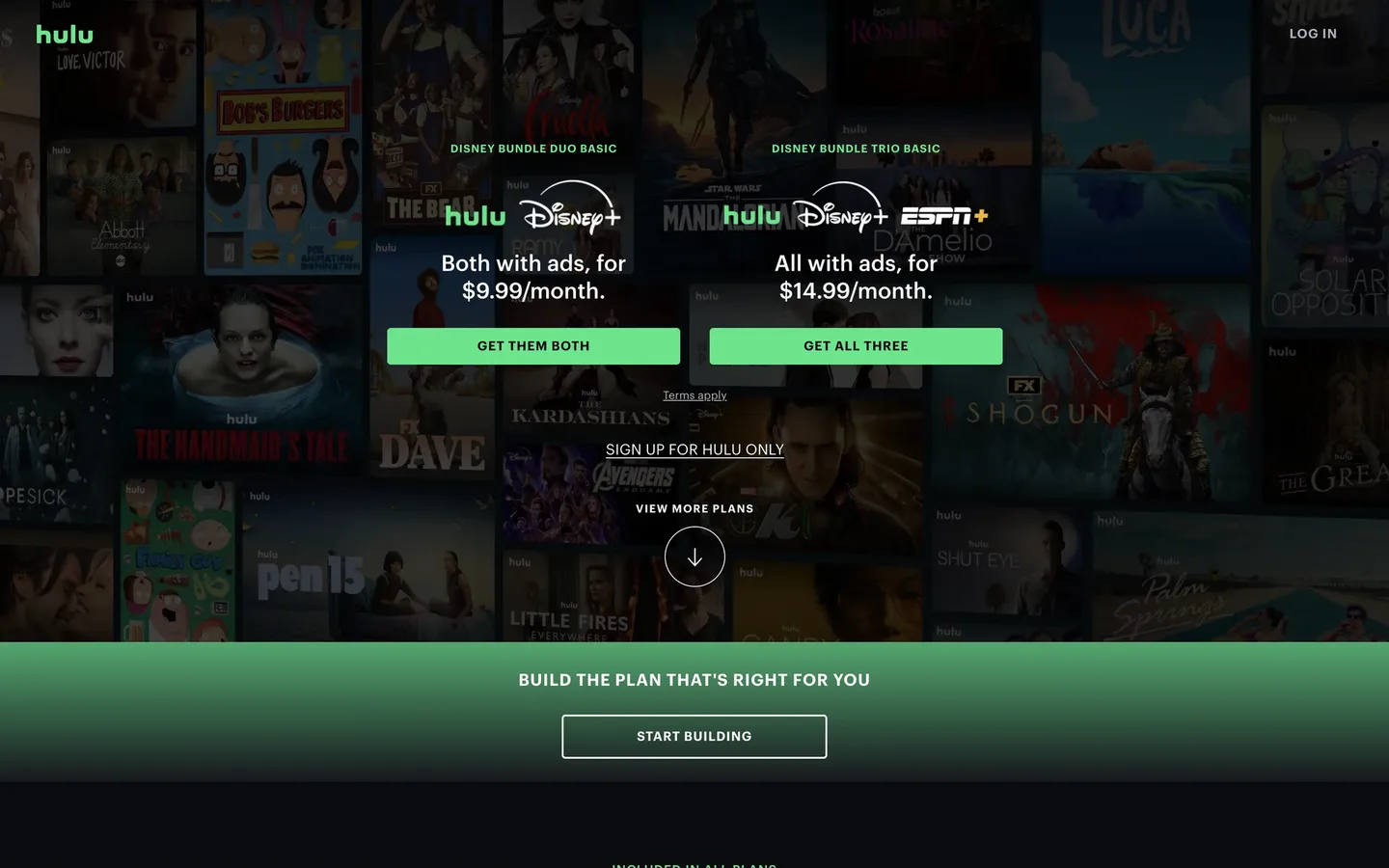
Hulu, a video streaming service, arranges its products in a particular way on one sign-up page. Two large buttons sell Hulu together with Disney+, and in a second offer with ESPN+ as well. Under them, a small text link lets you sign up for Hulu only. You can take a package or take one part of it.
Mixed bundling lets buyers take the whole bundle or any one of its parts. It sits between two other ways to sell.
| Way to sell | What the buyer can do | A case |
|---|---|---|
| Pure bundling | Buy the whole package or nothing | Film distributors selling theaters a set of films |
| Mixed bundling | Buy the package, or buy one part | Hulu's sign-up page |
| Unbundling | Buy only the parts they want, each priced alone | Airlines charging for checked bags |
Pure bundling once reached the US Supreme Court. Film distributors were offering theater owners a combined assortment of films in place of one title at a time. The US government sued. In United States v. Loew's, decided on 5 November 1962, the Court ruled that selling films only as a set broke the Sherman Antitrust Act. That law is the main US rule against deals that block fair competition. The next year the economist George Stigler wrote a note on the case that became the classic account of why sellers bundle.
Worked numbers
Why bundling can earn more: a worked example
A cable operator sells a sports channel and a family channel to two customers
Inputs
- Sports fan, most they would pay for the sports channel
- $45
- Sports fan, most they would pay for the family channel
- $20
- Family, most they would pay for the sports channel
- $25
- Family, most they would pay for the family channel
- $35
Working
- A customer's gain is the most they would pay minus what they pay
- Best separate prices: $25 for the sports channel and $20 for the family channel, so both customers buy both
- The seller earns 2 × $25 + 2 × $20 = $90, and the customers' gains are $20 and $15, $35 in all
- One $60 package: the sports fan would pay up to $65 and the family up to $60, so both still buy, and the seller earns 2 × $60 = $120
- The customers' gains are $5 and $0, $5 in all
Seller's income
$90 vs $120
Selling only the package earns the seller 33% more
Customers' combined gain
$35 vs $5
The same package leaves the customers with far less
The two customers rank the channels in opposite order. When that happens, one price for both can earn a seller more than two separate prices, though the buyers keep less. The economist George Stigler is credited with the idea, as [Thomas Lambert explains](https://truthonthemarket.com/2011/07/10/the-efficiency-of-cable-bundling).
041 min
Why big bundles work for digital goods
A music subscription sells a bundle of millions of songs, and its price makes sense for a reason that Yannis Bakos and Erik Brynjolfsson, two researchers, published in 1999. Start with one song. Some people love it and some don't care, so what a stranger would pay for it is hard to guess. Put ten thousand songs in one package and the guess gets easier. Each buyer likes some songs and ignores others. As a bundle grows, each buyer's likes and dislikes for its parts average out, so what that buyer will pay for the whole is much easier to predict. Statisticians call this the law of large numbers, the rule that the average of many uncertain cases settles near a steady value.
Bakos and Brynjolfsson found that very large bundles of unrelated digital goods can be surprisingly profitable. It works best when one more copy costs the seller almost nothing, which economists call a low marginal cost. Software, music and video fit that description. Physical goods fit much less, because each one adds real cost to serve.
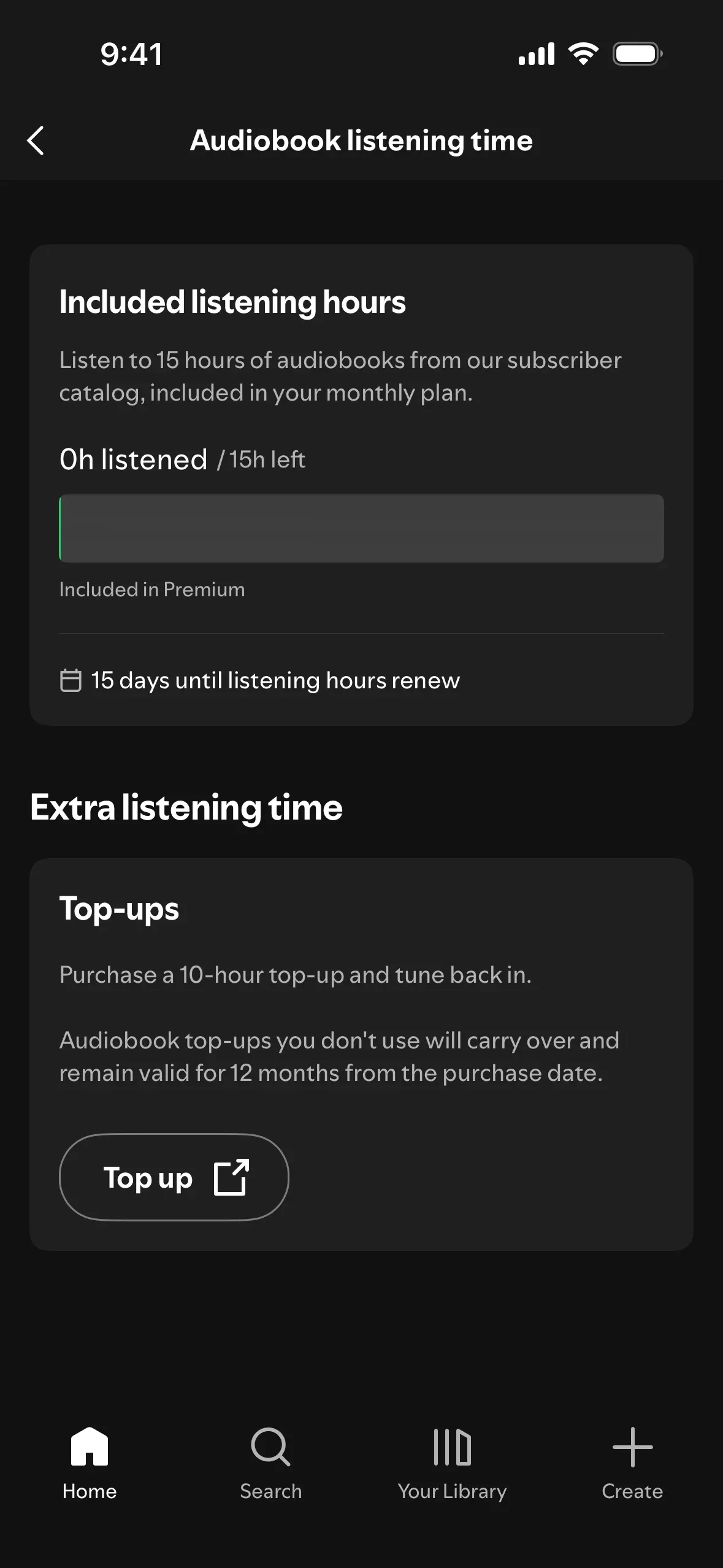
Spotify, the music streaming service, shows the arrangement from the buyer's side. Its audiobook listening-time page says the monthly plan includes 15 hours of audiobooks from the subscriber catalog, and it sells a 10-hour top-up to anyone who runs out.
Real case
Unbundling example: airline bag fees
US airline bag fees
2008–2011United States · airlines
Airlines split bag fees out of the ticket price one bag at a time.
21 May 2008
21 May 2008 · The first bag
American Airlines said it would charge $15 for the first checked bag from 15 June, as fuel prices hit a record high.
2010
2010 · The carry-on
Spirit Airlines went a step further and began charging for carry-on bags.
December 2011
December 2011 · The result
The aviation research firm CAPA reported that Spirit, which earns about 30% of its revenue from extras, kept the fee and earned about $50 million from it.
What it teaches
Pulling a charge out of the ticket price lets a seller price that part alone, and it pays when customers keep buying at the new price.
061 min
Unbundling example: Craigslist and newspapers
A local newspaper used to sell readers one package: news, ads, and classifieds, the small paid notices for jobs, cars and apartments. Craigslist, an online site of local listings, offered the classifieds, one part of that package pulled out and sold on its own. The economists Robert Seamans and Feng Zhu studied what happened to US local newspapers once Craigslist entered their markets, and they published the results in 2014.
Papers that leaned heavily on classified-ad income saw their classified ad rates drop 20.7%. Those papers also raised subscription prices 3.3%, lost 4.4% of their circulation (the number of copies they sold), and cut display-ad rates 3.1%. The advertisers who moved saved about $5 billion between 2000 and 2007, by the researchers' estimate.
The numbers show what an outside unbundler can do. Taking one part out of a package lowered the pricing power a paper had on that part. Pricing power is the freedom to set a price without losing customers. The loss also changed the price and the audience of the rest of the package.
072 min
How the economy shifts bundling and unbundling
Software buyers have swung between separate tools and packages, and the swing follows how cheap it is to borrow money. Pearl Shu, who wrote an essay on when to bundle and when not to, lays out the pattern.
For years after the 2008 recession, and again after COVID-19 arrived, borrowing money cost very little. Central banks held interest rates near zero, a policy known as ZIRP (zero interest rate policy). With money cheap, companies bought a separate tool for each job. That was a wave of unbundling in software.
When ZIRP ended, finance chiefs, the executives who run a company's money, started checking every line item for savings. A line item is one separate charge on the bill. Many finance chiefs pushed their teams toward fewer vendors, the companies they buy from.
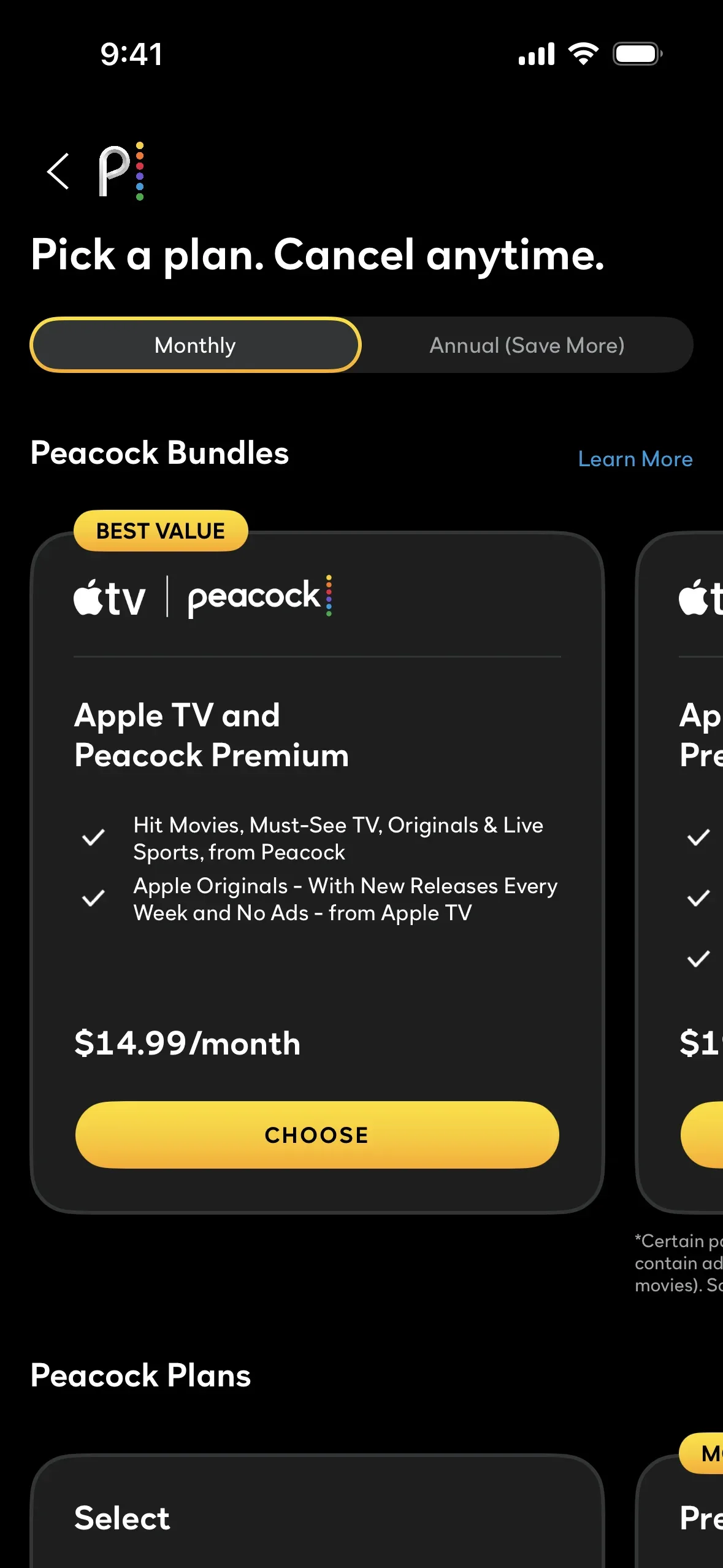
Households do the same. Shu points to Apple One and Amazon Prime, single monthly plans that pack several services together, as bundles people reach for when money is tight. Peacock, a video streaming service, shows a bundle in its plan picker. Under the heading Peacock Bundles, one card tagged Best Value sells Apple TV and Peacock Premium together, two companies' services at one monthly price. Peacock's own plans come further down the screen.
A startup can work the other side of these swings. It picks one use case from a big suite and does it better, which is unbundling. Shu argues that AI (artificial intelligence) tools make software cheaper to build, which gives single-purpose products a slight edge for now. What to watch is how expensive borrowing is for your buyers, and whether their finance teams are counting line items.
Misunderstandings
Common misunderstandings about bundling and unbundling
Belief: A bundle is always a discount for the buyer.
Actually: Not always. A seller can price a package to earn more, and it may hold parts you would never use.
Belief: Once a market splits into separate products, it stays split.
Actually: It often swings back. Companies that win by selling one part often add more parts later, and become the package that the next startup attacks.
Belief: Unbundling always lowers what you pay.
Actually: Only for the base price. A low starting price covers just the base. Add what you would really use on top, such as a checked bag, and compare that total with the bundle's price.
092 min
Bundling strategy: how to decide
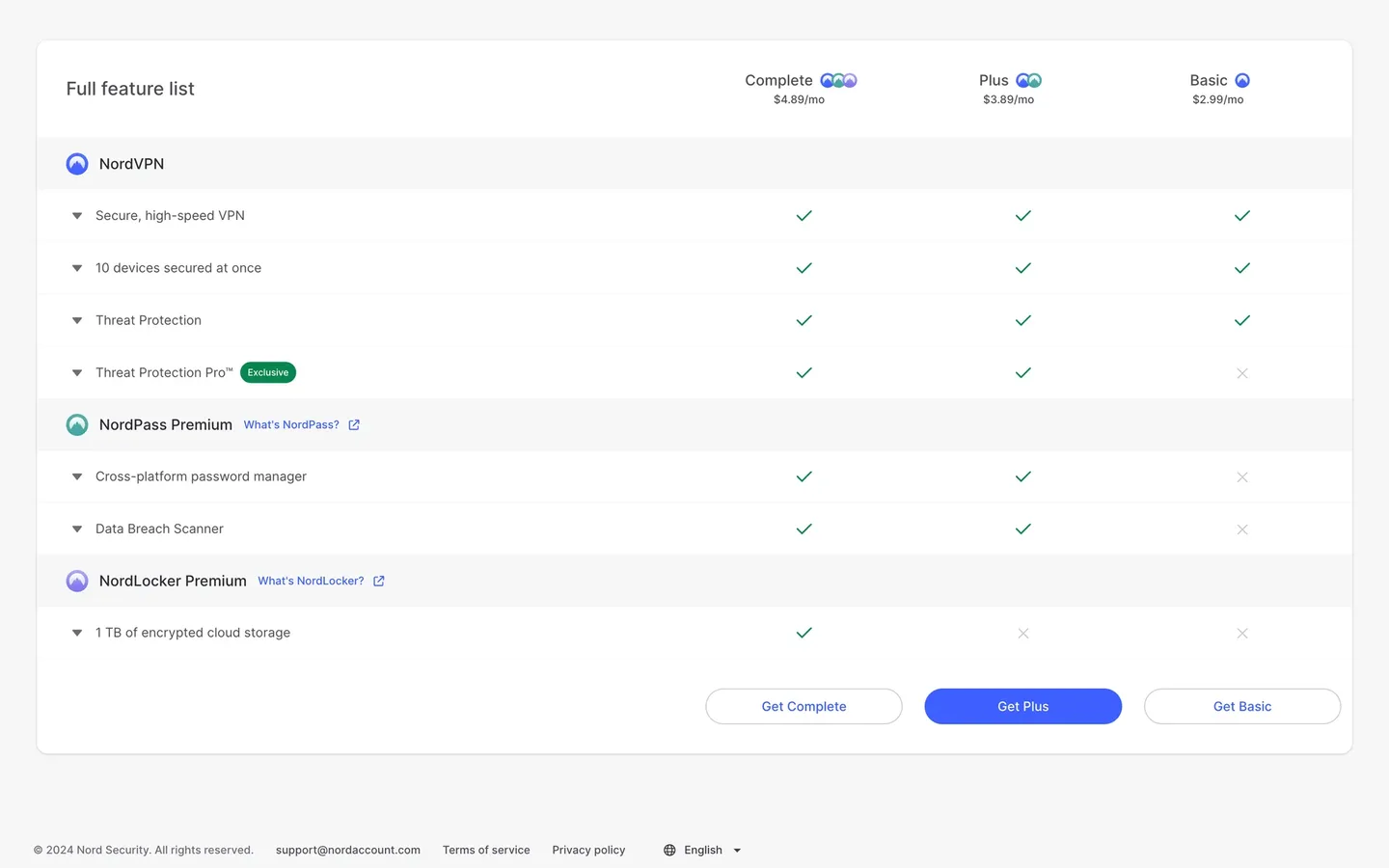
A company deciding between a package and separate parts can start with NordVPN, which sells three plans that each add a whole product. Its Basic plan includes the VPN, a service that protects your internet connection. Its Plus plan adds a password manager, and its Complete plan adds encrypted cloud storage. Each step up in price is a bigger bundle built from the company's own apps.
Which way to go depends on your case:
| Choosea bundle | Chooseseparate parts |
|---|---|
| Tastes differ.Customers rank the parts in opposite order, like a sports fan and a family choosing between a sports channel and a family channel. | Tastes match.Every customer ranks the parts the same way, so a package gains little over separate prices. |
| A part costs almost nothing to serve.One more customer adds almost no cost, as with software, music or video. | A part costs real money.Each customer adds a cost, such as shipping or support time. |
| You hold the market.A rival could pull one part out of your product, so a package defends what you have. | You are the challenger.You can do one part better than a big suite does, so sell that part alone. |
To test a change before you commit to it, work in this order:
- Step 1Find out what the current package does for your customers and for your own teams before you take it apart.
- Step 2List each part and what it costs you to serve one more customer.
- Step 3Group your customers and write down the most each group would pay for each part, which is its perceived value.
- Step 4Work out your income at the best separate prices and at one package price, and compare them.
- Step 5Decide whether buyers must take the whole package or can also buy single parts.
Watch for two costs that income figures hide. A bundle can tangle the teams that build its parts, which makes a part hard to sell alone later. And a seller with a large share of its market can draw an antitrust case, a lawsuit claiming it blocks fair competition, as Microsoft did in 1998, when the US government sued it over its web browser.
?6 questions
Questions people ask
What does unbundling mean?
Where does the bundling and unbundling quote come from?
Is a bundle always cheaper than buying the parts?
Is bundling illegal?
What are the disadvantages of bundling?
Does bundling work for physical products?
▶1 video
Watch
Understanding Bundling and Unbundling
§10 sources
Sources
Show all 10 sourcesHide sources
Satyajit Rout, Bundling, unbundling, and re-bundling: understanding the cycle of progress (Substack).
Netscape (Wikipedia).
Thomas Lambert, The Efficiency of Cable Bundling (Truth on the Market, 2011).
Yannis Bakos and Erik Brynjolfsson (1999), Bundling Information Goods: Pricing, Profits and Efficiency, Management Science 45(12), working-paper abstract.
Product bundling (Wikipedia).
United States v. Loew's Inc. (Wikipedia). .
NYU Stern, New Research Looks at Craigslist's Damaging Blow to Local Newspapers (2013 press release on Seamans and Zhu, Management Science 2014).
Associated Press via KVIA, American to charge for 1st checked bag, cut flights (21 May 2008).
CAPA, Spirit earns USD50 million in successful bag policy (21 Dec 2011).
Pearl Shu, On when to bundle... and when to not.