011 min
Why pricing power matters
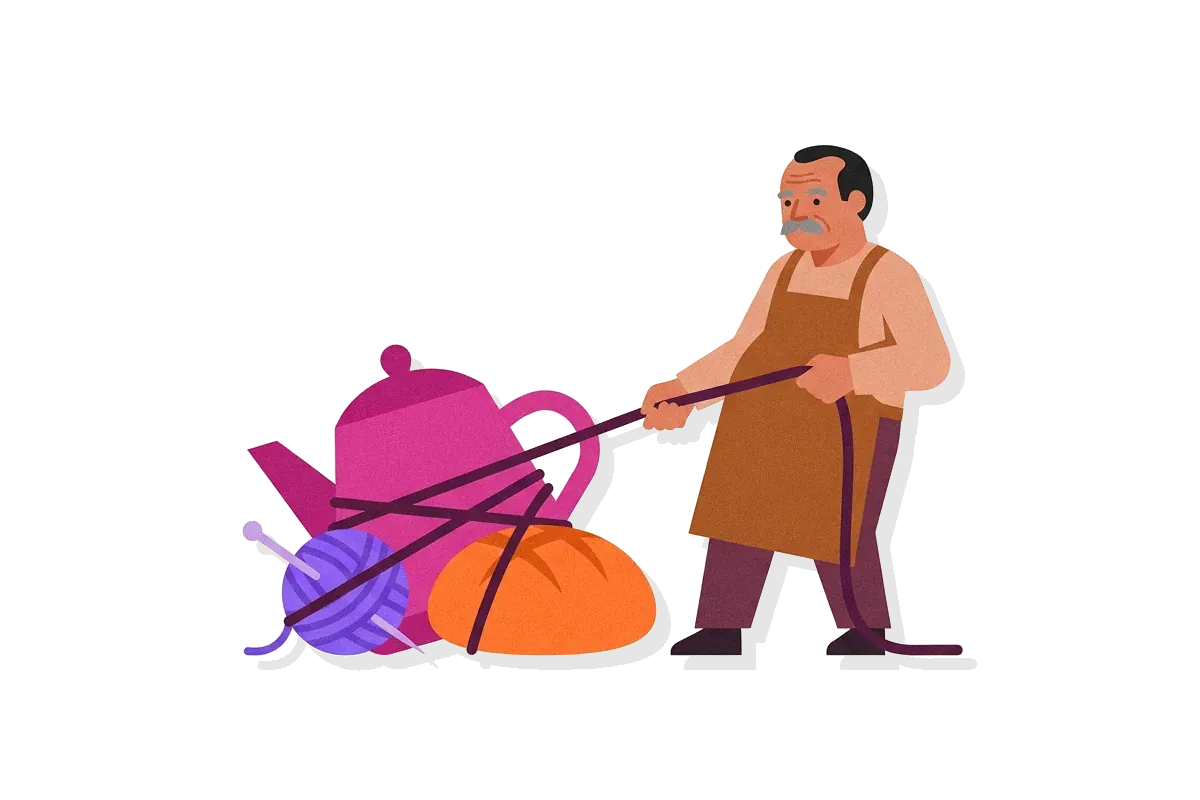
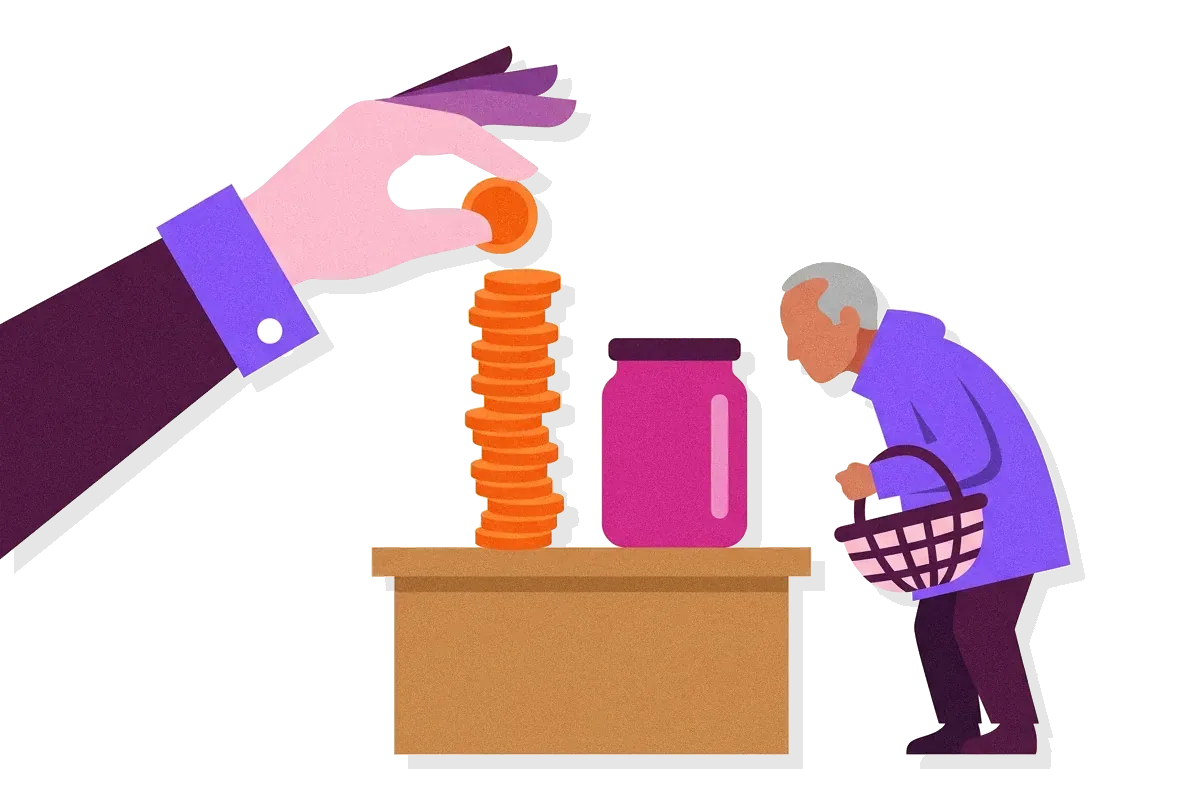
A price is the one lever in a business that changes revenue without changing the product. A firm that can move it freely earns more from the same work. A firm that cannot move it must find growth somewhere else, and that usually costs more.
Warren Buffett, who runs Berkshire Hathaway, was asked in 2010 by the US Financial Crisis Inquiry Commission how he evaluates a company. He gave a short answer:
the single-most important decision in evaluating a business is pricing power.
He then gave a test for it. If a company can raise prices without losing business to a competitor, it is a very good business. If its managers have to hold a "prayer session" (a worried meeting where nobody is sure customers will stay) before a tiny increase, it is a terrible one.
The cost of lacking pricing power lands on specific people. A founder who cannot raise prices must grow by adding customers, which means more advertising and more sales staff. A product manager without it must justify every roadmap item by the new users it brings, not by the value it adds for existing ones. An engineer feels it as pressure to cut cost, because cost is the only number left to move.
022 min
What pricing power is
Pricing power is about one question: when a firm raises its price, what happens to the number of units it sells? If sales fall only a little, the firm has pricing power. If sales collapse, it does not.
Economists measure the same idea with price elasticity of demand. This is the percentage change in units sold when the price changes by one percent. Demand with low elasticity barely moves when the price moves. Demand with high elasticity moves a lot. Pricing power is what low elasticity looks like from the seller's side.
Three conditions usually decide where a product sits:
- Substitutes. If a buyer can get nearly the same result from another seller, the buyer will leave when the price rises. Fewer close substitutes means more power.
- Switching cost. This is what a buyer gives up by changing seller: time, data, retraining, a broken habit. The higher it is, the more the price can rise before the buyer acts. The hassle premium is the related idea that buyers will pay more to avoid that effort.
- Value the buyer sees. Buyers compare the price with what they think the product is worth, not with what it costs to make. A product seen as clearly better can hold a higher price. See perceived value.
The first two conditions are facts about the market. The third is a belief inside the buyer's head, and a seller can influence it.
The classic measure is the Lerner index, formalized in 1934 by the economist Abba Lerner. It is the price minus the marginal cost, divided by the price. Marginal cost is what it costs to make and deliver one more unit. A firm that charges exactly its marginal cost has an index of zero and no market power. The higher the index, the more of each sale is margin the firm could keep because buyers had no better option.
Pricing power is not the same as a high price. A cheap product can have strong pricing power if buyers would accept a small increase. A luxury product can have none if every buyer is ready to switch to a rival at the first rise.
031 min
Where the idea of pricing power comes from
Pricing power has no single inventor. It is the everyday name for what economists call market power: the ability of a seller to set a price above its marginal cost and keep customers anyway.
The measurement comes from Abba Lerner, who formalized his index in 1934. The index links the gap between price and marginal cost to how responsive buyers are to price. A seller facing price-sensitive buyers cannot charge much above cost. A seller facing buyers with few options can.
In investing, the phrase is most familiar from Buffett, who named it as the first thing to check in a company in his 2010 statement to the Financial Crisis Inquiry Commission.
041 min
Example: Moody's and Dun and Bradstreet
In his 2010 interview, Buffett explained why Berkshire Hathaway bought shares in two companies that sell information about credit risk. The first was Dun and Bradstreet. The second was Moody's, the credit rating agency that was spun off from it.
He judged the businesses by their economics and did not meet their managers. In his words, Dun and Bradstreet had a very good business, and Moody's had an even better one. He tied the difference to pricing power. Moody's is one of the best-known rating agencies, and its ratings are used widely by the investors who buy bonds.
Buffett also said pricing power makes management less important. He said that if you owned the only newspaper in a town, you had pricing power and you did not even have to go to the office. He added a limit: he said this applied up until about the last five years before the interview, when the internet gave readers other places to go.
Buffett did not publish a fee history, so his statement is a judgment by an investor and not a measurement. What it shows is the test he applied: can the company raise its price without losing customers to a competitor? The newspaper remark shows that the answer can change. When readers gained other places to go, the power changed with them.
052 min
A second case: Netflix in 2011
Moody's shows pricing power at its strongest. Netflix in 2011 shows what happens when a company assumes it has more than it does.
In 2011 Netflix raised prices by splitting its combined DVD and streaming plan into two separate plans. In its shareholder letter of 24 October 2011, the company reported that its unique domestic subscribers had declined to 23.8 million. It gave two causes: a higher than expected level of cancellations, and fewer new sign-ups because of the damage to its reputation.
The company's own letter named the problem. It wrote that many long-term members felt shocked by the pricing changes, and that more of them cancelled than the company expected. It also admitted that without an explanation of its rising content costs, many people saw it as greedy.
The two cases differ in one variable: the buyer's view of whether the price is fair. Moody's customers have no good alternative, so their opinion of the fee matters little. Netflix customers had alternatives, including a cheaper plan, other services, and simply stopping. They also had a strong sense of what the price had been and what it should be.
Research on fairness explains the second part. Daniel Kahneman, Jack Knetsch and Richard Thaler surveyed households in 1984 and 1985 on when a price rise is acceptable. Their main finding was that transactors have an entitlement to the terms of the reference transaction and firms are entitled to their reference profit. The reference transaction is the price a buyer last paid. A firm may pass on higher costs, but buyers judge a rise that is not tied to costs as unfair. Price Transition Shock covers the reaction that follows a sudden change in price.
The lesson is that pricing power has a ceiling set by the market and a second ceiling set by what buyers accept as fair. Netflix had room under the first. It went past the second.
062 min
How to measure pricing power
You cannot read pricing power from a single number, but four measures together give a usable answer.
- Lerner index. Divide the price minus marginal cost by the price. Suppose a subscription app charges $10 a month and each additional subscriber costs it $6 to serve. The index is (10 − 6) ÷ 10 = 0.4. This example is illustrative. A rising index over time suggests rising power, but it only works when marginal cost is known, and most companies know their average cost better.
- Gross margin over time. Gross margin is revenue minus the direct cost of goods sold, as a share of revenue. A margin that holds steady while the firm raises prices points to pricing power. A margin that falls each time cost rises shows the firm cannot pass cost on.
- Volume response to a price change. After any price change, compare units sold with the pre-change trend. The share of volume lost per percent of price increase is the elasticity, measured on your own customers.
- A price test. Show different prices to comparable groups of new buyers and compare conversion. This is the cleanest evidence, because it removes everything else that changed.
Each measure has a blind spot. The Lerner index needs marginal cost. Gross margin changes for reasons other than price. The volume response is distorted by seasons and promotions. The price test only covers new buyers, not the existing ones who are most likely to feel unfairness. Use more than one.
See profit margin for how margins are defined and what they include.
072 min
How pricing power shows up in tech
Pricing power decides several calls that look unrelated.
A founder choosing a price. A founder with a young product has little data and weak switching costs. A low price wins early customers, but it leaves no room to rise later without a fairness backlash. A price that is slightly high and can be explained is easier to hold. Value-based selling starts from this: the price follows what the buyer gains, not what the product cost.
A product manager planning a roadmap. Features that increase switching cost (saved data, integrations, shared workspaces) raise pricing power over time. Features that only match a competitor's list do not. A PM can ask of each item whether it makes leaving more expensive or the product more valuable to a specific buyer.
A designer shaping the pricing page. Plan names, order and defaults change how buyers read a price. Price anchoring works because buyers judge a number against a nearby reference. The design does not create pricing power, but it can lose it by making a rise look arbitrary.
An engineer on a platform team. Open exports and standard formats lower switching cost. This helps customers and weakens pricing power. Teams that choose them are making a pricing decision, whether or not they call it that.
A finance lead setting lifetime value. Lifetime value estimates what a customer will pay over their stay. If a firm can raise prices every year, that estimate rises. If it cannot, any plan that assumes it can will be wrong.
081 min
How to use pricing power
Pricing power is a condition to assess, then use with care. The steps depend on each other, so the order matters.
Name the buyer's real alternative.
This is what the buyer would do if your price rose: use a competitor, build it themselves, or do without. Everything else depends on this answer, because the alternative sets the ceiling.
Estimate the value gap.
Compare what the buyer gains from your product against that alternative, in money where you can. Without the gap, you cannot tell how far a price can rise.
Measure the response on a small change.
Raise a price for a limited group, or on a new plan, and watch volume and cancellations. This step only works once step 1 is done, because you need to know which loss is a switch to a competitor and which is a customer who leaves altogether.
Explain the change.
Kahneman, Knetsch and Thaler found that buyers accept increases that protect a firm's profit when costs rise. Say what changed. Netflix's own letter admitted that missing explanation made it look greedy.
Move in steps.
A large jump makes the new price the reference. Small steps let the reference move with it.
Re-measure.
Substitutes appear and switching costs fall. Buffett's remark about newspapers shows that power can end.
091 min
Where the evidence is contested
Pricing power is a clear idea at the level of one product. At the level of a whole economy, economists disagree about how much of it exists.
In a 2020 paper in The Quarterly Journal of Economics, Jan De Loecker, Jan Eeckhout and Gabriel Unger used firm-level data from the United States since 1955. They reported that aggregate markups rose from 21% above marginal cost in 1980 to 61% in 2016. The median markup did not change. The rise came from the top of the distribution, so a small group of firms had much more market power than before, while most firms did not.
Susanto Basu challenged the size of this finding in the Journal of Economic Perspectives in 2019. He reviewed the three main ways of estimating economy-wide markups and argued that some of the steeply rising findings are difficult to reconcile with other evidence and with aggregate data. He also wrote that existing methods cannot say whether markups have been stable or have risen modestly.
For a practitioner, the dispute matters less than it seems. It is about averages across thousands of firms. It does not change the test for one product, which is what happens to sales when your price moves. Use your own data. Treat any claim that "the economy has more pricing power" as an open question.
101 min
Common mistakes
Trap 1: "A better product means pricing power." Teams assume that quality alone lets them raise prices. Quality only matters if buyers can see it and if rivals cannot copy it. A better product with an easy substitute has little power.
Trap 2: "No complaints about the price means we can raise it." Customers who never mention price may simply not have compared yet. A rise forces the comparison. Test on a small group first.
Trap 3: "Pricing power is permanent." It rests on substitutes and switching costs, and both change. The newspaper example in Buffett's interview shows a position that held for decades and then did not.
Trap 4: "The market allows it, so buyers will accept it." The market limit and the fairness limit differ. Kahneman, Knetsch and Thaler asked respondents about a hardware store that raised the price of a snow shovel from $15 to $20 the morning after a snowstorm. In this example, 82 percent of respondents (N =107) considered it unfair for the hardware store to take advantage of the short-run increase in demand associated with a blizzard. The store had the market power. Its customers still judged the use of it harshly.
The popular version of the idea also overclaims. "Raise prices every year" is not a strategy. It is a bet that the last increase left the buyer's alternatives unchanged.
111 min
Pricing power vs. nearby concepts
Four ideas sit close to pricing power. The deciding question is what each one describes.
| Concept | What it describes | Axis that separates it |
|---|---|---|
| This pagePricing power | ||
| MarketingPerceived value | ||
| MarketingPrice anchoring | ||
| MarketingHassle premium |
Perceived value is one input to pricing power. Price anchoring is a tool a seller uses to influence perceived value. Hassle premium is the price effect of one source of switching cost. Pricing power is the outcome that all three feed into.
?6 questions
Questions people ask
What is pricing power?
What is an example of pricing power?
How do you measure pricing power?
What is the difference between pricing power and market power?
Can a company lose pricing power?
When should a company not raise prices?
§7 sources
Sources
Show all 7 sourcesHide sources
Sources are listed in the order they are used.
Warren Buffett, interview with the US Financial Crisis Inquiry Commission, 26 May 2010, transcript as published by Barry Ritholtz:
Abba Lerner and the Lerner index, a summary on Wikipedia:
Netflix, letter to shareholders for the third quarter of 2011, filed with the US Securities and Exchange Commission on 24 October 2011:
Daniel Kahneman, Jack Knetsch and Richard Thaler, "Fairness as a Constraint on Profit Seeking: Entitlements in the Market", American Economic Review, 1986:
Jan De Loecker, Jan Eeckhout and Gabriel Unger, "The Rise of Market Power and the Macroeconomic Implications", Quarterly Journal of Economics, 2020:
Susanto Basu, "Are Price-Cost Markups Rising in the United States? A Discussion of the Evidence", Journal of Economic Perspectives, 2019: