011 min
The problem second-order effects name
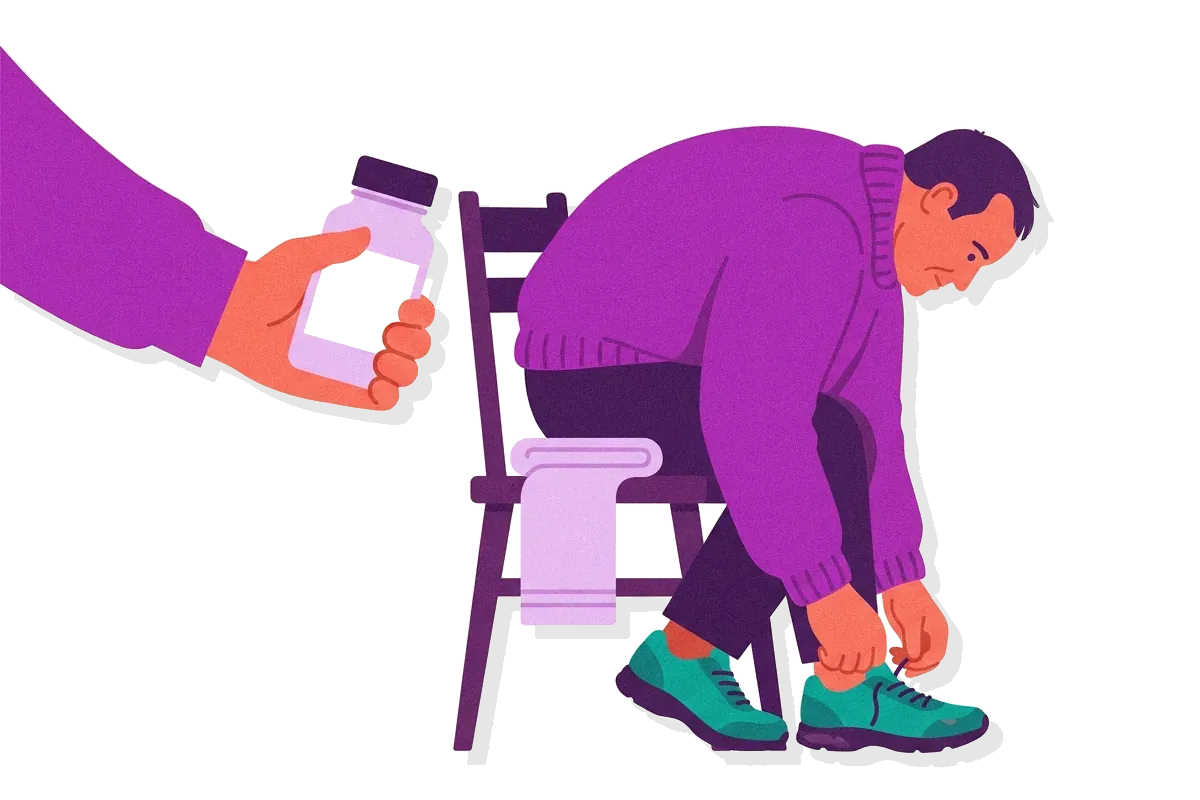
Picture a support lead at a subscription app who wants customers to wait less for an answer. They give each agent a small bonus for every ticket closed in a day. Within a week the average time to close a ticket falls, and the lead has what they asked for. That result is the first-order effect: the direct, intended outcome of an action.
Then the agents respond. A closed ticket pays and an open one does not, so some agents close tickets that are only half answered. Customers write back with the same question, and the system records it as a new ticket, which pays a second bonus. A month later the queue is longer than before and customer ratings are lower. These are second-order effects: results that come from how people react to the first-order effect, not from the action itself.
The lead did not choose carelessly. The first result appeared on a report within days. The second needed weeks and a look at a different report. People judge a decision by what they can see soonest, so the results that arrive late are the ones nobody checks.
That is the mistake this concept names: judging a decision only by its first result. The cost is real even when it is hard to see. A team can pay for a quarter to make its main problem worse.
022 min
How second-order effects work
The bonus did exactly what the lead wanted, so why did the queue grow? Because a decision changes the situation of other people: their rewards, their costs, their effort or their options. Those people then choose again, and each choice makes sense from where they stand. The agents were not cheating. They were following a rule that paid for closed tickets. A second-order effect is many sensible choices added together.
Three features make these effects hard to see.
- Delay. The first-order effect is often immediate. The next step needs other people to notice the change and adapt, which takes days, months or years.
- Distance. The effect often shows up away from the decision: in another team, another report or another group of customers. The person who decided rarely looks there.
- Adaptation. People learn how a rule works and then use it. A rule that works on day one can work differently on day ninety.
The chain can continue. A third-order effect is the result of a second-order effect, and so on. In most cases each further step is harder to predict, which is why practical advice stops at the second or third step. The chain also loops back. In the support case, the extra tickets add to the queue, and the longer queue creates more pressure to close tickets fast. That pattern is a feedback loop. A related idea, the butterfly effect, says that a small change can lead to a large and distant outcome, but second-order thinking is a narrower habit: check the next two steps.
Why people miss the consequences
The sociologist Robert K. Merton gave the first systematic list of reasons in 1936. Two are the most common. The first is ignorance, because nobody can know everything about a system. The second is error, such as applying a habit that worked before to a situation where it does not.
The third reason Merton called the imperious immediacy of interest. A person wants the intended result so much that they choose not to look at side effects. This differs from ignorance, because the effect could have been foreseen and was set aside. The fourth is basic values: a belief about what is right stops people from acting on a known long-term cost. The fifth is the self-defeating prediction, which a later section covers.
031 min
Where the idea of second-order effects comes from
The phrase has no single author. It is shorthand that spread through economics, military planning, investing and product work for one plain idea. The older and better documented body of work is about unintended consequences. In 1936 the sociologist Robert K. Merton published an essay on the subject in the American Sociological Review, and listed five causes of consequences that people did not anticipate. He wrote about purposive action, meaning conduct that involves motives and a choice between alternatives, not accident or reflex.
Later writers gave the habit of looking ahead its own name, second-order thinking. Farnam Street, a site on decision-making, describes it as thinking in terms of interactions and time, and says it asks "and then what?" after each choice. The two things are different. The effects are what happens in the world. The thinking is the practice of looking for them before you act.
A misreading: unintended effects are not a reason to do nothing
Some readers take Merton's work as an argument against planning. He did not. He wrote that no blanket judgment for or against social planning is justified. A second-order effect is a reason to look before acting and to keep watching afterwards. Doing nothing also starts a chain of effects, and what you give up by not acting is an opportunity cost.
041 min
A real case of second-order effects: the Hanoi rat bounty
The support bonus is invented. The next case is documented. In 1902 the French colonial government in Hanoi was fighting rats during a plague pandemic. Hunting in the sewers was not making enough progress, so officials set up a bounty. They paid one cent for each rat, and to prove a kill a person had to hand in the rat's tail. The first-order effect was what the officials wanted: tails arrived in large numbers.
Then officials began to see live rats with no tails. Rat catchers cut the tail off a rat and released it into the sewers, where it could breed and produce more rats with tails to sell. The rule paid for tails, so people made tails, and a living rat was worth more than a dead one. The French cancelled the bounty.
The pattern is called the cobra effect: a fix that makes the problem worse through the incentive it creates. The Hanoi case is its standard example. Accounts differ on the details, so treat the scale as uncertain. The structure is the same as the support bonus. The thing paid for (tails, closed tickets) stood in for the goal (fewer rats, solved problems), and people produced the stand-in.
051 min
A measured case of second-order effects: rent control in San Francisco
Hanoi shows an incentive going wrong. A second case shows the same chain with a rule meant to protect people, and with measured numbers.
Rent control limits how much a landlord can raise rent for existing tenants. Its first-order aim is to keep people in their homes. In 1994 San Francisco extended rent control to some buildings and not to similar ones. That gave the economists Rebecca Diamond, Tim McQuade and Franklin Qian a way to compare the two groups, and they published the results in the American Economic Review in 2019.
The first-order effect worked. Tenants in controlled homes moved about 20 percent less and were less likely to be forced out of the city. The second-order effect came from landlords. Landlords whose buildings came under the rule cut their supply of rental homes by about 15 percent, mostly by selling to people who would live in the home themselves or by redeveloping the building. The authors judged that this lost supply probably pushed market rents up in the long run, which works against the goal of the law.
This is one city, one law and one team's estimate. It does not settle every rent rule. It shows what a measured second-order effect looks like: a protected group gains, and the people who control supply change what they do.
062 min
Second-order effects of a safety rule: seat belts
Second-order effects do not only come from badly designed rules. A sound rule can change how people behave. In 1975 the economist Sam Peltzman, then at the University of Chicago, studied the US car safety rules that began in 1966. He concluded that the rules had provoked drivers to respond in a way that offset part of the safety gain. As he describes it, drivers had more accidents, but the accidents were less harmful, so the number of driver deaths did not change.
This behaviour is now called the Peltzman effect. It is a clean example because the first-order effect is real: a seat belt does protect a body in a crash. The second-order effect is in the driver's choices, not in the belt.
How large was the response?
Peltzman's study was early, and he says so himself. Asked in 2016 about later criticism, he said that his critics accept the idea of an offsetting response, and that the argument is about its size in specific cases. For a decision maker the lesson is practical. Treat the direction of a second-order effect as a hypothesis, and treat its size as something to measure.
A misreading: this is not a case against seat belts
People took Peltzman to be against seat belts, and he calls that a complete misunderstanding. He does not tell anyone to stop wearing one. A second-order effect changes how much a decision is worth. It does not turn a good decision into a bad one unless the total comes out negative, and showing that takes data.
Another safety rule: bicycle helmets in Victoria
In 1990 the Australian state of Victoria required every bicycle rider to wear a helmet. Head injuries fell, but the number of young cyclists also fell, and fewer cyclists means fewer injuries even if each ride is no safer. The second-order effect changed what the first-order measure meant. A drop in head injuries looked like proof that the rule worked, when part of the drop came from people who stopped riding.
071 min
When second-order effects help
All the cases so far went against the person who decided. The effect can also go the other way. Aspirin was made to relieve pain, yet it also thins the blood and so helps prevent some heart attacks. Nobody planned that use, and it is now one of its best known.
So the useful question is not only what could go wrong but what else will this change. A team that asks only the first question misses upside. Say a PM adds an export button so customers can back up their data. Customers start using it to send reports to colleagues who have no account. The unplanned effect brings new people to the product, and the PM can build for it once they see it.
A larger case: the Cold War border zones
The border zones of the Cold War, such as the line between Eastern and Western Europe and the Korean Demilitarized Zone, have become large natural habitats. They were closed to people for military reasons. Nobody planned that result, and it came from the same cause as the harmful cases: a decision that changed what other parties could do.
Looking for effects in both directions also keeps the habit honest. If every second-order effect you list is bad, you are probably listing worries, not predictions.
081 min
What second-order effects mean for your work
The ideas above change specific decisions in specific jobs.
- Product managers choose targets. Before setting a metric, ask what behaviour the metric will pay for, as the support lead should have.
- Engineers choose defaults. Say an engineer adds automatic retries to a failing request. Each client now sends more traffic exactly when the service is weakest, and the retry makes the outage longer.
- Founders choose prices. A discount that wins a customer today teaches the next customer to wait for a discount.
- Designers choose prompts. A reminder that brings people back this week may lead them to mute all reminders next month.
In each case the first-order effect is easy to measure, and the second-order effect needs a measure that the decision maker has to choose in advance.
An engineering case: the Scunthorpe problem
In 1996 the profanity filter that AOL put on its sign-up system stopped residents of Scunthorpe, a town in England, from creating accounts, because the filter wrongly flagged the town's name. The filter worked as designed on the words it knew. The second-order effect was on people whose names contained a banned string of letters. Engineers now call this kind of mistake the Scunthorpe problem. Any rule that blocks by pattern will also block some people it was never meant to stop, so test such a rule on real names and real words before it ships.
101 min
How to look for second-order effects
Four checks turn the cases above into a routine you can use before a decision.
Name the first-order effect and the measure that will show it.
For the support bonus, that is the time to close a ticket.
Ask "and then what?" for each group affected.
List users, staff, partners and competitors. For each group, write what they would do differently if the rule were in place.
Ask what the change rewards, what it makes harder, and what cost it moves onto others.
If the rule pays for a stand-in, such as tails or closed tickets, expect more of the stand-in.
Pick a second measure that would get worse if the first result is hollow, and set a date to read it.
For the support bonus, that is the share of tickets that are reopened. Delay is the reason to set the date in advance.
| Check | Question | Support bonus |
|---|---|---|
| First effect | What will we see first? | Faster closing |
| Reactions | What will each group do? | Agents close early |
| Stand-in | What are we paying for? | Closed tickets |
| Second measure | What would show a hollow result? | Reopened tickets |
When the stakes are high, try the change on a small group first and watch the second measure there.
111 min
When second-order analysis breaks
Looking for second-order effects can fail in two ways. The first is going too far. Each extra step in the chain is less certain, and a long list of imagined effects can stop a team from acting at all. A team that cannot name evidence for a predicted effect should treat it as a question to test, not as a fact to plan around.
The second is false confidence in the direction. The Peltzman case shows that even when the existence of an effect is accepted, its size stays disputed. A prediction that drivers will offset the safety gain says little until someone measures how much.
A final limit is that the method needs a decision you can still change. If the decision cannot be undone, as with a launched price or a signed contract, the review comes too late to help. Smaller, reversible steps let the later effects show up while you can still respond.
121 min
Second-order effects vs. nearby concepts
Second-order effects overlap with several neighbouring ideas. The deciding fact in each case is shown below.
| Concept | What it covers | How it differs |
|---|---|---|
| Not in the library yetUnintended consequences | ||
| Not in the library yetThird-order effects | ||
| ProductFeedback loops | ||
| BusinessExternalities | ||
| PsychologyThe Peltzman effect | ||
| Not in the library yetCobra effect |
?4 questions
Questions people ask
How many steps ahead should I look?
Is second-order effect also a term in engineering or physics?
How do I find them in an experiment?
Can a team be sure it found all of them?
§8 sources
Sources
Show all 8 sourcesHide sources
Merton, R. K. (1936). The Unanticipated Consequences of Purposive Social Action. American Sociological Review 1(6), 894-904.
Unintended consequences, encyclopedia entry, including a list of Merton's five causes.
Unintended Consequences, an excerpt of an encyclopedia entry on Merton's sources of unanticipated consequences, Communication Initiative.
Great Hanoi Rat Massacre, encyclopedia entry on the 1902 bounty.
Diamond, R., McQuade, T. and Qian, F. (2019). The Effects of Rent Control Expansion on Tenants, Landlords, and Inequality: Evidence from San Francisco. American Economic Review 109(9).
Peltzman, S. (1975). The Effects of Automobile Safety Regulation. Journal of Political Economy 83(4), 677-725.
Sam Peltzman Thinks You Should Belt Up, interview, Chicago Booth Review (2016).
Second-Order Thinking, Farnam Street.