011 min
Why role playing finds what notes miss
Picture a design team that has finished the research for a new rail service. It has interview notes, a journey diagram and a list of passenger needs. The work is careful, and everyone agrees with it.
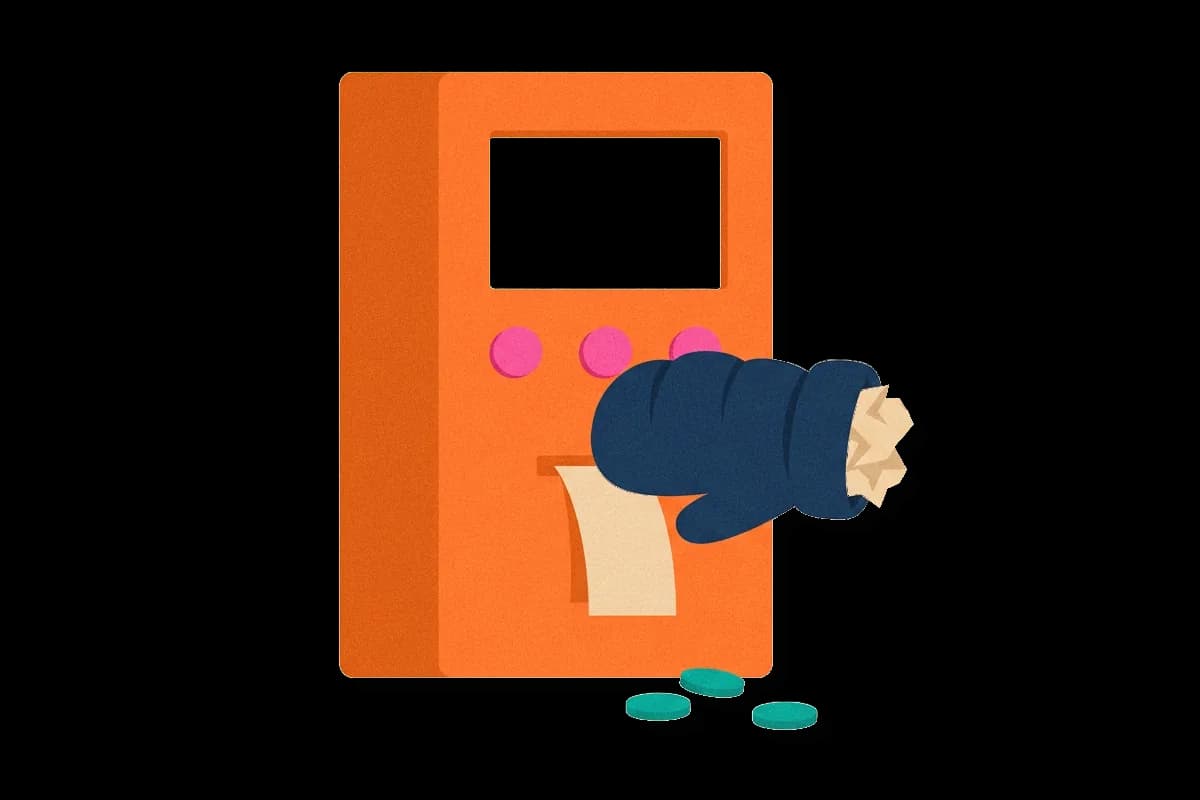
Then someone asks a plain question. What happens when a passenger buys a ticket with gloves on, in the dark, while holding a child's hand, at a machine that takes only coins? The notes do not say. They describe passengers, but nobody on the team has stood at that machine.
Role playing answers that question by testing it. The team does not discuss the ticket machine. It plays the scene: one person takes the part of the buyer, another takes the part of the machine, and the rest watch. What happens depends on the people and the limits in the room, which a document cannot supply.
Teams use the method for three jobs. They use it to learn what a situation is like, to try out an idea, and to show an idea to people who have not lived the situation. Marion Buchenau and Jane Fulton Suri of the design firm IDEO named these same three jobs in 2000, when they wrote about experience prototypes.
022 min
How an IDEO team role-played a train journey
A real rail project at IDEO took exactly this step. The team was studying what passengers need from a new rail service, and it already had passenger research. It added a second kind of discovery: the designers acted out the journey themselves, one stage at a time. The stages were entering the station, buying a ticket, waiting, riding, and changing to other transport.
A designer plays the ticket machine
A professional actor who knew improvisational theatre moderated the session. At the ticket stage, the moderator set up a scene. One designer tried to buy a return ticket for themselves and a child, while a second designer took the part of the ticketing machine.
The moderator then changed the conditions, one at a time. Do it with gloves on. It is dark and windy. The machine takes only coins. The machine is very helpful and friendly. Each change gave the two players something new to react to, while the other designers watched.
Ideas that appear during the scene
The scene did more than show problems. It also produced ideas while it ran. Acting out the ticket machine could lead someone to add a shelf for a purse or luggage. It could also lead someone to make the machine signal that it is out of order by turning away from the buyer. Nobody had to propose these changes in a meeting, because the situation itself called for them.
Scene cards and breaks
Each scene started with a card that gave the rules, the goal, and the roles of the players and the audience. After each scene the group stopped for a short discussion. This kept what they had just seen fresh, and it let the group move from noticing a problem to proposing a first idea.
Cards that assign a passenger
The same team also rode a real train. To learn about passengers unlike themselves, they handed each other cards with instructions. One card said to pretend to speak no English. Another said to be hungry and to find something to eat.
Permission to observe
The cards had a second effect. The team found that acting a part on a real train gave them permission to observe.
031 min
Where role playing in design comes from
The IDEO session drew on improvisational theatre, and the vocabulary for it has a short history. Buchenau and Fulton Suri traced two terms for this kind of work to Interval Research: informance, short for informative performance, and [bodystorming](/concept/bodystorming), which means brainstorming that happens in a physical setting, with the body involved.
IDEO then made the method a regular part of its projects. In 2003 Kristian Simsarian, a designer there, described how teams used it. He defined role playing as group pretend that is physical and spatial: people take on a character in a made-up scene, with props or without them. He pointed to two features that set it apart. People stay fully in the moment, and they use the whole body rather than only talk.
Simsarian also showed that the method is not tied to one stage of a project. His teams used a different form of it in each phase:
- Understand: walk through a situation to find issues and decide which questions to ask.
- Observe: re-create situations the team saw in the field, or extend them.
- Visualize: bodystorm, to generate new ideas inside a situation.
- Evaluate and refine: play out scenarios of use, to find and fix small details before launch.
- Implement: give an informance, a staged performance that shows a finished idea to an audience.
043 min
How to run a role playing session
A plain session uses the same pieces as the IDEO train session, and it does not need a professional actor to run it.
Choose one situation.
Take a moment from your research that has a clear start and a clear end, such as buying a ticket or returning a faulty product. Use real data, real questions and real objects where you can.
Assign the roles.
Name the user and the staff member or anyone else in the exchange. Roles do not have to be people. Simsarian suggests that each scene include at least one new role and one role that is not human, such as the ticket machine.
Set the scene.
Clear a space. Add props such as chairs, boxes, printed forms or a phone. Props can be rough. Their job is to give the players something to handle.
Play it to the end.
Players stay in character, even when something goes wrong, because the wrong moment is the one you came to find. Observers stay quiet and write down where players hesitate, repeat themselves, or change what they do.
Talk straight away.
Ask the players what they felt, then the observers what they saw. Write down the moments, not the verdicts.
Replay with one change.
Change one thing, such as the gloves, the lighting or who plays the user. Swapping roles lets each person see the situation from another side.
Simsarian's teams ran this as a half-day or full-day workshop with 8 to 20 people, split into groups of three to five. They filmed the scenes. The recordings kept a record of what happened, and he found that the camera also made the performances more focused.
Furniture as a cabin
Props can also represent a whole place. In IDEO's early work on an airplane interior, the team built a full-size cabin from foam-core board and filled it with chairs from the studio. Then the team acted out sitting and reading, sleeping and talking to a companion, receiving and eating meals, to judge comfort in different seat arrangements. The team produced and judged ideas quickly, because it felt the physical and social problems first-hand.
Crude objects as stand-ins
A prop does not need to look like the product. Another IDEO team was designing a control device with six degrees of freedom for a video game. It named three very different directions and found an object to represent each. A palm-sized pebble represented a device you hold and feel. Two joysticks of different sizes, mounted on suction pads, represented a device shared between two hands or two players. The surface of a customised skateboard represented a device that uses the whole body. Simply playing with these crude objects let the designers see what each direction would involve.
052 min
Role playing with users in the field
So far the players have been designers. Role playing also works with the people the design is for, and then the method does a different job. In a team session the designers learn by doing. In a session with users, the users show how they act and talk.
In 2018 the service designer Estee Liebenberg of Praekelt.org ran research workshops in Harare and Mutare, in Zimbabwe, with young people aged 16 to 28. Her team asked each group to perform a day in the life of a young person in their community, including topics such as contraception and mental health. In one scene, a girl and her pretend boyfriend argued about using a condom. In another scene, a girl answered the same request with sharp anger. Liebenberg reported that playing a part gave participants a safe way to act out things they had lived, seen or only imagined. The performances brought up a topic that an ordinary interview would most likely not have reached.
The same workshop shows what to check. Participants dramatise, so a scene can show an exaggerated version of the truth. Liebenberg advised sorting facts from exaggeration in a discussion after the scenes. She also advised letting people speak in their home language, and opening the session by performing a short scene yourself, so that no participant feels like the only one performing.
Other teams have changed the format to fit their situation:
- Some teams run it remotely on a shared whiteboard, with a card for each persona that gives the character's background.
- Some hand each team member a persona unlike themselves, so that people see the service from a position they would not have chosen.
- Some use it to train service staff, with staff playing their customers.
One caution applies to all of these. Roles should come from research on real people, because a role built from the team's own guesses only repeats those guesses.
062 min
Where role playing misleads
Role playing can mislead as well as reveal. Some participants find it uncomfortable or refuse to play a part. Groups can also adopt the view of their most expressive member, which hides other ideas. Running several sessions with different players, or swapping roles within one, lowers that risk.
The deeper problems concern what a performance proves.
Acting is not the same as understanding
Buchenau and Fulton Suri raised this question about their own method. When designers play at having an experience, does their energy go into understanding it or into performing it? A designer who generalises from their own acted experience, without checking it against real users, may build on a wrong idea. Their answer was to combine acting with watching others, and to check what the designers learned with people who have lived the situation.
Checking a portrayal with a real person
IDEO's team did this in a project on the pilot's interface for an underwater remotely operated vehicle. Its task analysis, built from pilot interviews, had not conveyed how hard the job is. So the designers built a game. One player walked around a room with a video camera on a long cable, and chairs represented underwater obstacles. A second player watched the live picture on a distant screen and gave spoken directions. The cable wrapped around legs and chairs, and the team saw why pilots would need clear feedback about their tether. Afterwards the team asked a retired vehicle pilot whether the game matched real piloting. He found it surprisingly accurate, and he added details about conditions that change the experience, such as how experienced the pilot is and how clear the water is.
When a simulation backfires
A related practice asks people to imitate a condition they do not have. Disability simulations are the common form, and researchers have tested what they do. In 2017 Michelle Nario-Redmond and colleagues ran two experiments with undergraduates, 60 in the first and 50 in the second. After the simulations, participants felt more confused, embarrassed and helpless than before. Their concern for disabled people rose, but their attitudes toward interacting with disabled people did not improve. In the second experiment, participants also rated themselves as less competent, and they expressed more pity and more discomfort about interacting. The authors concluded that simulating a disability caused distress and failed to improve attitudes.
For design work, the lesson is to ask the people who live the situation. Role playing can prepare a team for those conversations, but it cannot stand in for them.
071 min
Role playing vs nearby methods
Several design methods share parts with role playing, and people mix them up. Bodystorming comes closest, and many practitioners treat the two names as the same thing. Experience prototyping is the larger family. In Wizard of Oz tests, a hidden person plays the machine for a real user. Participatory design is the wider approach in which users help make the design decisions.
| Method | What it is | What separates it from role playing |
|---|---|---|
| DesignBodystorming | ||
| DesignExperience prototyping | ||
| ResearchWizard of Oz | ||
| ProductParticipatory design | ||
| ProductPersonas |
?4 questions
Questions people ask
Do I need actors or acting skill for role playing?
How many people does a role playing session need?
How long should a role playing session last?
What do I do when participants feel too shy to play a part?
§11 sources
Sources
Marion Buchenau and Jane Fulton Suri, "Experience Prototyping", Proceedings of the ACM conference on Designing Interactive Systems, 2000. PDF copy
Kristian Simsarian, "Take it to the Next Stage: The Roles of Role Playing in the Design Process", CHI 2003 extended abstracts. PDF copy
Michelle R. Nario-Redmond, Dobromir Gospodinov and Angela Cobb, "Crip for a day: The unintended negative consequences of disability simulations", Rehabilitation Psychology, 2017. Europe PMC record
Estee Liebenberg, Praekelt.org, "How Role Play Changed Our User Testing Methodology for Mobile Applications in International Development", ICTworks, 2018. Article
Show all 11 sourcesShow fewer sources
Learning Loop, "Product Experiment: Role Playing". Article
UX Mastery, "Design Games: Role Plays". Article
Designorate, "How to Use Role-Play Method in UX Research". Article
TPXimpact, "Role play in the user centred design process". Article
Service Design Tools, "Role Playing". Article
Design Methods Finder, "Role Playing". Summary of the method
Skylight, "Role-playing", Service Design Framework. Method page