012 min
Game theory in a price decision: Spotify and Apple Music
Apple Music charged US customers $9.99 a month. On 24 October 2022 Apple Music added $1 and went to $10.99. Spotify had charged $9.99 a month in the US for about twelve years. It held that price for another nine months, then raised it to $10.99 on 24 July 2023. Spotify's own US Premium page, archived on 3 May 2023, still showed $9.99 a month.
Why did Apple Music go first, and why did Spotify wait nine months? A $1 rise earns more from every subscriber who stays. But some subscribers might leave for the cheaper rival, and how many leave depends on whether the rival raised its price too.
The table below shows that choice. The prices are the real ones. The customer numbers are made up for the example. Each company starts with 1,000 subscribers, and 150 of them leave if their company costs $1 more than the other. Each cell shows monthly revenue in dollars.
| Spotify holds at $9.99 | Spotify raises to $10.99 | |
|---|---|---|
| Apple Music holds at $9.99 | Apple 9,990, Spotify 9,990 | Apple 11,489, Spotify 9,342 |
| Apple Music raises to $10.99 | Apple 9,342, Spotify 11,489 | Apple 10,990, Spotify 10,990 |
Read the table from Apple Music's side. If Spotify holds, Apple Music earns 9,990 by holding and 9,342 by raising. If Spotify raises, it earns 11,489 by holding and 10,990 by raising. Holding is better in both cases, so Apple Music should hold whatever Spotify does. Spotify faces the same table and reaches the same answer. Both hold and each earns 9,990, even though both would earn 10,990 if they raised together.
Game theory works out each side's best move while the other side does the same. For this table the answer is to hold, which would explain why neither company moved for years. Then Apple Music raised anyway. Billboard reported that Apple and other services that raised their prices said customer churn was barely affected. So the real number who left was probably far below the table's 150, and Spotify followed.

022 min
How game theory finds where a game settles
Two suspects sit in separate rooms, and each is offered the same deal. If both stay silent, both get 1 year in prison. If one accuses the other and the other stays silent, the accuser goes free and the silent one gets 10 years. If both accuse, both get 5 years. These prison terms are made up, to show the structure.
Game theory describes this with three things. The players are the two suspects. Their options are to stay silent or accuse. The payoffs are the sentence each one gets from each pair of choices. To predict what happens, you ask what each player's best reply is to every option the other has. Say you are one of the suspects. If your partner stays silent, accusing gets you 0 years instead of 1. If your partner accuses, accusing gets you 5 years instead of 10. Accusing is your best reply either way, so it is called a dominant strategy.
Your partner reasons the same way, so both of you accuse and both get 5 years. Neither of you can do better by changing alone, which makes this a Nash equilibrium, named after the mathematician John Nash. It is also a poor result. Staying silent together would have given each of you 1 year. Economists call an outcome Pareto inefficient when another outcome would leave everyone better off. A game with this shape is the prisoner's dilemma.
Where the prisoner's dilemma came from
The game is usually credited to Merrill Flood and Melvin Dresher, two of the mathematicians whom the RAND Corporation hired after World War II to think scientifically about military strategy. The prison story came later. The mathematician Albert Tucker wrote it to explain the game to an audience of psychologists at Stanford.
031 min
Repeated play: why Tit for Tat won a tournament
In the early 1980s the researcher Robert Axelrod ran a tournament. Each entry was a program written to play the prisoner's dilemma. That is a game in which each of two players does better by betraying the other, yet both lose if both betray. Every program played every other program hundreds of times. The winner was Tit for Tat. It cooperated in the first round and then copied whatever its opponent did in the round before. Axelrod ran a second tournament. Its sixty-three entrants had all been shown the first results, and Tit for Tat won again.
Repeating the game changes the answer because a betrayal can be answered in the next round. Say you play against the same opponent round after round. If you betray once, you gain once, and then you meet an opponent who betrays back.
Knowing the last round brings back the logic of a single round. If you and your opponent both know which round is the last, you each betray in it, because nothing can be punished afterwards. Then you each betray in the round before it, and so on back to the first. A result from 1982 by Kreps and his coauthors shows how fragile that argument is. If a player thinks there is some chance that the other plays Tit for Tat, both players can cooperate until close to the end.
042 min
Types of games in game theory
Game theorists sort games with a few plain questions. The answers decide which tools fit, and they decide how the game is written down. A game where players move together fits in a payoff table. A game played in turns fits in a game tree, which branches after every move.
| Question | The two kinds |
|---|---|
| Can the players make binding agreements? | Cooperative games allow them. Non-cooperative games do not. John Nash drew this line. |
| Do the players move at the same time? | Simultaneous games, such as sealed bids. Sequential games, such as chess, where moves come in turns. |
| Does one side's gain equal the other's loss? | Zero-sum games, such as a penalty kick. Non-zero-sum games, where both sides can gain or lose together. |
| Does everyone know the rules and the payoffs? | Complete information means yes. Incomplete information means some players know things the others do not. |
| Do all players face the same payoffs? | Symmetric games give every player the same options and rewards. Asymmetric games do not. |
| Is the game played once or many times? | One-shot games and repeated games. |
A handful of small named games turn up again and again. Each one shows a different tension, and the tragedy of the commons is one of them.
| Named game | The tension |
|---|---|
| Prisoner's dilemma | Each side gains by betraying, but both lose if both betray. |
| Stag hunt | Everyone gains if everyone joins, but joining alone risks a loss. |
| Chicken | Each side wants the other to back down, and both crash if neither does. |
| Tragedy of the commons | Each user gains by taking more, and the shared resource is ruined if all do. |
| Battle of the sexes | Both sides want to be together but prefer different places. |
| Hawk-dove | Fighting wins a prize, but costs both sides if both fight. |
| Ultimatum game | One side proposes a split and the other accepts, or both get nothing. |
051 min
Where game theory comes from
In 1939 the economist Oskar Morgenstern met the mathematician John von Neumann, who had already solved one kind of game. In 1928 von Neumann had shown how to play a game between two players where whatever one wins the other loses. His minimax solution tells each player to pick the plan that limits the worst result the other can force. Morgenstern wanted a mathematics that economists could use, and the two agreed to build it. In 1944 they published Theory of Games and Economic Behavior. Its strongest results covered the two-person zero-sum games von Neumann had solved. That left a gap, because most business choices are not like that. A price cut can leave two firms both worse off, and a merger can leave both better off.
In 1950 the mathematician John Nash closed the gap in his doctoral dissertation, Non-cooperative Games. It gave a way to predict the outcome of a game with any number of players and any preferences, not just two-person zero-sum games. That solution is now called a Nash equilibrium. Nash shared the 1994 Nobel Prize in economics with John Harsanyi and Reinhard Selten, who extended his idea to games with private information and to games played in turns.
061 min
Game theory in auctions: what eBay's maximum bid does
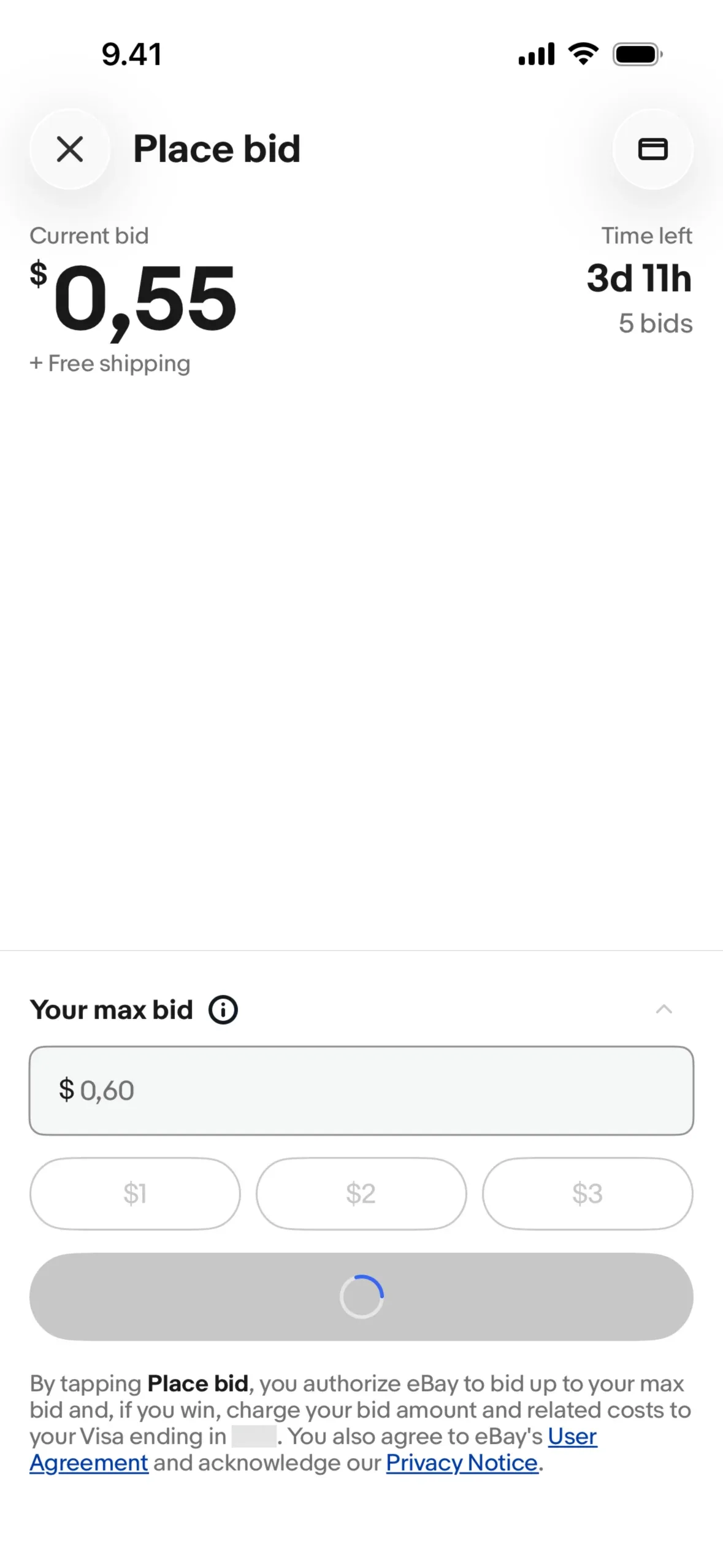
When you bid on eBay, the screen asks for the most you would pay, not for a bid. eBay then bids for you in small steps and never above the limit you typed. Say your limit is $60 and the next-highest bidder's limit is $40. These numbers are made up. eBay raises your bid only until it passes $40, so you win at a little over $40, not $60.
Every auction poses a game theory problem, because your best bid depends on what the others bid. A rule like eBay's removes most of that problem. The economist William Vickrey studied the rule in the early 1960s as a second-price auction. In his sealed-bid version, the highest bidder wins but pays only the runner-up's offer. Under that rule, bidding less than your true limit can lose you an item you would have bought at a price you accept. Bidding more can win it at a price you would not accept. So under Vickrey's rule, stating your real limit is the best reply to every set of rival bids, which makes it a dominant strategy. eBay's version is open rather than sealed, so the match is close but not exact. The Nobel committee that honoured Vickrey in 1996 described the second-price auction as a mechanism that draws out a person's true willingness to pay.
071 min
Game theory in the 1994 radio-spectrum auction
Radio frequencies are hard to sell, because nobody knows what one will earn. Two Stanford economists, Paul Milgrom and Robert Wilson, worked on the problem. Wilson studied items worth the same to every bidder, though nobody knows that worth for sure. Each bidder holds only an estimate. If you win, every other bidder's estimate was lower than yours, so yours was probably too high. This is the winner's curse. Rational bidders protect themselves from it by bidding below their own best estimate. Milgrom built a more general theory in which bidders can also value an item differently from each other.
Governments needed more than theory, because frequencies are linked to one another. Milgrom and Wilson invented formats for auctioning many linked items at the same time, for a seller who wants broad benefit to society rather than the highest revenue. In 1994 US authorities, for the first time, used an auction format designed by Paul Milgrom and Robert Wilson to sell radio frequencies to telecom companies. Many other countries have followed, and the Nobel committee said the formats benefitted sellers, buyers and taxpayers. Milgrom and Wilson shared the 2020 Nobel Prize in economics.
081 min
Game theory in crowdfunding: Kickstarter's all-or-nothing rule
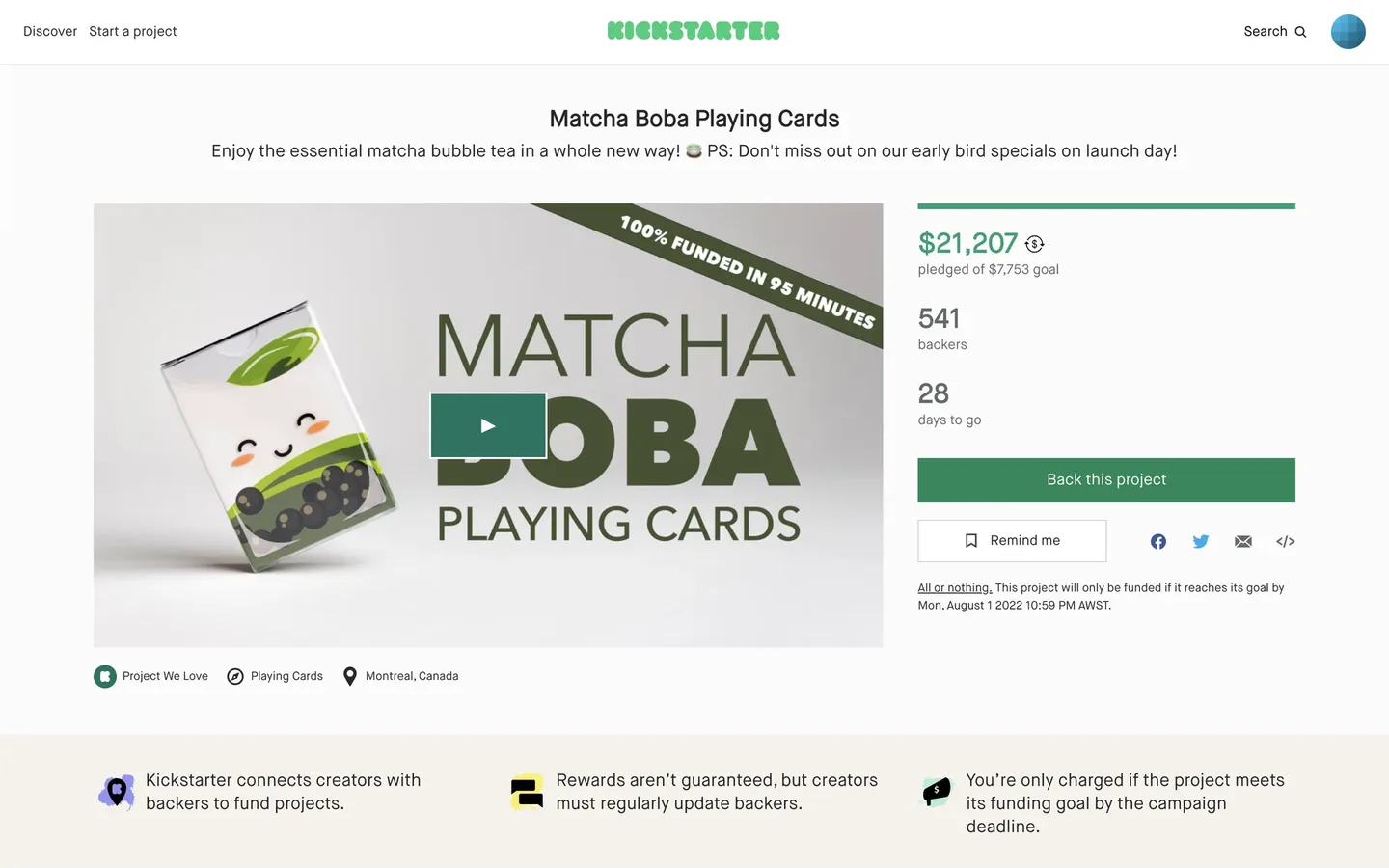
As a backer on Kickstarter, you want a project to exist, but your pledge only helps if enough other people pledge too. Without a protective rule, if you pledge early and the project stops short of its goal, your money is tied up in something that will never be built. If every backer waits to see what the others do, nobody pledges and the project fails. Game theorists call this shape a stag hunt: everyone gains if everyone joins, and joining alone is risky.
Kickstarter removes the risk. Funding is all or nothing, so if the campaign falls short of its goal, nobody is charged. A backer who pledges early loses nothing when the project fails, so the careful move and the helpful move become the same move. Kickstarter says the goal itself builds momentum, because it gives early backers a reason to recruit others.
091 min
Game theory in bargaining: inDrive's offers and counteroffers
In most ride apps the app sets the fare. On inDrive, you propose a fare and nearby drivers answer. Each driver can accept your offer, make a counteroffer or decline. You then pick among the replies, which show factors such as the fare, arrival time, vehicle type and rating.
That is a sequential game: you move first with an offer, the drivers reply, and you choose. Game theorists solve a sequential game by backward induction, which means starting at the last decision and reasoning back to the first. The last decision is yours, a choice among the replies. So each driver wants a counteroffer that beats the other drivers' and is still worth driving for. Your first offer follows from that. If you offer too little, you risk few replies. If you offer more than needed, you pay drivers more than they would have accepted.

102 min
Game theory tested: penalty kicks and traffic
In a penalty kick, the kicker picks left, centre or right while the goalkeeper picks a side at the same moment. A goal for one is a miss for the other, so the game is zero-sum. If you were the kicker and always shot left, the goalkeeper would learn to dive left. So game theory predicts that neither side should be predictable. It also predicts that every choice should score about equally often, because a choice that scored more would be picked more. Game theorists call that unpredictable mixing a mixed strategy. In 2003 the economist Ignacio Palacios-Huerta tested the prediction on kicks in professional soccer games. His results fit it closely: scoring chances were statistically the same across choices, and a player's choices showed no pattern from one kick to the next.
Traffic: when the equilibrium costs everyone
Picture two towns joined by two routes. Each route has one busy bridge and one motorway. A bridge takes longer the more cars use it, while a motorway always takes the same time. You are one of the drivers, and you pick the quicker route given what the other drivers do. That is a Nash equilibrium, and it can be worse for everyone than another arrangement. Braess's paradox shows how.
Say a bridge takes 1 time unit if every car uses it and 0.5 if half the cars do, and each motorway takes 1 time unit. Half the drivers take each route, so every trip takes 0.5 + 1 = 1.5 time units. Now the towns build a free link road between the two bridges. It lets you drive over both bridges and skip both motorways. That looks quicker to you whatever the others do, so every driver takes it. Now every car crosses both bridges, and every trip takes 1 + 1 = 2 time units, longer than before.
Tim Roughgarden and Éva Tardos asked how bad this can get. They proved that when each road's delay grows in step with its traffic, selfish routing makes the total delay at most four thirds (4/3) of the best possible. The ratio between the two is called the price of anarchy.
111 min
Game theory in your work: bidding for a job
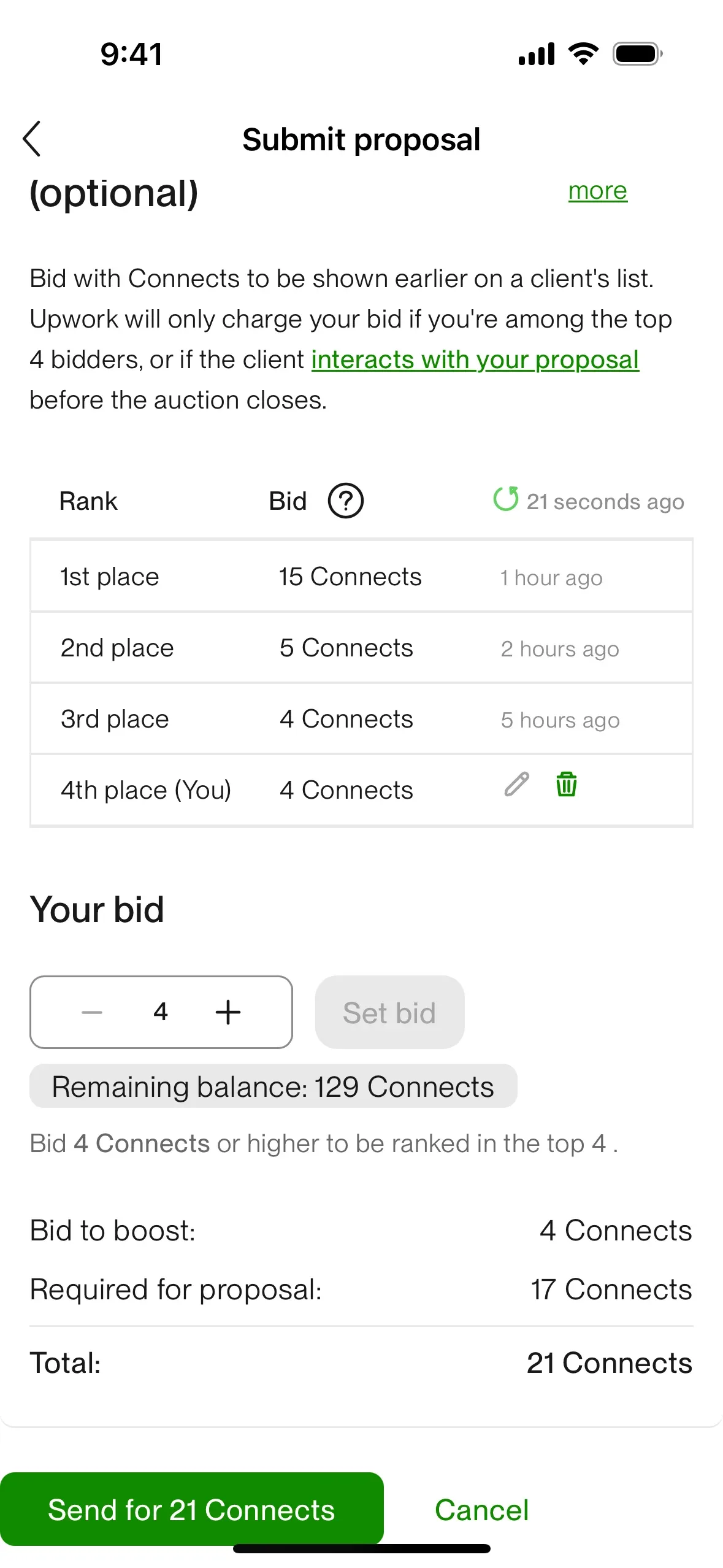
Bidding for a job on Upwork is a game against the other freelancers you can see. You pay Connects, Upwork's in-app credits, to move your proposal into one of the top four slots on the client's list. Upwork charges your bid if the proposal finishes in the top four. You can see what the other freelancers have bid for those slots, so your best bid depends on theirs. A bid just above the fourth-place bid wins a slot for the fewest Connects. A bid far above it wastes Connects. And the other freelancers see the same list and can raise at any time.
Start with the job's value, not with the rivals. Ask how many Connects the job is worth to you. Any bid above that number loses money even when it wins a slot. Then bid just above fourth place and check the list again before the bidding closes. The same steps work when you bid for ad space or any other ranked slot: set your ceiling first, then bid against what you can see.
121 min
How to apply game theory to your own decision
Take a decision where a rival's move changes your result, such as a price, a bid or an offer. Six steps turn it into a game you can solve on paper.
- Step 1Name every party whose choice changes your result.
- Step 2List each party's real options, including doing nothing.
- Step 3Give every outcome a number for each party, in one unit such as dollars.
- Step 4For each option the others have, mark your best reply.
- Step 5Look for an option that is your best reply whatever they do, and take it if you find one.
- Step 6Find where every party's best reply matches. That outcome is the one to expect.
Then ask two more questions. Will you meet these parties again? If so, a rival you undercut today can answer with its own price cut next month. Can you change the payoffs? Kickstarter did, by charging backers nothing when a project misses its goal.
132 min
When game theory breaks
A game theory prediction holds only when the payoff table is right and the players reason the way the table assumes. Either can fail.
Start with the payoff table. Apple Music is a music streaming service. In October 2022 it raised its US monthly price from $9.99 to $10.99. Any table for that decision depends on one number nobody knew beforehand: how many subscribers would leave for a cheaper rival. In a made-up table where 150 of every 1,000 subscribers leave after a $1 rise, holding the price is each service's best move. In the same table with only 20 leaving, raising is. Billboard reported that Apple, Amazon and other services that raised their prices said customer churn was barely affected.
Then the players. In 1997 the Financial Times ran a contest for its readers. Each reader picked a number from 0 to 100, and the winner was whoever came closest to two thirds of the average pick. Newspapers in Spain and Germany ran similar contests, and researchers ran the same game in labs with undergraduates and with game theorists. Say you think the others pick at random. You expect an average of 50, so you pick 33. If you think the others reasoned that far, you pick 22, and one step further gives about 15. Following every step ends at 0. Reasoning one, two and three steps ahead was common in every one of these groups. Picking 0, the equilibrium, was common only among newspaper readers and game theorists.
A Nash equilibrium says where players would settle if nobody wanted to change. It does not say they will get there, and a game can have several equilibria. Use it as a baseline, then check it against how people really choose. Bounded rationality and behavioral economics study that gap.
141 min
Game theory vs nearby concepts
Several nearby ideas get mixed up with game theory, so it helps to place them side by side.
| Concept | What it covers | The fact that separates it |
|---|---|---|
| This pageGame Theory | ||
| PsychologyDecision Theory | ||
| PsychologyBehavioral Economics | ||
| PsychologyNash equilibrium | ||
| BusinessPrisoner’s Dilemma |
Decision theory is the nearest neighbour. Decision theory fits a choice against nature, such as packing an umbrella for a forecast. Game theory fits a choice against someone who reacts, such as a competitor who answers your price cut.
?6 questions
Questions people ask
What is game theory in AI?
Is game theory part of economics?
Why is it called game theory?
Does game theory assume people are selfish?
Where is game theory used in real life?
Is game theory hard to learn?
§14 sources
Sources
Show all 14 sourcesHide sources
Ivan Pastine and Tuvana Pastine (2017), Introducing Game Theory: A Graphic Guide, Icon Books. The definition of game theory and the reasoning behind the examples.
Billboard (July 2023), Spotify Hikes Price on Premium Individual Plan by $1. Spotify's price history and the churn reports.
Hypebot (2022), Apple Music ups subscription price to $10.99. The Apple Music price rise of 24 October 2022.
Steven Kuhn, Prisoner’s Dilemma, Stanford Encyclopedia of Philosophy.
The Royal Swedish Academy of Sciences (1994), The Prize in Economic Sciences 1994, press release. Von Neumann, Morgenstern, Nash, Harsanyi and Selten.
The Royal Swedish Academy of Sciences (1996), The Prize in Economic Sciences 1996, press release. Vickrey and the second-price auction.
The Royal Swedish Academy of Sciences (2020), The Prize in Economic Sciences 2020, press release. Milgrom, Wilson and the 1994 spectrum auction.
eBay, Automatic bidding, eBay Help. How a maximum bid works.
Kickstarter, Why is funding all-or-nothing?, Kickstarter Help Center.
inDrive via PRNewswire (2025), inDrive Empowers Riders with Fare Negotiation, The Week. How fares are proposed and countered.
Upwork, Boost your proposal, Upwork Help Center. How boosted proposals are ranked and charged.
Tim Roughgarden and Éva Tardos (2002), How Bad Is Selfish Routing?, Journal of the ACM, author's copy.
Ignacio Palacios-Huerta (2003), Professionals Play Minimax, Review of Economic Studies.
Antoni Bosch-Domènech, José García-Montalvo, Rosemarie Nagel and Albert Satorra (2002), One, Two, (Three), Infinity, ...: Newspaper and Lab Beauty-Contest Experiments, American Economic Review.