011 min
Why risk reversal matters
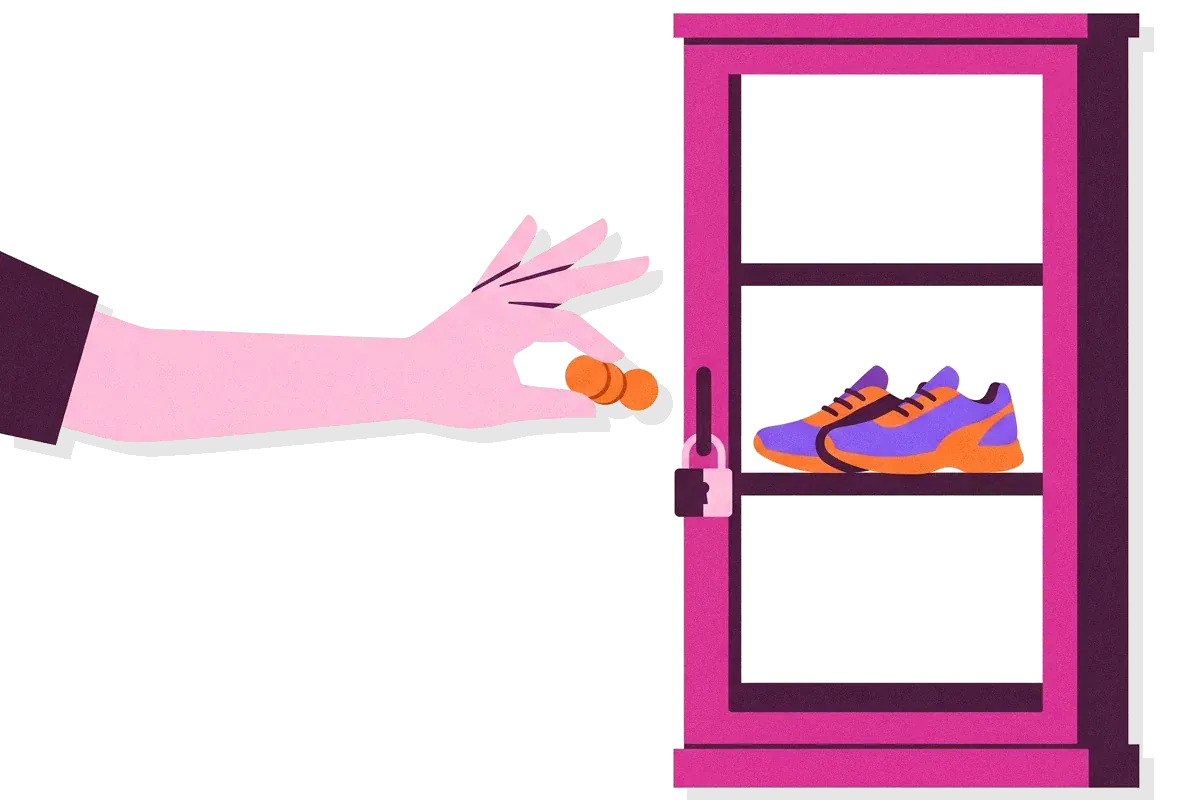
Before a purchase, the buyer cannot check whether the product works. This is true of software, of glasses ordered online, and of any service that is delivered after payment. The buyer pays first and finds out afterwards.
In 1960 the researcher Raymond Bauer described what this feels like to a buyer. He split perceived risk into two parts: how uncertain the result is, and how much a failed choice would cost. A Polish review of the research puts his view this way: "According to Bauer, risk perceived by consumers is a function of uncertainty for the results of decisions taken and the importance of the consequences of a failed choice."
A seller can rarely remove the uncertainty before the sale, because the product has to be used to be judged. A seller can change the second part. If a failed purchase costs the buyer nothing, the consequence is small, and the buyer has less reason to wait.
People also weigh a possible loss more heavily than an equal gain, a pattern called loss aversion. A buyer may feel the fear of wasting money more strongly than the pleasure of a good purchase. That is the cost this concept addresses: a buyer who was interested leaves without buying. The people who own this decision are usually the founder or the product manager who sets the refund, trial and return policy.
022 min
What risk reversal is
In a normal sale, the buyer carries the risk. The buyer pays, and if the product is wrong, the buyer absorbs the loss. Risk reversal changes who pays for a bad outcome. The seller agrees in advance to cover it, and says so clearly before the buyer decides.
The seller can cover the cost in different forms. Each form protects the buyer from a different loss.
| Form | What the seller pays for | Example |
|---|---|---|
| Refund | The price of the product | A money-back guarantee |
| Free return | Shipping and handling back to the seller | Ordering shoes in two sizes and sending one back |
| Free trial | The cost of serving someone who has not paid | A software plan that is free for the first weeks |
| Performance promise | A penalty if the seller misses a stated standard | A pizza that is free if it arrives late |
| Redo | The work of fixing the result | A contractor who repeats a job that failed |
The marketing consultant Jay Abraham teaches risk reversal in his book Getting Everything You Can Out of All You've Got. He is the person most often linked with the phrase in sales and marketing writing.
Two conditions make the promise work. The buyer must understand it in one reading, and the buyer must believe the seller will keep it. A promise full of exceptions is not believed.
The same two words also name an unrelated idea in options trading. This entry covers only the marketing meaning.
031 min
Where risk reversal comes from
The idea has two roots. The first is the buyer's side. Bauer's 1960 paper "Consumer Behavior as Risk Taking" separated uncertainty from consequence. Later reviews of consumer research still use that split.
The second is the seller's side. In sales writing, the phrase "risk reversal" is tied to Jay Abraham, whose book Getting Everything You Can Out of All You've Got lists risk reversal among its main ideas. A review of the book on the Personal MBA site says: "include developing a Unique Selling Proposition (USP), risk reversal, referral and affiliate programs, campaign testing, joint ventures, prospect qualification, and leverage."
No source checked for this entry shows who first used the phrase, so no date is given here. Sellers offered guarantees long before the label existed. What Bauer and Abraham each added was a way to describe the practice.
042 min
How risk reversal changes a buying decision
A buyer of something unseen makes two decisions, in this order. First: do I order? Later, once the product is in hand: do I keep it? A return policy touches both, and the two respond to different parts of the policy.
A 2016 meta-analysis of return policies shows this. A meta-analysis combines the results of many studies. Narayan Janakiraman, Holly Syrdal and Ryan Freling reviewed 22 academic papers and sorted return policies along five dimensions: time, money, effort, scope and exchange. A university press release summarising the work reports: "The team showed that the return policy factors that increase purchases are money and effort leniency."
The same release says the factors that lower returns differ. Money and effort leniency raise purchases, but a longer time limit and a more generous exchange option reduce returns. Taken together, a promise that is easy to claim and pays back the full price raises purchases. A longer window gives the buyer time to get used to the product, and a buyer who has used a product tends to value it more. That is a likely reason, based on the endowment effect, and the meta-analysis summary does not test it.
There is a second effect. A seller who pays for bad outcomes loses money if bad outcomes are common. So the promise also tells the buyer something about the seller's own view of the product. This is one of the quality signals a buyer reads before buying. The signal only works when the promise is costly to keep. A guarantee nobody can claim signals nothing.
The mechanism, in short:
- The buyer fears a failed purchase, not the price itself.
- The seller offers to pay for the failure.
- The buyer judges how likely the seller is to keep the promise.
- Fewer buyers delay, and more of them order.
The result depends on the product. For things that are hard to judge before use, such as glasses that must fit a face or software that must fit a workflow, the promise removes more risk than it does for a pencil.
052 min
Example: Warby Parker and home try-on
Warby Parker sells prescription glasses. When it started, many shoppers did not believe they could buy glasses without trying them on. Co-founder Neil Blumenthal described the problem to Retail Dive in 2025: "We wanted to sort of overcome that challenge of buying without trying them on, and that is what led to the home try-on program, which is super innovative and novel."
The program removed the cost of a wrong choice. According to Retail Dive, "Warby Parker launched its popular home try-on program, where customers could have five frames shipped to their home to test out for free." The customer kept one pair or none, and sent the rest back at no charge.
Before the program, a buyer who ordered glasses unseen risked the price and the wait. After it, the buyer risked a few days.
A 2019 Tufts Now profile describes how buyers responded. Demand was high enough that, two days after orders began, the company had so little stock that it temporarily suspended home try-on. A free trial uses inventory.
In September 2025, Retail Dive reported that Warby Parker would end the program: "Its store expansion has meant that most of the brand’s home try-on users live within 30 minutes of a Warby Parker store." Once shoppers could try frames in a store, the trial no longer removed much risk. A risk reversal is worth keeping only while the risk is still there.
061 min
A second case: the Domino's 30-minute guarantee
Warby Parker promised to cover the cost of a wrong product. The second case covers a different kind of risk: that the product arrives too late.
According to Wikipedia's company history, "Beginning in 1973, Domino's Pizza offered a guarantee to customers their pizza would be delivered within 30 minutes of placing an order or they would receive the pizza free." A late pizza was the failure. The seller paid for it with the pizza itself. The company later changed the promise to a $3 discount in 1987.
The promise ended in 1993. The same page reports that a woman injured by a Domino's delivery driver who ran a red light "was awarded nearly $80 million by a jury, but accepted a payout of $15 million." The half-hour guarantee was dropped that year, and then-chief executive Tom Monaghan gave the reason as the "public perception of reckless driving and irresponsibility".
The one variable that differs between the two cases is who controls the failure. A buyer decides whether glasses suit them, so Warby Parker's promise cost it only the returned frames. Delivery time is controlled by the seller's own staff, so the promise gave drivers a reason to hurry. The contrast teaches a rule: a risk reversal should pay for a failure the seller cannot make worse by trying to avoid paying.
071 min
How risk reversal shows up in tech
Different roles decide different parts of the promise.
- Founder. Chooses the size of the promise. A founder of a subscription app decides whether to refund the first month, the whole year, or nothing, and what share of refunds the business can afford.
- Product manager. Chooses where the promise appears. The promise belongs next to the buy button or plan selector, where the buyer is deciding, not on a policy page the buyer never opens.
- Designer. Makes it easy to claim. The Janakiraman meta-analysis counts effort leniency, for example "no forms being required versus forms are required", among the factors that raise purchases. A refund that takes six steps to claim gives less reassurance than the policy text implies. Every extra step is friction, and buyers expect it before they decide.
- Engineer. Builds the refund path and the limits. This covers automatic refunds, abuse checks, and reports of who claimed what. A promise the system cannot honour quickly will be treated by buyers as a promise not made.
A clear case from outside software is the free home delivery of several sizes of the same shoe, with the unwanted sizes sent back at no cost. The buyer's fear is fit, and the promise addresses that fear.
081 min
How to design a risk reversal
This is a design sequence for this entry, not a framework from a named author. The order matters because each step uses the answer from the one before.
Name the buyer's specific fear.
Use Bauer's two parts. Is the buyer unsure the product works, or afraid of how much a failure costs? A buyer afraid of a large price needs a refund. A buyer unsure about fit needs a trial.
Pick the form that answers that fear.
Use the table in the section on what risk reversal is. This step only works once step 1 is done, because the form has to match the fear.
Estimate what it will cost.
Take your expected rate of claims and multiply it by the cost of each claim. This step needs step 2, because a refund, a free return and a trial each cost different amounts.
Set the limits.
Choose the time window, the claim steps and what is excluded. Each limit changes the claim rate you estimated in step 3, so go back and update that estimate.
State it where the buyer decides.
Write it in one sentence, with no hidden conditions. Do this last, because only now do you know exactly what you are promising.
091 min
How to measure risk reversal
Measure the benefit and the cost with the same test. Show the promise to half of the visitors to a page and hide it from the other half, then compare the two groups.
Collect four numbers from your own records:
- Conversion rate: orders divided by visitors, for each group.
- Refund or return rate: refunds divided by orders.
- Net revenue per visitor: the formula below.
- Claim abuse: refunds from accounts that used the product heavily before claiming.
Net revenue per visitor = (orders × price − refunds) ÷ visitors
Track purchases and returns as separate numbers. The meta-analysis above found that the policy factors that raise purchases are not the same ones that lower returns, so a single combined figure can hide a policy that helps one and harms the other.
102 min
Common mistakes with risk reversal
Teams assume a bigger promise always sells more
Janakiraman put it this way in a university press release: "There is an inherent belief among business that lenient return policies increases product purchase. While that is true sometimes, businesses must be wary of being too lenient." The same summary says some forms of leniency raise returns. A longer promise or a wider scope costs more, and not every dimension of generosity raises sales.
Teams assume buyers will believe the promise
A promise only reduces risk if the buyer expects the seller to honour it. A new seller with no history may need a more generous promise than a known one, because the buyer has no other reason to trust the seller. A promise with many conditions lowers trust instead of building it.
Teams assume the promise is free to make
The cost shows up in inventory, in staff time and in claims. Warby Parker had to pause home try-on two days after it began filling orders, because of stock. A promise that pays out only when the seller fails can also change how the seller acts. The Domino's guarantee gave delivery drivers a reason to speed, and the company dropped it in 1993.
Where the popular version overclaims
Sales writing often describes risk reversal as a way to raise conversion at almost no cost. The research reviewed here supports a smaller claim: some forms raise purchases, and some forms raise returns.
111 min
Risk reversal vs. nearby concepts
Risk reversal is often mixed up with the tools that carry it out. The one question that separates it from each neighbour is: what is the seller promising to pay for?
| Concept | What it is | How it differs from risk reversal |
|---|---|---|
| Warranty | A promise to repair or replace a product that breaks after purchase | A warranty covers defects. Risk reversal also covers a purchase that works but does not suit the buyer. |
| Free trial | Use of the product before paying | A free trial is one form of risk reversal. Not every risk reversal is a trial. |
| Social proof | Showing that other people bought and liked the product | Social proof lowers the buyer's uncertainty. Risk reversal lowers the cost of being wrong. |
| Money-back guarantee | A promise to refund the price | This is the best-known form, but not the only one. A late-delivery promise is also risk reversal. |
The deciding variable is where the seller acts. Social proof changes what the buyer believes about the odds. Risk reversal leaves the odds as they are and changes what a bad result costs.
121 min
Where the evidence on risk reversal is contested
The evidence in favour is real but narrow. The meta-analysis by Janakiraman, Syrdal and Freling covers return policies, which is one form of risk reversal. The 22 papers it reviewed deal with returns of goods. Whether the same effects hold for a software trial, a performance promise or a service redo is an inference, not a measured result.
The authors do not argue for generosity without limit. Janakiraman said: "While that is true sometimes, businesses must be wary of being too lenient." His example was large televisions bought for a sporting event: "During the Super Bowl season, you have quite a few consumers who purchase a big-screen TV for the event and then return it after the game is played." In that case, the promise attracted buyers who used the product and returned it.
Jaramillo, who is quoted in the same release, reads the same findings differently: "The study shows that lenient return policies do in fact encourage product purchase." Both statements come from the same data.
What this leaves a practitioner with: expect a gain in purchases from a generous refund and an easy claim, expect more returns from a generous policy overall, and test your own product before choosing the size of the promise.
132 min
Risk reversal questions
What does risk reversal mean in marketing?
It means the seller takes on the cost of a bad purchase so the buyer does not have to. The seller does this with a refund, a trial, a free return, or a promise to fix the result.
What is an example of risk reversal?
Warby Parker's home try-on program is one. Customers could have five frames shipped to their home to test out for free, and returned the ones they did not want at no cost.
How do you measure risk reversal?
Show the promise to half of your visitors and hide it from the other half. Compare the order rate, the refund rate, and net revenue per visitor between the two groups.
What is the difference between risk reversal and a warranty?
A warranty covers a product that breaks after the sale. Risk reversal covers any purchase that disappoints, including one that works but does not fit the buyer's needs.
Does a more generous guarantee always raise sales?
No. A meta-analysis of 22 papers by Janakiraman, Syrdal and Freling found that money and effort leniency raise purchases, while some other forms of leniency lead to more returns.
When should you not use risk reversal?
Do not use it when the seller cannot control the cost of claims, when the promise would give staff a reason to act badly, or when the buyer already has no doubt. Domino's dropped its 30-minute guarantee for the first of these reasons.
?6 questions
Questions people ask
What does risk reversal mean in marketing?
What is an example of risk reversal?
How do you measure risk reversal?
What is the difference between risk reversal and a warranty?
Does a more generous guarantee always raise sales?
When should you not use risk reversal?
§7 sources
Sources
Show all 7 sourcesHide sources
Janakiraman, N., Syrdal, H. A. and Freling, R. (2016). "The Effect of Return Policy Leniency on Consumer Purchase and Return Decisions: A Meta-analytic Review." Journal of Retailing, 92(2), 226-235.
University of Texas at Arlington (2016). A press summary of the Janakiraman, Syrdal and Freling meta-analysis, published by ScienceDaily.
Maciejewski, G. A review of perceived risk research that summarises Bauer's 1960 definition.
Retail Dive (23 September 2025). Interview with Warby Parker co-CEO Neil Blumenthal on the end of home try-on.
Tufts Now (2019). A profile of Neil and Rachel Blumenthal covering the first weeks of Warby Parker.
Wikipedia. Domino's Pizza, section on the 30-minute guarantee.
The Personal MBA. A review of Jay Abraham's book Getting Everything You Can Out of All You've Got.