012 min
The problem dopamine loops name
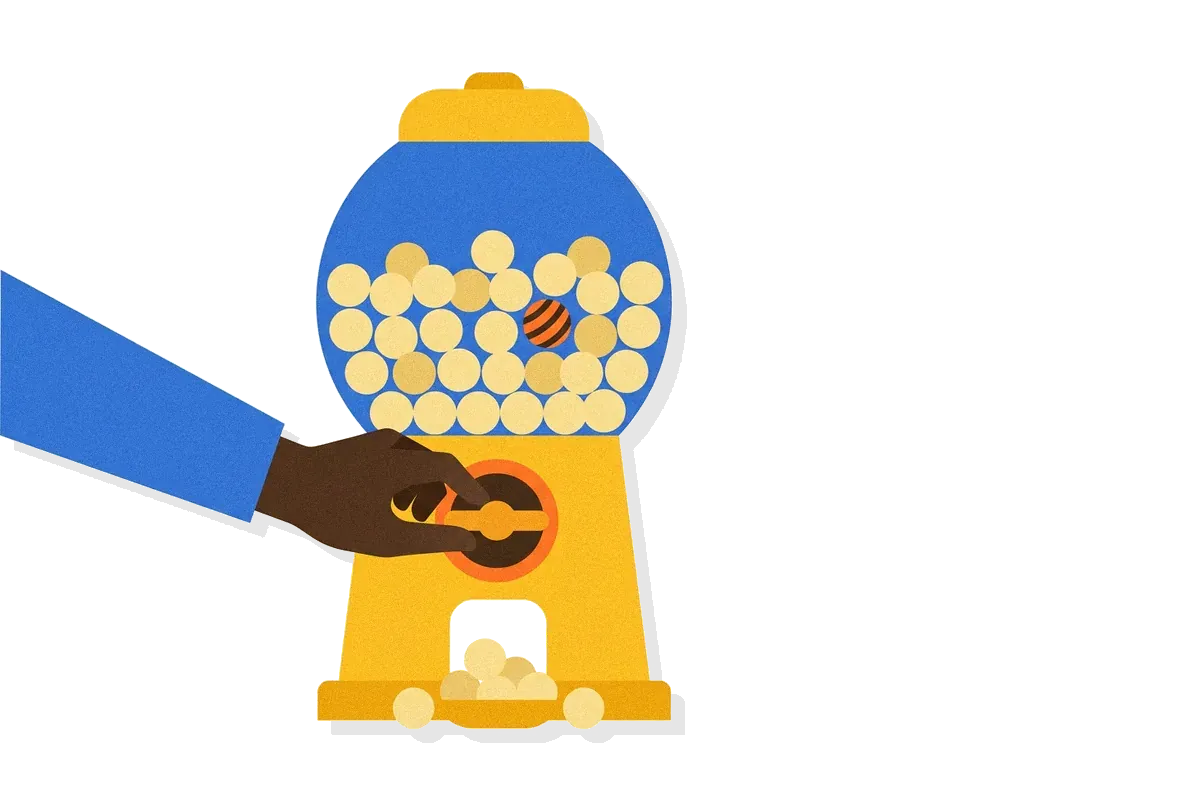
Picture a product manager in a sprint planning meeting. Their phone buzzes on the table. They glance at it, see nothing important, and look up again. Two minutes later they pick it up when it has not buzzed at all. Afterwards a colleague says the phone is running a dopamine loop on them, and the product manager cannot tell whether that is science or a slogan.
It is a little of both, and the difference matters because the phrase is now used to justify decisions. Designers use it to explain why a feed works. Founders use it to defend a feature or to attack a rival one. Parents and managers use it to explain why a person cannot stop checking something. If dopamine were simply the chemical of pleasure, the story would be easy: the phone gives pleasure, so the person wants more. That version is wrong in an important way, and a wrong story leads to wrong fixes.
This article keeps the product manager's phone as its running case. It uses published experiments to say what a dopamine loop is, what it is not, and where the evidence is thinner than confident explainers suggest. The term itself is informal. Neuroscientists also use the word loop for circuits inside the brain, which is a different thing. Here a dopamine loop means the cycle that popular writing describes: a cue, an action, an outcome, and a stronger urge to repeat.
023 min
How a dopamine loop works
Start with the chemistry. Dopamine is a neurotransmitter, a chemical that one nerve cell, called a neuron, releases to send a signal to the next. Some dopamine neurons sit in the midbrain, deep in the brain, and send their signals to the striatum, a region involved in movement, motivation and learning. Researchers have recorded these neurons in animals for decades. The recordings show a pattern that explains the phone.
Wolfram Schultz, Peter Dayan and Read Montague set the pattern out in 1997. They combined single-neuron recordings from monkeys with a computer model of learning. Their account has four steps.
- A surprise happens. A reward arrives that nothing predicted. The dopamine neurons respond to it with a burst of extra activity.
- The brain links the reward to what came before it. If the same light or sound comes just before the reward many times, the pairing is learned over repeated trials.
- The response moves to the cue. After learning, the burst of activity no longer comes at the reward. It comes at the cue that predicts the reward.
- A cue that predicts a reward now motivates action. The cue is followed by an urge to act. This step is inferred from behaviour. The recordings show the earlier signal, and the link to the urge comes from other experiments.
A buzz on a table is such a cue. Every earlier buzz that turned out to be a message taught the brain to treat the buzz as a prediction. The product manager's hand moves because of the prediction, before any message is read.
Why a reward that arrives on time stops mattering
The same experiments show something that surprises people. Once a reward is fully predicted, the neurons do not respond to it at all. The signal measures the gap between what was expected and what happened. A reward that matches the prediction produces no signal, a better-than-expected one produces a burst, and a missing one pushes activity below the normal rate at the moment the reward was due. Researchers call this gap a reward prediction error.
This is the reason loops need some uncertainty to stay strong. A phone that always delivered one pleasant message at nine o'clock would soon stop prompting a check. A phone that sometimes delivers something good and often delivers nothing keeps producing prediction errors. The idea is developed in variable reward, which names the schedule that makes the gap permanent.
The signal grows as the goal gets closer
A second finding shows that the burst is not the whole story. In 2013 Mark Howe and colleagues measured dopamine in the striatum of rats as the rats ran through mazes toward a reward. The signal rose gradually as the rats came nearer, and it grew with both the distance to the reward and its size. The authors suggest that this ramp may supply sustained motivational drive. It would explain why the urge to check gets stronger as the next opening of an app gets closer.
031 min
Where the idea of a dopamine loop comes from
No single person coined the phrase as a scientific term. It is popular shorthand that grew out of two older lines of work. The first is behavioural. In the 1950s B. F. Skinner and Charles Ferster studied how the timing of rewards changes how often animals repeat an action, and their book on the subject appeared in 1957. The second is the biology of dopamine, where the key step was Schultz's recordings from monkeys, published with Dayan and Montague in 1997.
Game designers gave the cycle its own name. A compulsion loop, in their usage, has three parts: anticipation of a reward, the activity needed to earn it, and the moment the reward is obtained. The design term was taken from the behavioural research, and the dopamine link was added by writers who cited Schultz.
The two sets of work do not say the same thing. Skinner's work describes behaviour, and it can be checked without any brain measure. The monkey recordings describe a signal, and they do not by themselves say how a person feels. The popular phrase joins them, so each claim in it needs its own evidence.
041 min
The experiment behind dopamine loops
The central link is the move of the signal from reward to cue, and it was seen in alert monkeys whose dopamine neurons were recorded one at a time. A monkey sees a light come on, and a moment later a drop of fruit juice reaches its mouth. In the first trials, the neuron responds when the juice arrives. After many trials, the neuron responds when the light comes on and is quiet when the juice arrives.
A third kind of trial tests the prediction. The light comes on and the juice does not come. At the moment the juice was due, the neuron's activity drops below its normal rate. The neuron is therefore not reporting the juice. It is reporting whether the juice matched what the light had promised.
What the experiment cannot show is just as clear. The animals were monkeys, and the measure was a neuron's firing rate, not a feeling. It shows that dopamine neurons carry a prediction signal. It does not show that the signal feels like anything, or that a human checking a phone has the same pattern.
052 min
How strong the evidence for dopamine loops is
Each claim in this article sits at a different level of evidence. The level matters more than the claim, because a result in monkeys is not a result in people.
| Claim | Evidence | Species and sample | What it shows |
|---|---|---|---|
| The dopamine signal moves from reward to cue | Single-neuron recordings | Monkeys | A signal exists. It is measured directly. |
| The signal grows as a reward gets nearer | Chemical measurement in the striatum | Rats in mazes | A rise in dopamine that scales with distance and size. |
| Dopamine is released during a video game | Brain scan using a labelled chemical | Human volunteers | A change in receptor binding that fits dopamine release. It is inferred, not counted. |
| People post more often when posts earn social rewards | Behaviour of users, plus an online experiment | Over 4000 users, over one million posts, and 176 people in the experiment | A reward-learning pattern in behaviour. No brain measure was taken. |
Two limits apply to the whole table. A scan shows that a signal changes while a person does a task. It does not show that the signal caused the behaviour. And no row shows that a dopamine loop is dangerous to a person. That is a claim about harm, and it needs a different kind of study than the ones here.
061 min
A second case: a video game in a scanner
The monkey experiment used juice. A study of people looked for the same signal in a more familiar setting. In 1998 Matthias Koepp and colleagues asked volunteers to play a video game while lying in a positron emission tomography scanner, a machine that can track a labelled chemical in the brain. The chemical, raclopride, attaches to dopamine receptors. When more dopamine is released it competes for the same receptors, so less raclopride binds.
Binding fell during the game, compared with a baseline measurement. The authors read this as evidence that dopamine was released in the striatum while people played a goal-directed task.
The two cases differ in species, in method and in what was rewarded. The monkeys were given juice, and the volunteers were given points in a game. In both, the signal appeared in the striatum, and in neither was a pleasant feeling measured. Together they suggest the signal is not tied to food or drink. Neither shows how much of the signal is the game's cue and how much is the play itself.
082 min
What dopamine loops do not mean
The most common misreading is that dopamine is the pleasure chemical and a dopamine loop is a pleasure loop. Kent Berridge and Terry Robinson challenged this in 1998 and have kept testing it since. In their experiments, rats that had lost 98 to 99 percent of the dopamine in two striatal regions did not eat, drink or go after any reward on their own. But when sweet liquid was put into their mouths, they still showed normal liking reactions. The want was gone and the liking was not.
The pattern also appears in people. The same authors report that patients with Parkinson's disease, who have lost many dopamine neurons, still gave normal ratings of liking for foods such as sugar and chocolate. Their account separates wanting, the motivation to pursue something, from liking, the pleasure of having it. Dopamine matters most for the first.
This changes how the phone case reads. A person can feel a strong urge to check a feed and enjoy it very little. That is the pattern wanting without liking predicts, and it is why a loop can hold someone who reports no joy.
Other popular claims fail on evidence rather than logic. Popular pages also list brain changes, withdrawal and falling pleasure in heavy phone users. None of the sources used for this article measures those, so the article makes no claim about them. Dopamine is also not always bad. The same cycle, in a language app or an exercise habit, produces a repeated action that its user is glad of.
092 min
Where the evidence is contested
Researchers do not agree on exactly what dopamine does in a loop. One view, in the line of Schultz's work, says the signal is a learning signal about prediction errors. Berridge and Robinson say the signal gives rewards and their cues a motivating strength, which they call incentive salience, and that it does not mainly teach. Both accounts fit parts of the data. A practitioner can use either one, as long as they do not claim that dopamine is only pleasure.
A related dispute concerns addiction. Berridge and Robinson, in their 2025 review, describe two camps. One says addiction arises mainly from a state of too little dopamine, with a loss of pleasure or liking. They and others say it arises from a state of excess reactivity, in which cues trigger too much wanting. They add that the evidence for a low-dopamine state in addicted people is open to alternative readings.
Their sensitization theory adds a limit. Repeated, intermittent exposure to addictive drugs sensitizes the dopamine system in vulnerable individuals. The authors say the effect, once started, can last a long time, and that vulnerability varies widely. This article does not claim the same process happens with phones, because the sources here do not measure it.
What does that leave a practitioner? A loop is a well-supported way to describe how cues gain motivating strength. Whether a particular product causes compulsion is a separate question that this evidence does not settle.
102 min
What this means for your work
The loop gives a product team three places to look, and it does so without claiming anything about harm.
- A product manager chooses what counts as a reward and how often it arrives. A weekly digest and an instant alert are different loops, even when the content is the same.
- A designer chooses the cue. A badge count, a sound and a colour each tell the user that something may be waiting. The cue is where a loop begins.
- An engineer chooses the schedule. A system that sends an alert only when something matters produces a different pattern from one that sends alerts to raise visits.
- A founder chooses whether the loop serves the user's goal or only the product's numbers.
Some products use the loop on purpose against the user's interest, such as a notification built to bring someone back with nothing useful behind it. That is a dark pattern. Others use it to support a goal the user chose, as a progress bar does for a learning habit, and gamification is the usual name for that.
Game designers show the same split. A compulsion loop guides a player towards anticipation of a reward from a specific activity, while a core loop is simply an activity players repeat. A team that cannot tell which one it built is likely to build the first by accident.
A claim that a product is built on neuroscience deserves a question. Which of the findings above is it based on, in which species, and with what measure?
111 min
How to apply the dopamine loop idea
The aim is to change the cue, the action or the reward. Awareness alone is a weak fix, so each step below changes something in the environment. These steps are inferences from how cues work in the research above. The sources used here did not test them as treatments.
Remove the cue.
Turn off the alerts that do not need a response. The buzz was the prediction, so without it the hand has no prompt.
Add a step between cue and action.
Move the app off the first screen or sign out after each use. A little extra effort lowers the urge's chance of becoming a habit.
Change when the reward arrives.
Check messages at set times. A reward that comes on a schedule is predicted, and a predicted reward has little pull.
Keep the loop where you want it.
If the loop supports a habit, such as a daily lesson, keep the cue visible and make the reward arrive reliably.
A signal that it works: you notice the urge, and it passes without a check. A signal that it does not: you check without noticing. This is explanation, not medical advice. If compulsive use is affecting sleep, work or mood, a clinician is the right person to talk to.
121 min
Dopamine loops vs. nearby concepts
Four neighbours get mixed up with dopamine loops.
| Concept | What it is | How it differs |
|---|---|---|
| Not in the library yetHabits | ||
| PsychologyVariable reward | ||
| PsychologyPositive reinforcement | ||
| Not in the library yetReward signal |
The deciding fact is the level of description. Habit and reinforcement describe what a person does. Dopamine and reward prediction error describe a signal measured in cells.
?6 questions
Questions people ask
Does dopamine make you feel good?
Is a dopamine loop the same as an addiction?
Why do unpredictable rewards motivate more than fixed ones?
Can you break a dopamine loop on purpose?
Do all feeds and games use dopamine loops?
What does "loop" mean in brain research?
§8 sources
Sources
Show all 8 sourcesHide sources
Schultz, W., Dayan, P. and Montague, P. R. (1997). A neural substrate of prediction and reward. Science, 275.
Berridge, K. C. and Robinson, T. E. (1998). What is the role of dopamine in reward: hedonic impact, reward learning, or incentive salience? Brain Research Reviews.
Robinson, T. E. and Berridge, K. C. (2025). The incentive-sensitization theory of addiction 30 years on. Annual Review of Psychology.
Howe, M. W., Tierney, P. L., Sandberg, S. G., Phillips, P. E. M. and Graybiel, A. M. (2013). Prolonged dopamine signalling in striatum signals proximity and value of distant rewards. Nature.
Koepp, M. J. et al. (1998). Evidence for striatal dopamine release during a video game. Nature, 393.
Lindström, B. et al. (2021). A computational reward learning account of social media engagement. Nature Communications.
Ferster, C. B. and Skinner, B. F. (1957). Schedules of Reinforcement.
Wikipedia, a general description of the game-design term. Compulsion loop.