012 min
What awe and wonder actually are
Research on awe starts from a 2003 paper by the psychologists Dacher Keltner and Jonathan Haidt. Keltner and Haidt proposed that every awe experience has two central features: perceived vastness and a need for accommodation.
Perceived vastness means the experience seems much larger than the person or their ordinary range of experience. The size can be physical, like a canyon. It can be social, like meeting a person of great prestige. It can also be conceptual, like a theory that explains a lot.
A need for accommodation means the experience does not fit the mental models the person already holds, so those models have to change. Keltner and Haidt took the word from Jean Piaget, who used it for the adjusting of mental structures that cannot take in a new experience.
Both features have to be present. An experience with a need for accommodation but no vastness produces surprise, not awe. The Greater Good Science Center at UC Berkeley gives the example of a surprise party: the person has to rethink what they believed about the evening, but nothing about it is vast.
Size on its own is also not enough. In one of those studies, looking up at a grove of tall eucalyptus trees produced awe, but looking up at a tall building did not. The tall building was physically large, and it still did not produce awe.
Keltner and Haidt also named five qualities that change how awe feels: threat, beauty, ability, virtue and supernatural causality. The threat version is why awe is not always pleasant. People can feel awe at a storm or a powerful leader and feel fear at the same time.
Wonder is the everyday word for this family of feelings. Researchers mostly write awe, but papers on astronauts pair the two, and this article uses both words for the same experience. Where a claim comes from a study, the article uses the word that study used.
022 min
Where the research on awe comes from
Philosophers and religious scholars wrote about awe for centuries, but psychologists largely ignored it until the early 2000s.
Keltner and Haidt's paper, "Approaching awe, a moral, spiritual, and aesthetic emotion", appeared in the journal Cognition and Emotion in 2003. It gave later researchers a definition they could test: two features that every clear case of awe has, and five qualities that explain why awe feels different from one case to the next. The experiments below measure awe in people who watched, recalled or stood in something awe-inspiring.
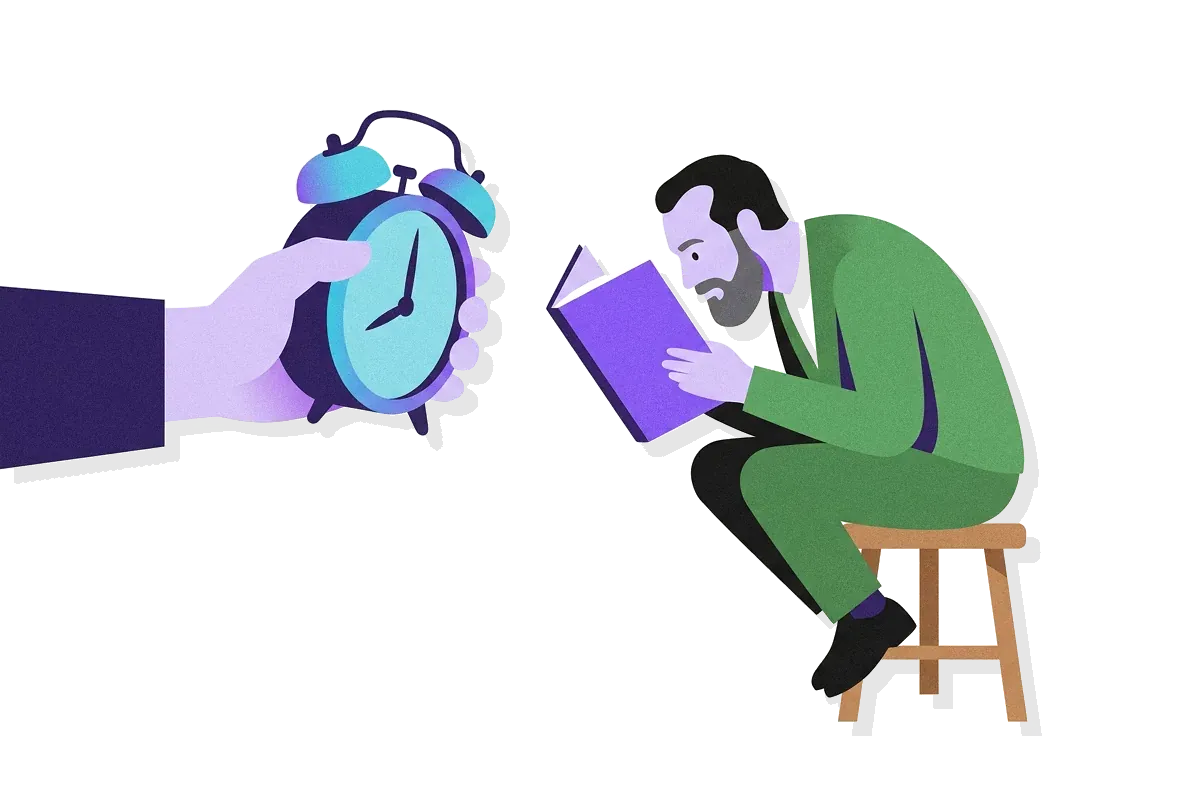
In three experiments published in 2012, Melanie Rudd, Kathleen Vohs and Jennifer Aaker found that people who felt awe, compared with other emotions, felt they had more time available and were less impatient. The same participants were more willing to volunteer their time, preferred experiences over material products, and reported greater life satisfaction. The authors report that these changes were due to awe's effect on how people experience time.
In 2015, Paul Piff and colleagues tested awe across five studies with 2,078 participants in total. In the last study, people who stood in a grove of towering trees helped an experimenter more than people in a control condition. The authors report that feelings of a small self explained the effect on prosocial behaviour in part, not completely.
Both papers measured feelings, judgments and short tasks in a lab or a park. Neither tested an interface, so they say what awe does to a person and nothing about which design choices produce it.
032 min
How awe and wonder show up in real products
Applied: a place that surrounds the wearer
Apple describes Environments in visionOS as a way to replace the wearer’s physical surroundings with a different place, such as Yosemite, Mount Hood or the Moon. Apple's support page describes the same scenes as places you reach from Home View, and says some of them add sound and weather, such as rain in Mount Hood. The scene is large because it fills the wearer's view instead of sitting in a window. Apple's page does not claim the feature produces awe. The link to awe comes from the research on immersion.
In a 2017 experiment with 42 participants, Alice Chirico and colleagues showed immersive 360-degree videos and ordinary 2D videos, with either awe or neutral content. The immersive videos produced a significantly higher self-reported intensity of awe than the 2D videos. Immersion is one route to perceived vastness, and this experiment is the closest to a controlled test of it.
Applied: a story with a vast subject
When Google relaunched Google Earth in April 2017, it added Voyager, a set of guided tours with more than 50 stories at launch. Google's announcement names storytellers and organisations such as BBC Earth as partners. The product pairs a very large subject, the planet, with a guided story. The subject can supply vastness, and a story can supply something the viewer did not know, which is the condition for a need for accommodation.
A simulation of the strongest case
Astronauts who see Earth from space often describe awe. The Greater Good Science Center white paper calls the view of Earth from space the ultimate awe elicitor. In a 2014 study, Gallagher and colleagues built a Virtual Space Lab from the accounts of 51 astronauts, and it reproduced many of the astronauts’ reported effects, including awe and wonder. The simulation did not reproduce everything. Elation and a feeling of unity with the universe were not reproduced.
Violated: size without a gap, and motion without control
A full-screen photograph is large in pixels. If nothing in it asks the visitor to rethink anything, it matches the tall building in Piff's study: large and not awe-inspiring. The scene needs something the visitor cannot immediately file under what they already know.
Effects built on motion can fail in another way. The W3C explains that when scrolling a page makes elements move, other than the essential movement of scrolling, it can trigger vestibular disorders. The same page names parallax scrolling, where backgrounds move at a different rate from foregrounds, as an example of animation that is often not essential. A site that stages its awe moment with scroll-driven motion can make some visitors dizzy or nauseous instead.

042 min
Applying awe and wonder
These moves follow from the two features. They are design inferences from the research, not tested recipes.
Choose the vast thing first.
Decide what is really large about your subject: a planet, a span of centuries, a count of people, the depth of a system. In a 2018 VR study, the mountain and Earth scenes created greater perceived vastness than the forest scene, so scenes of the same kind can differ. Test more than one.
Show it at true relative scale.
Place a familiar object next to it so the visitor can compare. Size the scene to the idea, not to the screen.
Add the gap.
Give the visitor one fact or view their current picture of the topic cannot predict. Without it you have a large picture, not awe.
Leave room.
Awe changes the sense of time, so do not put a banner, a pop-up or a cookie prompt on top of the moment. The research does not test interruptions directly, so treat this as a likely cost.
Keep the controls.
Let people pause, skip or reduce motion, and make the still version complete.
Vastness, then a gap, then room to resolve it, with a control the visitor can use at any point.
The effect backfires when it is applied to a task that needs attention elsewhere. A checkout page or a settings screen has no vast subject, and an effect added there is decoration with a cost in time and motion.
051 min
How to spot awe and wonder going wrong
Each of these can be checked in analytics or in a recording of a real session.
- Visitors skip the intro. A high click rate on a skip or close control means the effect costs more than it gives.
- Scrolling does not slow down at the big moment. In session recordings, visitors move past the hero at normal speed and never pause.
- Motion complaints. Support messages that mention dizziness, nausea or a request to turn off animation point to a problem with the effect.
- The effect is everywhere. If every screen has a large visual and a transition, none of them stands out as vast.
- Visitors ask what the product does. If the spectacle is what people remember, and the product is not, the large scene is competing with the message.
061 min
Awe and wonder vs. nearby concepts
Several concepts describe a positive reaction to a design. They differ in what causes the reaction.
| Concept | What it describes | How it differs from awe |
|---|---|---|
| Surprise | A reaction to something unexpected | It needs no vastness |
| Delight | A pleased reaction to a thoughtful detail | It needs no vast subject and no change in understanding |
| Novelty | The pull of something new | New things are not necessarily large or hard to understand |
| Aesthetic-Usability | Attractive interfaces are judged easier to use | It concerns judgment of usability, not a feeling of vastness |
| Peak-End Rule | People judge an experience by its most intense moment and its end | It is about memory, and any intense moment can be the peak |
The closest neighbour in practice is delight. A designer can aim for delight with a small animation on a button. Awe needs a subject large enough to change what the person thinks, which is a harder and rarer thing to design. An awe moment can serve as the peak that the Peak-End Rule predicts people will remember, but the rule works the same way for a peak of frustration.
071 min
Accessibility and awe
WCAG 2.2 Success Criterion 2.3.3, Animation from Interactions, requires that motion animation triggered by interaction can be disabled, unless the animation is essential. It is a Level AAA criterion, the highest of the three levels, so a site can meet the common AA target without it and still harm some visitors.
The W3C lists three ways to meet the criterion: avoid unnecessary animation, provide a control that turns off non-essential animation, or respect the reduce motion setting in the user's operating system or browser. People with vestibular disorders are the group the criterion protects. Their reactions can include dizziness, nausea and headaches.
Awe does not need motion. A still photograph of Earth from space and a sentence of context can carry vastness and a gap. When a design does use motion, treat the reduced-motion version as the main version and add motion on top.
082 min
Where the evidence on awe is contested
Awe research is young, and the Greater Good Science Center white paper calls awe a complex emotion that can be difficult to define. Four points matter for a designer.
The second feature is hard to separate. In a 2018 virtual reality study, a scene of high snowy mountains produced more awe than a forest scene or a view of Earth from space. In that same study, the scenes did not differ in how much need for accommodation people reported. If need for accommodation did not differ, it did not explain why one scene produced more awe than another in that study. Vastness did.
Culture changes what causes awe. In a 2017 diary study by Bai and colleagues, personal accomplishments caused awe for 8 percent of the U.S. undergraduates’ experiences, but for 0.41 percent of the Chinese undergraduates’ experiences. In both countries, the most common causes were experiences involving another person or nature. The sample was undergraduates in two countries, so the result cannot speak for every audience.
Awe is not always pleasant. In a later diary study by Gordon and colleagues in 2017, roughly 21 percent of the intense awe experiences people described involved threat. A designer who treats awe as a reliable way to make people feel good is ignoring the threatening kind.
The step from lab to product has not been taken. The experiments above measured feelings and short tasks. Nobody in them measured sign-up, retention or any other product outcome. A practitioner can use the research to form a hypothesis, then test it with real users and a control version that has no awe moment. Until that test is run, the effect on a product is unknown.
091 min
Frequently asked questions
Answers to the questions people search for most.
?6 questions
Questions people ask
What is awe and wonder in design?
What is an example of awe in a product?
How is awe different from delight?
Does awe make people kinder?
Can awe feel bad?
How do I use awe without causing motion problems?
§8 sources
Sources
Show all 8 sourcesHide sources
Keltner, D., & Haidt, J. (2003). Approaching awe, a moral, spiritual, and aesthetic emotion. Cognition and Emotion, 17(2), 297-314.
Piff, P. K., Dietze, P., Feinberg, M., Stancato, D. M., & Keltner, D. (2015). Awe, the small self, and prosocial behavior. Journal of Personality and Social Psychology, 108(6), 883-899.
Rudd, M., Vohs, K. D., & Aaker, J. (2012). Awe expands people's perception of time, alters decision making, and enhances well-being. Psychological Science, 23(10), 1130-1136.
Chirico, A., Cipresso, P., Yaden, D. B., Biassoni, F., Riva, G., & Gaggioli, A. (2017). Effectiveness of immersive videos in inducing awe: an experimental study. Scientific Reports, 7, 1218.
Greater Good Science Center, UC Berkeley (2018). The Science of Awe. White paper prepared for the John Templeton Foundation. A summary of the research that also reports Gallagher et al. (2014), Bai et al. (2017), Gordon et al. (2017) and Chirico et al. (2018).
W3C. Understanding Success Criterion 2.3.3: Animation from Interactions, WCAG 2.2.
Apple. Use Environments on Apple Vision Pro, Apple Support.
Google (2017). Welcome home to the new Google Earth.