011 min
Choice Overload at a glance
- What it is: past a threshold, adding options reduces both the odds of choosing and satisfaction with the choice.
- Origin: Iyengar and Lepper's 2000 supermarket jam-tasting experiment first demonstrated the effect.
- Where it bites: pricing pages, settings screens, and menus with too many similar-looking options.
- Guard against it: show a short curated default set and let people expand it themselves.
- Contested: a 2010 meta-analysis of 50 studies found the average effect close to zero once every condition was pooled together.
021 min
Where Choice Overload shows up
A product manager is reviewing a subscription pricing page before launch. The original design had two tiers, Basic and Pro. To capture more revenue, the team adds a third tier, then a fourth, then optional add-ons for each. By the time the page ships, a visitor can configure eighteen different combinations of plan and add-on.
Conversion drops after launch. Support tickets asking "which plan is right for me" go up. The team assumes the pricing itself is wrong and starts testing discounts. The actual problem sits upstream of price: the visitor has to compare eighteen near-equal options with no obvious winner, and a large share of them leave without choosing any of them.
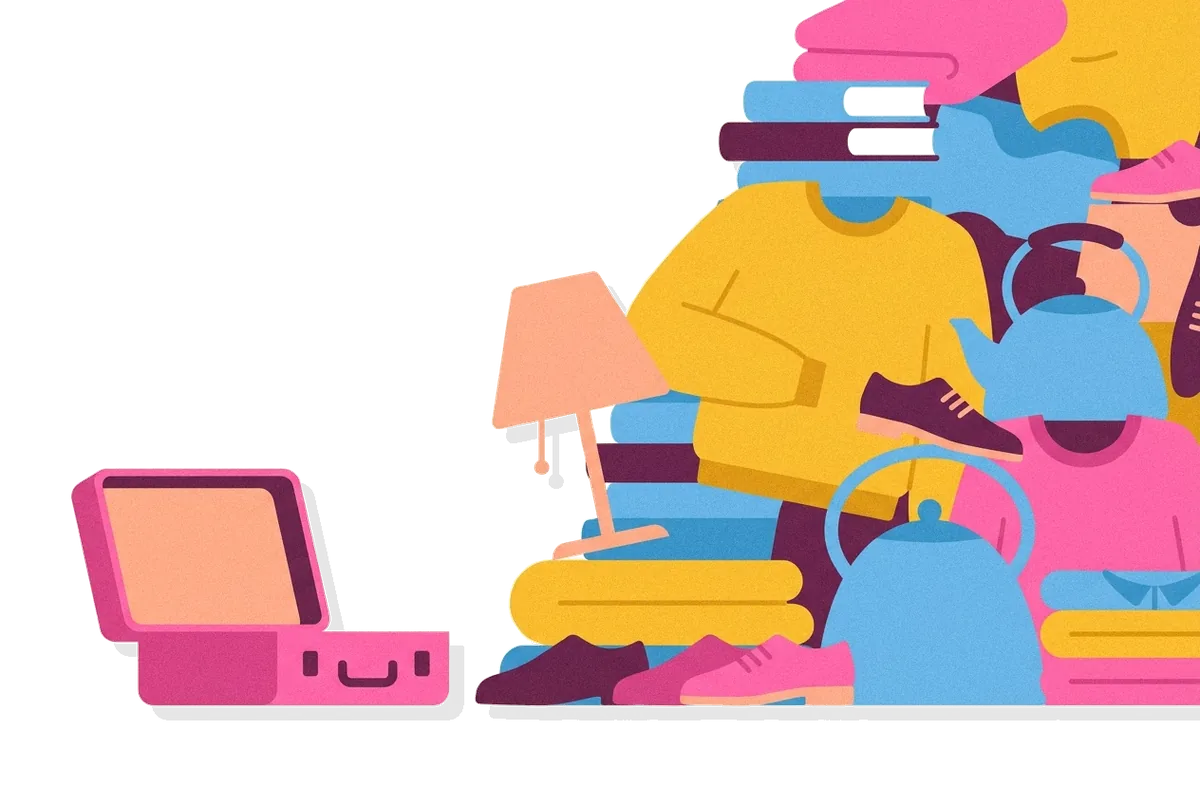
The same pattern shows up outside pricing pages. A streaming catalog with thousands of titles and a search box that returns hundreds of near-identical results. A settings screen with forty toggles instead of three sensible defaults. A restaurant menu with twelve appetizers where three would do the same job. In each case, the number of options crossed a point where comparing them cost more effort than the decision was worth, and people responded by deciding not to decide, or by deciding worse.
032 min
Why Choice Overload happens
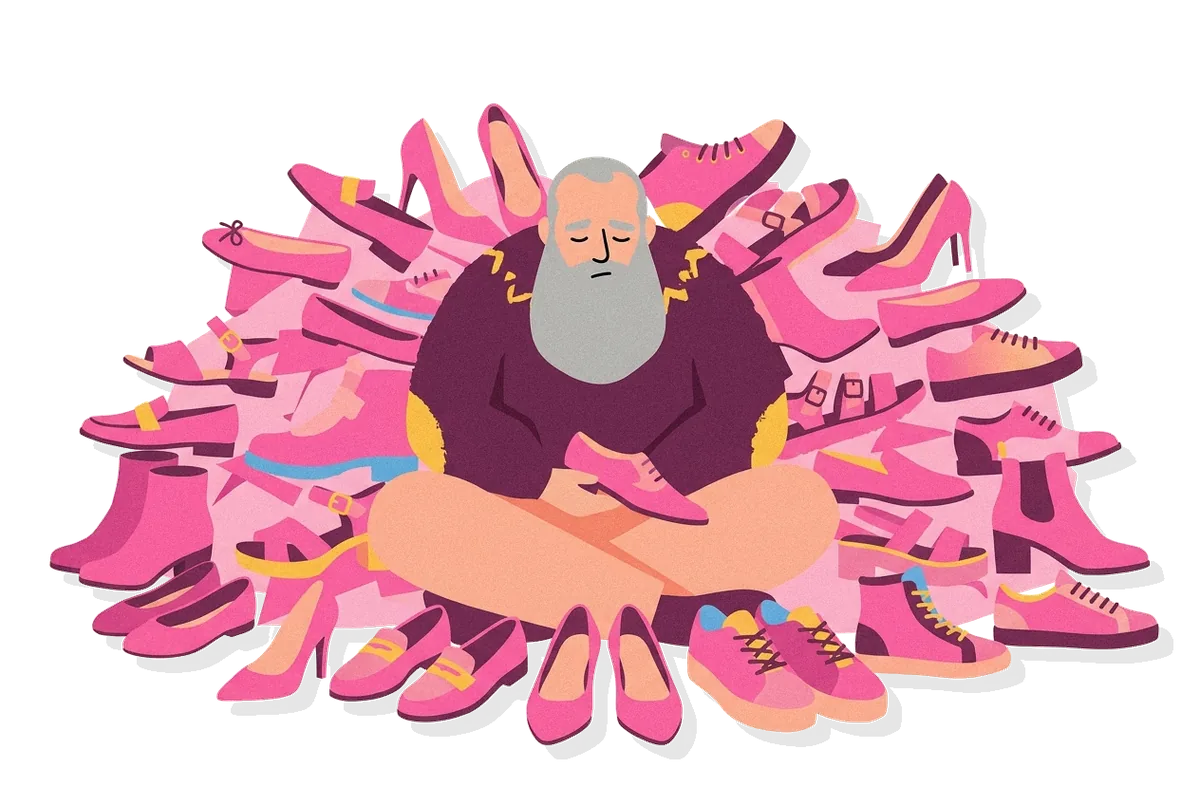
Choice overload happens because evaluating options is mental work, and that work grows faster than the number of options does. Comparing two alternatives means weighing them against each other on whatever attributes matter — price, features, flavor. Comparing ten alternatives means checking each new option against every option already on the table, so the number of comparisons rises much faster than the number of choices. The mental workspace that holds a comparison in progress, which psychologists call working memory, holds only a handful of items at once. Past that point, people stop weighing every option carefully and switch to a shortcut: taking the first acceptable option, taking the default, or walking away.
Researchers describe that shortcut as satisficing — stopping at the first option that is good enough, instead of searching for the best one. Iyengar and Lepper's own chocolate experiment found a second mechanism alongside it: anticipated regret. People choosing from a large assortment could not be sure a better chocolate had not been left on the table, and that residual doubt made them enjoy their pick less even though they had, on average, more good options to choose from — a close relative of the way Loss Aversion makes a possible loss feel bigger than an equivalent gain.
Both shortcuts exist for a reason outside the lab. Comparing fewer options and settling faster is a reasonable strategy whenever the cost of deciding slowly is real. The size of the effect in any one situation varies a great deal, and the evidence section below explains why: it depends on how similar the options are to each other, how expert the chooser already is, and whether they came in wanting to browse or wanting to buy.
041 min
Where Choice Overload comes from
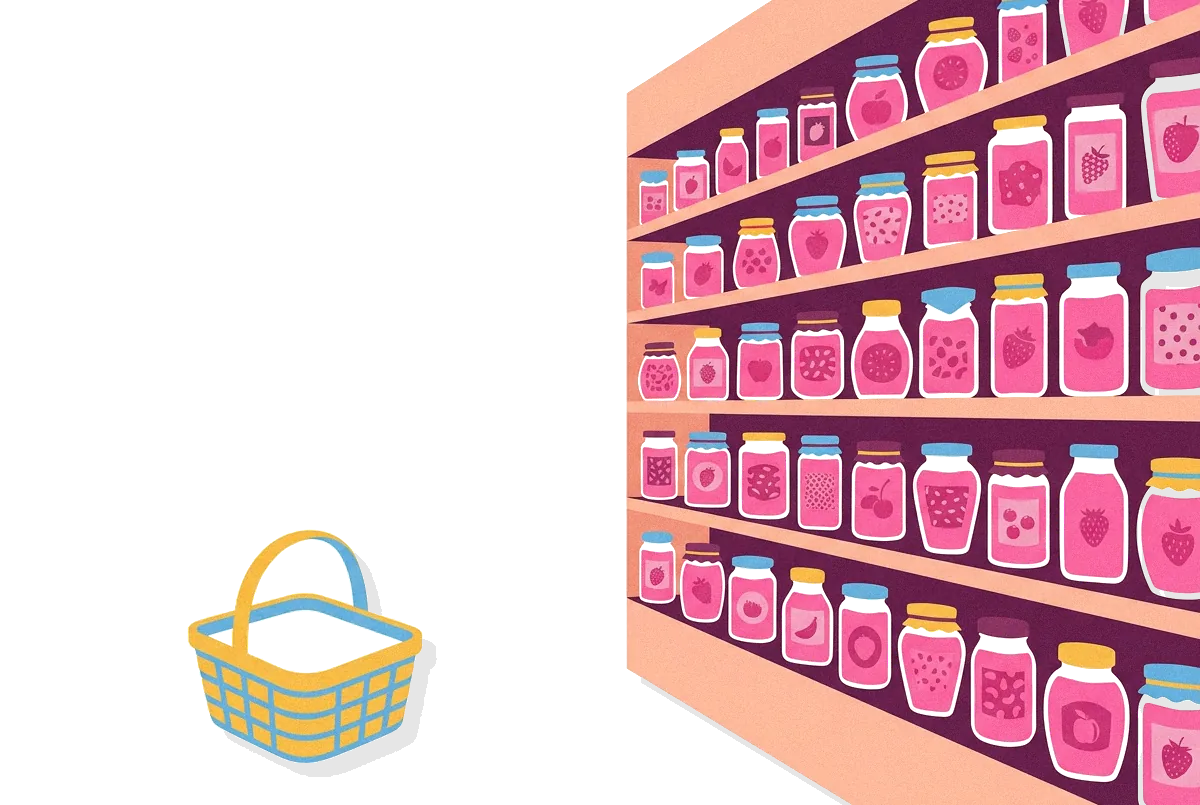
Sheena Iyengar and Mark Lepper set up a tasting booth at Draeger's, an upscale grocery store in Menlo Park, California, and alternated it every hour between a display of 24 jam flavors and a display of 6. More shoppers stopped to taste when 24 jams were on the table, but far fewer of them went on to buy: consumers who first encountered the 6-jam display were considerably more likely to purchase a jar afterward than consumers who first encountered the 24-jam display. Iyengar and Lepper published this finding, along with two further experiments on essay topics and chocolate assortments that found the same pattern, in 2000.
052 min
Two more results from the same paper
The jam table was one of three experiments Iyengar and Lepper ran to check the same idea in different settings. In the second, students in an introductory psychology course could sign up for extra-credit essays, choosing a topic from a list of either 6 or 30 options; more students chose to write when the list was short, and the essays they turned in were rated as better written. In the third, participants tasted Godiva chocolates from a display of either 6 or 30, then rated how satisfied they were with the one they picked. People who chose from the small display reported less regret afterward, and were more willing to take a box of the chocolate itself, rather than cash, as payment for taking part; people who chose from the large display asked for the cash instead more often.
A product team can run into the same problem without ever running an experiment. Picture a design team building a notification-settings page. The first draft lists every notification type the product can send, each with its own on/off switch — nineteen switches in total. In user testing, most people leave the defaults untouched not because the defaults are right for them, but because working out which of nineteen switches to change is not worth the effort. A second draft groups the same nineteen settings into three presets — "All", "Important only", "None" — with an "Advanced" link for the minority who want the full list. Nobody's options have been removed, but almost everyone can now make a decision in seconds.
062 min
How Choice Overload shows up in product and design
Two decisions this shows up in directly. A PM setting the number of pricing tiers is choosing a point on the same curve Iyengar and Lepper found in a grocery aisle: too few tiers and some buyers do not see a fit; too many and comparison itself becomes the barrier to purchase. A designer laying out a category page is making the same trade-off between showing everything in stock and showing a curated, comparable set.
Some products lean on the effect deliberately. A checkout flow that offers exactly three shipping speeds, rather than a slider with fifteen delivery-date options, is choice architecture: reducing the option set on purpose to raise the odds that a visitor completes the purchase at all, discussed further in Choice Architecture. A subscription page that hides eleven legacy plans and shows three current ones for new signups is doing the same thing for a different reason — most of the eleven plans exist for billing continuity, not because a new customer needs to choose among them.
Other products suffer the effect by accident. A settings menu that has grown one toggle at a time, added by a different team for a different reason each sprint, ends up as an unintentional 40-option choice screen that nobody designed on purpose and nobody wants to prune.
The pattern shows up outside software too, which is why product teams borrow the fix rather than invent it fresh. Procter & Gamble reduced the number of versions of its Head & Shoulders shampoo from 26 to 15 and, in turn, saw a 10% increase in sales — fewer variants on the shelf made the remaining ones easier to tell apart and choose between.
071 min
Where the evidence is contested
The size of the choice overload effect is genuinely disputed, not just its existence. In 2010, Benjamin Scheibehenne, Rainer Greifeneder, and Peter Todd combined 63 experimental comparisons from 50 studies, covering 5,036 participants, and found a mean effect size close to zero, with large variation between individual studies — some found strong overload, others found the opposite, that more options helped.
Their analysis pointed to a handful of conditions that make overload more likely without settling on any single one as necessary: options that are hard to compare because they differ on many unrelated features, a chooser with no clear prior preference, and time pressure or an obligation to justify the choice afterward. A shopper who already knows they want "the cheapest waterproof jacket in stock" is not overloaded by a wall of fifty jackets in the way a shopper with no criteria yet would be.
The practical conclusion is not that Iyengar and Lepper's finding was wrong. Their own jam and chocolate results still replicate under the conditions that produce the effect — unfamiliar options, no strong prior preference, options that are hard to rank against each other. The conclusion is that "more options always hurt" and "more options never hurt" are both overstatements, and a designer should check which conditions actually apply before assuming either one.
081 min
How to guard against Choice Overload
Cut the option set the chooser actually has to compare, not the total inventory. A default of three curated options with an "see all" link preserves every option for the minority who want it while giving everyone else a short list to decide from.
Group similar options before showing them, rather than listing all of them flat. A grouped view — three categories of five items each, rather than fifteen items in one list — cuts the number of things being directly compared even though nothing was removed.
Give the chooser a way to state what they already want, then filter to match it. A shopper who can say "waterproof, under $100" before seeing any jackets is comparing four or five relevant options, not fifty irrelevant ones.
None of this works if the chooser has no way to tell the options apart. Reducing forty near-identical items to fifteen near-identical items still leaves them stuck; the fix is a clearer difference between the options that remain, not just fewer of them.
Sequence the choice instead of presenting it all at once, where the product allows it. Asking three simple questions before showing any options — budget, use case, one deal-breaker feature — narrows fifty products to five before the chooser ever has to compare anything directly, which does more than any amount of visual reorganizing of the full fifty.
091 min
Choice Overload vs. nearby concepts
Choice overload is often used as a synonym for Paradox of Choice, but they are not quite the same claim. Paradox of choice is Barry Schwartz's broader argument that a society with more options overall produces less happiness and more regret. Choice overload is the narrower, testable claim behind it: that within a single decision, adding options past a threshold measurably reduces the odds of choosing and the satisfaction with the choice made. A reader can accept the narrow claim, which has decades of mixed but real evidence behind it, while doubting the broader social argument.
It is also distinct from Choice Architecture, which is not an effect but a design practice: deliberately structuring how options are presented — through defaults, groupings, or ordering — to change what people choose. Choice overload names a problem; choice architecture names one family of fixes for it, alongside others such as filtering and staged disclosure.
101 min
How the evidence on Choice Overload changed since
Iyengar and Lepper's 2000 result was read for a decade as a general law: more options, worse decisions. Scheibehenne's 2010 meta-analysis, described above, complicated that reading by finding almost no effect once every study was pooled together, regardless of how different those studies were from each other.
In 2015, Alexander Chernev, Ulf Böckenholt, and Joseph Goodman went back to the same body of studies with a different question: not whether choice overload is real on average, but which conditions turn it on. Their reanalysis proposed a model built around four factors that decide when a bigger option set backfires: how complex the option set is to compare, how hard the decision task itself is, how clearly the chooser already knows what they want, and whether their goal is to choose well or simply to get the choice over with. Once those four factors were accounted for, the pooled effect of assortment size on choice overload was no longer indistinguishable from zero.
The practical upshot moved in twenty years from "more choice is bad" to "more choice is bad under specific, identifiable conditions" — a narrower claim, but a far more useful one for anyone deciding how many options to show.
?6 questions
Questions people ask
What causes choice overload?
What is an example of choice overload in product design?
How do you avoid choice overload?
What is the difference between choice overload and the paradox of choice?
Is choice overload real, or does it not hold up?
Does having more options ever help?
§4 sources
Sources
Iyengar, S. S., & Lepper, M. R. (2000). When choice is demotivating: Can one desire too much of a good thing? Journal of Personality and Social Psychology, 79(6), 995-1006. (2000).pdf
Iyengar, S. S., & Lepper, M. R. (2000). Same paper, PubMed record.
Scheibehenne, B., Greifeneder, R., & Todd, P. M. (2010). Can there ever be too many options? A meta-analytic review of choice overload. Journal of Consumer Research, 37(3), 409-425.
Chernev, A., Bockenholt, U., & Goodman, J. (2015). Choice overload: A conceptual review and meta-analysis. Journal of Consumer Psychology, 25(2), 333-358.