012 min
Where choice closure shows up
Picture a product manager at a hotel booking app. A traveler picks one hotel out of forty in a city after an hour of scrolling and filtering, and books it. The confirmation screen shows the booking, and below it a list of the other hotels the traveler looked at.
Two days later the traveler opens the app again. They do not want to change the booking. They want to check whether one of the hotels they skipped had a nearer train station or a better breakfast. The product manager counts these visits as engagement. The support team reads the same visits as travelers asking themselves whether they chose well.
This habit of going back over a choice is the problem that choice closure addresses. After a hard choice, many people keep the decision open in their mind and compare the option they took with the ones they gave up. Those comparisons tend to find something the chosen option lacks, so the person feels less satisfied with a choice that may be a good one. Choice closure is the state in which the person treats the choice as settled and the comparing stops.
The state is easiest to see after a hard choice from a large set, such as the forty hotels. It is related to choice overload, the difficulty of picking from many options. Choice overload is about the moment of choosing. Choice closure is about what the person does with the choice afterwards.
021 min
Where choice closure comes from
Yangjie Gu, Simona Botti and David Faro, researchers at London Business School, introduced the term in a 2013 paper in the Journal of Consumer Research. They defined choice closure as the process through which a person comes to treat a decision as final.
Their starting point was an ordinary habit. After a purchase, people often go back to the options they passed up, and that habit can lower satisfaction, mostly when the choice was hard. The researchers asked whether a small act that signals an ending could stop it.
Their best-known experiment used a tray of chocolates. In one experiment, people chose one of 24 chocolates from a tray with a lid, and some of them put the lid back on before eating their pick. The people who put the lid back on liked the chocolate they ate more than those who did not.
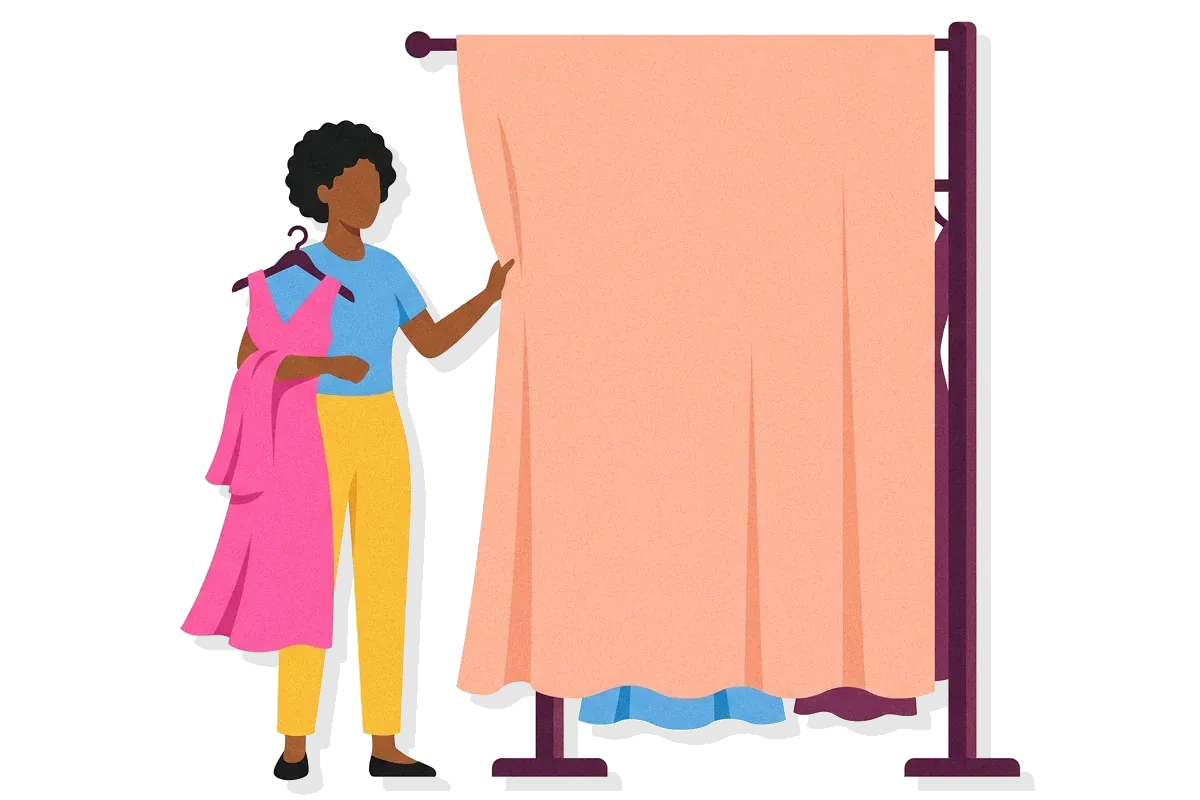
The closing acts in the studies included covering the rejected options, turning a page on them and turning one's back on them. None of these changed the options. Each one only marked the choice as finished.
032 min
Why choice closure raises satisfaction
A hard choice from a large set leaves the person aware of good options they gave up. That is the first step in a chain with three steps. In the second step, the person goes back over the decision and compares their pick with those options. In the third step, the comparison often favors something they rejected, so satisfaction falls. A closing act breaks the chain at the second step.
Across the four studies, acts of closure made people less likely to go back over a decision and to compare their pick unfavorably with what they gave up, and they ended up more satisfied after choosing from large sets. Nothing about the options had changed. The researchers conclude that cues which leave the options as they were can still raise satisfaction with a difficult decision.
Why a physical act works
The acts the researchers chose are ones people already link with finishing something, such as closing a book or covering a dish. The body does the closing, and the mind appears to take it as the decision being closed. This is a description of what the experiments found, not a claim about the brain: the studies measured what people said about their choice, not what happened inside their heads. Later work by the same group found that visual cues can also give a sense of finality, so the act does not need to involve the hands.
How it differs from justifying a choice
A related process is described by cognitive dissonance theory. After choosing, people often argue themselves into liking the choice, to ease the discomfort of the options they lost. That takes thought and time. A closing act asks for neither. It is a cue that ends the comparing before the long argument with oneself begins.
041 min
Choice closure and choices that can be changed
The traveler in the hotel app can cancel the booking, and that fact matters. Psychologists Daniel Gilbert and Jane Ebert studied what the option to change a choice does to satisfaction. In one of their studies at Harvard, participants took photographs and printed them in a darkroom. Participants picked one of two prints to keep, and some were told they could swap it for the other print after a few days while the rest were told the choice was final.
Gilbert and Ebert found that people prefer to keep the option of changing a choice, yet having that option keeps them from making themselves satisfied with it. With a final choice, the person has no reason to keep checking the print they gave up, so they settle on the one they have.
Irreversibility and choice closure push in the same direction, because both remove the reason to keep comparing. They are not the same thing. A closing act, such as confirming a booking, can be added without taking away the right to cancel. Whether that combination works as well as a final choice has not been tested in the studies described here.
051 min
Why large sets make choice closure matter more
The 2013 studies used large sets, and a separate line of research suggests why. Sagi and Friedland predicted that regret after an unsatisfying choice grows with the number of alternatives and with how different they are from each other, and four experiments supported both predictions.
The hotel case fits. Forty hotels spread across neighborhoods and prices give the traveler many different things to wish for later. A short list of three similar rooms gives them little to wish for. This suggests why a closing act has the most to do after large, varied sets, and why the studies looked there first.
062 min
How choice closure is used in product design
Back to the product manager. The app can add a closing moment after the booking. Three design points follow from the research above.
- Let the person perform the closing act. In the tray study the participants put the lid back themselves. A confirmation the traveler taps is closer to that than a message that appears on its own.
- Keep the rejected options off the next screen. A list of similar stays directly under the confirmation invites the comparison that the closing act is meant to stop.
- Keep the right to cancel. The cancellation option protects the traveler from a real loss. Gilbert and Ebert's result says it may also lower satisfaction, so the cost is worth knowing, but it is not a reason to remove it.
A 2017 conference paper by Gabe Lee and Andrew Chen proposed a "closure interface" for online shops and described two planned experiments. It reports no results, so it is a design idea and not evidence. In a physical shop, the same idea can be as plain as a cover over the display of items the customer did not take.
Closure should not be forced. A countdown timer that claims a deal is ending, or a layout that hides product details so the buyer decides faster, ends the comparing by pressure. The buyer may feel finished at first and learn later that they were hurried. A buyer who is precommitted from the start is in a different position, because they chose the commitment themselves.
071 min
When choice closure works against the person
Closure is not always good for the person. In 2018 the same three authors published a follow-up, and its results changed how the idea is used. A 2018 follow-up of seven studies found that people were more satisfied with a poor outcome after closure and with a good outcome without it, yet they expected the reverse.
The logic follows from the mechanism. When a pick turns out poor, comparing it with the rejected options hurts, so stopping the comparison helps. When a pick turns out well, the comparison is pleasant, so stopping it removes a source of satisfaction.
People expected the opposite pattern. The authors explain this contrast as an overgeneralized rule: people learned it for improving satisfaction with a future choice, and they apply it wrongly to a choice already made. The authors conclude that people are unlikely to be able to use choice closure on purpose to raise satisfaction with a decision they have made.
For the traveler, the room is unknown at booking. Closure at that moment protects against disappointment, and it costs a little pleasure if the room turns out better than expected. The studies do not measure this trade-off for hotels.
082 min
What the evidence on choice closure covers
The idea rests on a small set of studies, and the wider literature it draws on is in dispute.
Short tasks in a lab
In the 2013 studies, people chose from large selections of chocolates, teas and biscuits and then either did or did not perform a closing act. Choosing a snack to taste at once is far from booking a hotel or signing a contract. Nothing in the studies cited here tests closing acts in a real purchase, so the size of the effect outside the lab is unknown.
An older field result: the jam stall
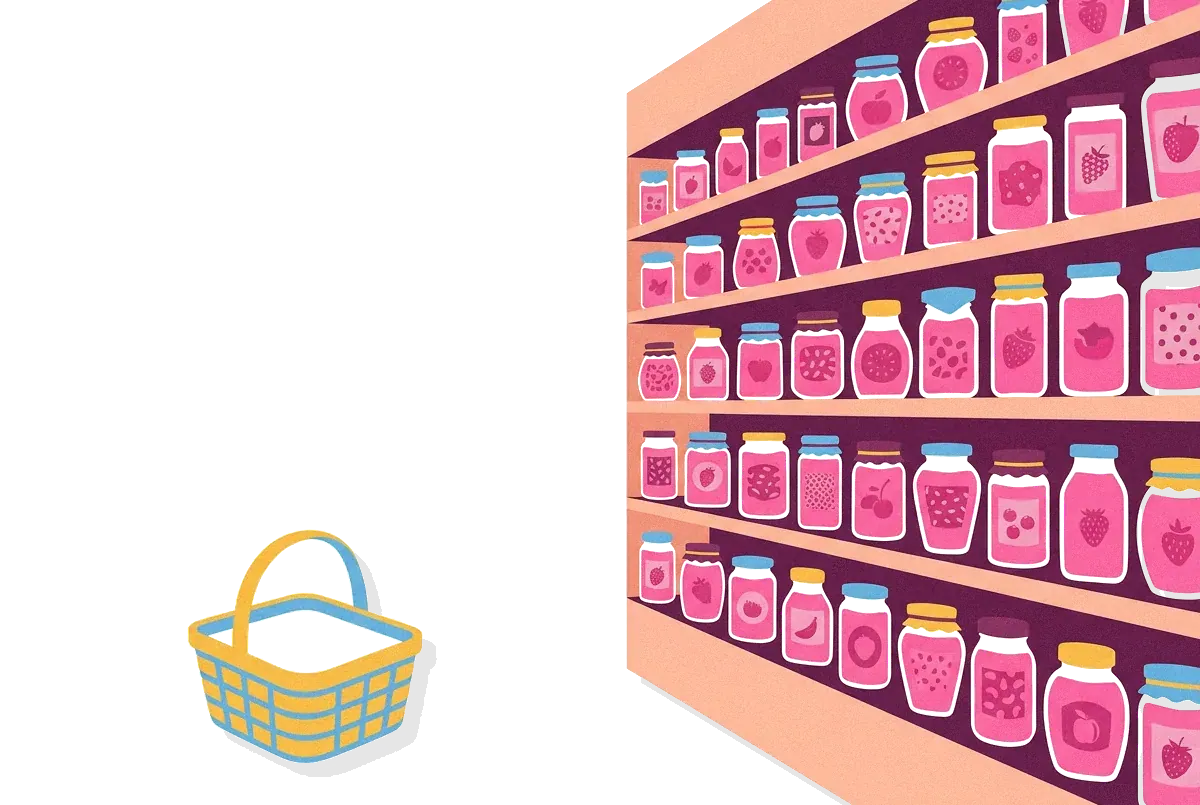
The belief that large sets cost people something has an older field study behind it. Iyengar and Lepper found that shoppers bought gourmet jam more often when offered 6 flavors than when offered 24. This result made the paradox of choice widely known, and it set up the 2013 question: if too many options hurt, what helps afterwards?
Does choice overload hold up?
Not every researcher found the effect. A 2010 meta-analysis of 50 experiments by Scheibehenne, Greifeneder and Todd found an average effect of choice overload close to zero, with large differences between studies. A 2015 meta-analysis of 99 earlier observations by Chernev, Böckenholt and Goodman found four factors that decide whether a large assortment overloads people: how complex the set is, how hard the task is, how unsure the person is of their taste, and what the person is trying to achieve. The disagreement is still open. For choice closure it means that a closing act is most likely to matter in the conditions where reconsidering is likely, which are hard tasks with many different options. After an easy choice from a short list, there is little reason to expect it to matter.
091 min
Choice closure vs. nearby concepts
Several terms sit close to choice closure. The table gives the one axis that separates each.
| Concept | What it describes | How it differs from choice closure |
|---|---|---|
| PsychologyChoice overload | ||
| PsychologyRegret aversion | ||
| Not in the library yetNeed for cognitive closure | ||
| PsychologyCognitive dissonance | ||
| Not in the library yetClosure in perception |
?4 questions
Questions people ask
How is choice closure different from being decisive?
Does choice closure change which option people pick?
Is choice closure a cognitive bias?
Can a person create choice closure for themselves?
§11 sources
Sources
Show all 11 sourcesHide sources
Gu, Y., Botti, S., & Faro, D. (2013). Turning the page: The impact of choice closure on satisfaction. Journal of Consumer Research, 40(2), 268-283.
A summary of the 2013 studies, with the chocolate tray experiment, from the journal press release:
Gu, Y., Botti, S., & Faro, D. (2018). Seeking and avoiding choice closure to enhance outcome satisfaction. Journal of Consumer Research, 45(4), 792-809. Abstract record at London Business School:
Seminar abstract for the 2018 work, Bocconi University Department of Marketing:
Seminar abstract for the 2013 work, Wharton Decision Processes Colloquium, 2011:
Gilbert, D. T., & Ebert, J. E. J. (2002). Decisions and revisions: The affective forecasting of changeable outcomes. Journal of Personality and Social Psychology, 82(4), 503-514.
Sagi, A., & Friedland, N. (2007). The cost of richness: The effect of the size and diversity of decision sets on post-decision regret. Journal of Personality and Social Psychology, 93(4), 515-524.
Iyengar, S. S., & Lepper, M. R. (2000). When choice is demotivating: Can one desire too much of a good thing? Journal of Personality and Social Psychology, 79(6), 995-1006. (2000).pdf
Scheibehenne, B., Greifeneder, R., & Todd, P. M. (2010). Can there ever be too many options? A meta-analytic review of choice overload. Journal of Consumer Research, 37(3), 409-425.
Chernev, A., Böckenholt, U., & Goodman, J. K. (2015). Choice overload: A conceptual review and meta-analysis. Journal of Consumer Psychology, 25(2), 333-358.
Lee, G., & Chen, A. (2017). Designing interfaces to induce choice closure: Why and how. ICIS 2017 presentation abstract: