011 min
Where affordance comes from
James J. Gibson was a perceptual psychologist who studied how animals see. In his 1979 book The Ecological Approach to Visual Perception, he needed a word for what the world offers an animal. No existing word described both the world and the animal at once. Gibson coined the word to name a relationship: "I mean by it something that refers to both the environment and the animal in a way that no existing term does." The word comes from the verb afford.
Gibson gave a plain example. Gibson's own example is the ground: a surface that is nearly horizontal, nearly flat, extended and rigid "affords support" to a heavy animal, while water "is not sink-into-able" for one. The same surface is not a floor for a water bug, which is light enough to walk on water. The affordance depends on the pair: the surface and the body that meets it.
The second idea in Gibson's chapter matters more for design. Gibson wrote that the affordance of something "does not change as the need of the observer changes." The observer may not notice it. In the book's words, the affordance is "always there to be perceived." An affordance is a fact about what is possible. It is not a feeling about what looks possible.
021 min
How affordance changed meaning in design
Donald Norman brought the term into design with his 1988 book The Psychology of Everyday Things. He used it in a narrower way than Gibson. Norman wrote about this change later. In 2008 Norman wrote: "When I introduced the term into design in 1988 I was referring to perceivable affordances." For Gibson, an affordance existed whether or not anyone could see it. For Norman, the interesting cases were the ones a user can see.
That gap produced years of confusion. A designer who says "this button has good affordance" usually means that it looks tappable. That is Norman's sense. A designer who says "this screen affords tapping" in Gibson's sense means only that tapping would work. The first claim is about perception. The second is about what the product physically or digitally allows.
An affordance says what is possible. A signifier says where and how.
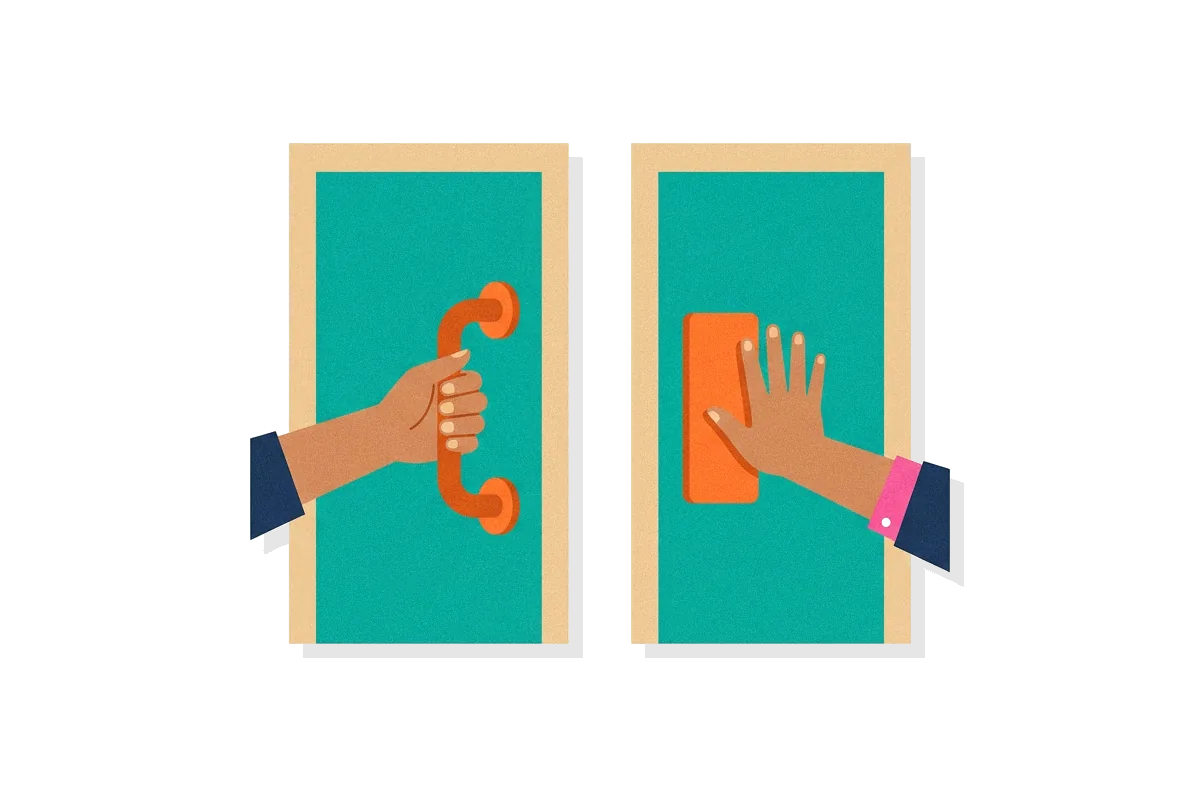
Norman later separated the two jobs with a second word. Norman defines a signifier as "some sort of indicator, some signal in the physical or social world that can be interpreted meaningfully." A handle on a door is a signifier. A painted line on a road is another. Gibson's affordance is the possibility itself, such as a door that can be pulled. The signifier is the visible cue that tells a person it can be.
031 min
A real case: the platform with no train
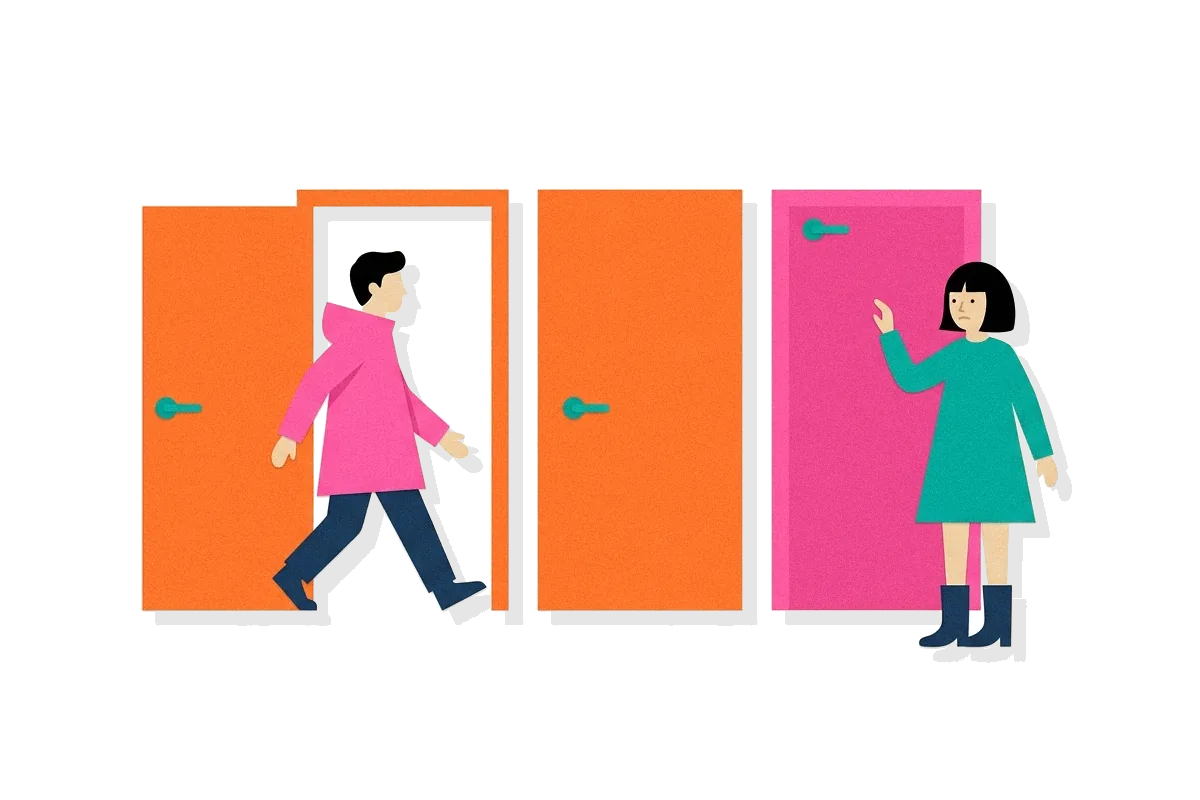
Norman gives a case where the signifier is an accident. A person runs onto a railway platform and finds no train. They cannot tell whether the train left or has not yet arrived. The platform itself gives the answer. People standing and waiting mean the train has not come. An empty platform means it has gone.
The train can be boarded in both situations, so the affordance does not change. What changes is the evidence. Norman says such cues are "often useful, but of mixed reliability." A busy city station with many trains per platform gives a worse signal than a small town station with one train a day. A designer can learn from this: a cue that is not designed on purpose can still carry the message, and a cue that is designed on purpose can fail to carry it.
041 min
How affordance shows up in product work
Here is an illustrative case. A designer on a mobile app removes the borders and shadows from all buttons to follow a flat visual style. Every button still works. The affordance has not changed. A user testing the screen, however, does not tap the text labels that are buttons, because nothing marks them as tappable. The affordance is intact and the signifier is gone.
The case shows why the two words should be kept apart in a design review. A reviewer who says "this has no affordance" is ambiguous. They may mean that the action is impossible, or that nobody can tell it is possible. The first needs an engineering change. The second needs a visible cue.
A second illustrative case runs the other way. A designer adds a drag handle to a list whose items cannot be reordered. The signifier is present and the affordance is missing. The user will try an action that cannot work.
The same reasoning applies to people with different abilities. Because Gibson defined an affordance as a relationship between a thing and a particular body, one control can afford pressing to a person with a steady hand and afford nothing to a person with a tremor. This is why the question is never only whether a control looks usable, but who it is usable by.
051 min
How to apply affordance when you design
Use the two words as two separate checks.
- List what the user can actually do on the screen or with the object. This is the set of affordances.
- For each action that matters, find the cue that shows it is available. If you cannot point to one, the signifier is missing.
- For each cue, ask whether it promises an action that does not exist. If so, remove the cue or build the action.
- Test with people who were not on the project. Ask them what they think they can do before they try anything.
The fourth step matters because the designer already knows what every control does. The designer cannot see what the screen looks like to someone who does not.
061 min
Affordance versus signifier, mapping and affordance blindness
| Concept | What it is | Question it answers |
|---|---|---|
| Not in the library yetAffordance | ||
| DesignSignifiers | ||
| DesignMapping | ||
| PsychologyAffordance blindness |
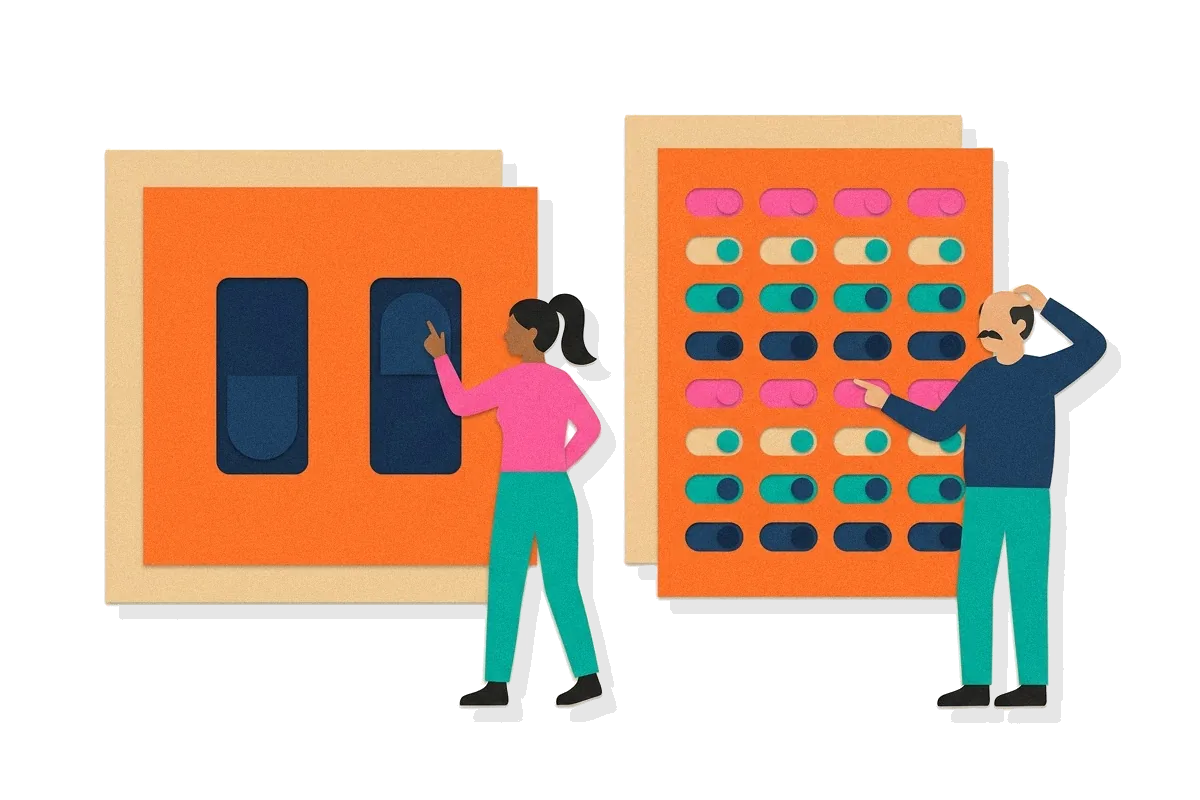
The nearest neighbour is the signifier. An affordance can exist with no signifier, which is a common cause of affordance blindness. A signifier can also exist with no affordance, which promises an action that fails. Mapping is a different question. It covers whether a set of controls lines up with the things they control, such as a row of stove knobs and the burners behind them.
071 min
When affordance is the wrong word to use
The term has a known weakness. It is used for at least two different things, and teams rarely say which. Norman reached the same view about his own work. Norman's own advice is blunt: "Forget affordances: what people need, and what design must provide, are signifiers."
The signal that you are using the word badly is a sentence that could mean either of the two ideas. "The icon needs a stronger affordance" is such a sentence. Say "the icon needs a clearer signifier" if the action exists and users cannot see it. Say "the icon needs an action behind it" if it does not.
A second weakness is that affordance cannot be measured from the object alone. Because it is a relationship, the same control can have different affordances for different users. A claim about an affordance without a named user and a named situation is incomplete.
081 min
Frequently asked questions
What is an affordance in simple terms?
An affordance is an action that a thing allows for a particular person or animal. A chair affords sitting to an adult. It does not afford sitting to a person who cannot bend their knees.
Who invented the term affordance?
The psychologist James J. Gibson invented it. He used it in his 1979 book The Ecological Approach to Visual Perception. Donald Norman brought it into design in 1988.
What is the difference between an affordance and a signifier?
An affordance is a possible action. A signifier is a visible cue that tells a person where and how to do it. A door that can be pulled has the affordance. A handle on it is the signifier.
Does an affordance have to be visible?
In Gibson's sense, no. An affordance exists whether or not anyone notices it. In Norman's design use of the word, it refers to the ones a person can perceive.
Why did Norman stop using the word?
He found that designers used it for two different things and that what they needed was a visible cue. He now recommends the word signifier for that cue.
?3 questions
Questions people ask
What is an affordance in simple terms?
What is the difference between an affordance and a signifier?
Who invented the term affordance?
§2 sources
Sources
James J. Gibson, The Ecological Approach to Visual Perception, chapter 8, "The Theory of Affordances" (1979). cs.brown.edu
Donald A. Norman, "Signifiers, not affordances", ACM Interactions 15(6), 2008. jnd.org