011 min
The problem signifiers address
A person who meets a new door, a new app screen or a new form field has to decide what to do with it. They have no manual. They look for clues.
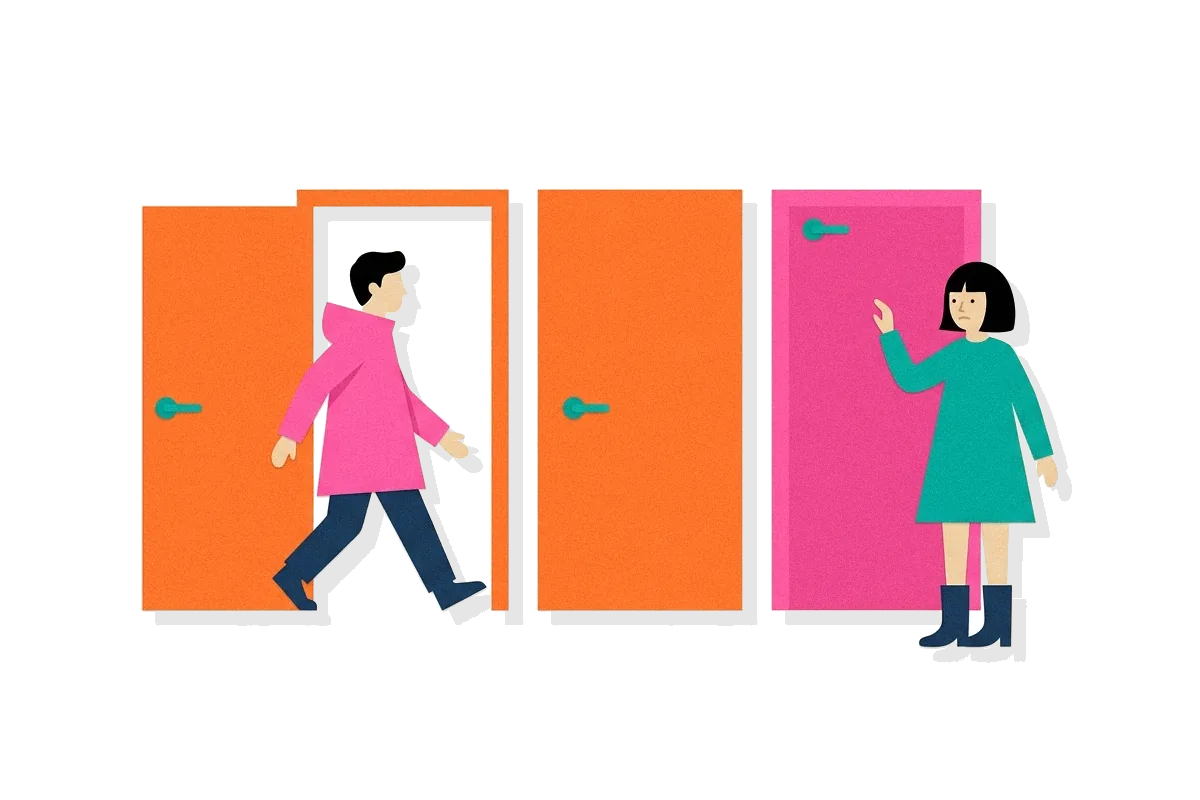
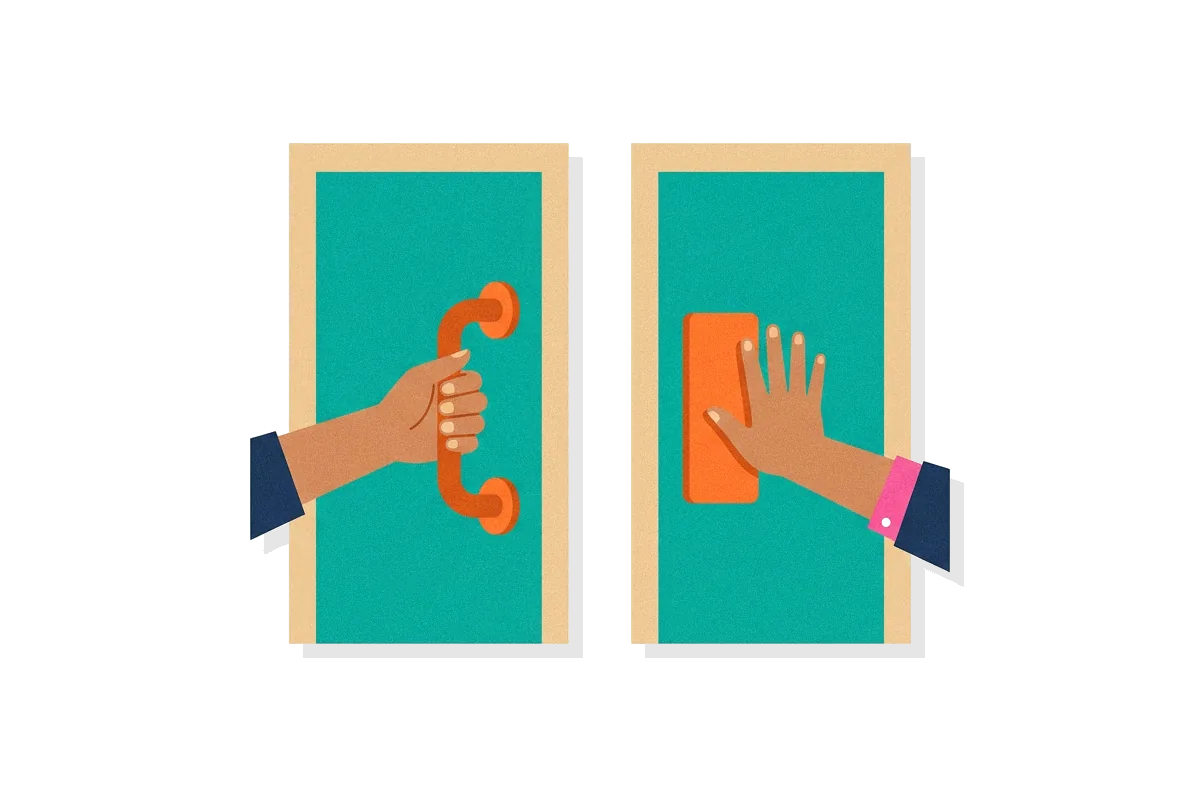
If the clues are missing or wrong, people guess. A door with an identical handle on both sides gives no clue about whether to push or pull. A text label on a page that looks like a button but does nothing wastes a click. The designer made an action possible and did not make it visible.
The concept of signifiers separates two questions that designers often mix together. One is what the object lets a person do. The other is how the person finds out. A design can fail on the second question even when the first is answered perfectly.
021 min
Where the term signifier comes from
The word that came first is affordance. The perceptual psychologist J. J. Gibson invented it to describe the actions an environment offers an animal. In Don Norman's summary of Gibson's view, "to Gibson, affordances did not have to be perceivable or even knowable — they simply existed."
Norman brought the term into design in 1988 in the book now titled The Design of Everyday Things. He writes that he "was referring to perceivable affordances," and that since then the term "has been widely used and misused." Designers came to use "affordance" to mean any visual hint that something could be clicked. On screens, a designer cannot change what the computer can do. The designer can only change what the person can see.
Norman proposed a clearer word in a 2008 column in the magazine Interactions, titled "Signifiers, not affordances." In the column he defines a signifier as some sort of indicator, some signal in the physical or social world that can be interpreted meaningfully. He added the concept to the revised and expanded edition of The Design of Everyday Things in 2013.
In that edition's wording, as quoted on Wikipedia: "Affordances determine what actions are possible. Signifiers communicate where the action should take place. We need both."
031 min
How signifiers work
A signifier works by being perceived and interpreted. The person sees, hears or feels something, and links it to a past experience or to a convention they already know.
Norman's 2008 definition is deliberately broad: "I call any physically perceivable cue a signifier, whether it is incidental or deliberate." That sentence covers three kinds.
| Kind | Who made it | Example |
|---|---|---|
| Deliberate | A designer placed it to guide | A flat plate on a door, a button that looks raised |
| Incidental | Nobody placed it to guide, but it informs | People standing on a train platform |
| Social | Created or interpreted by people or society, signalling social activity or appropriate behaviour | A trail worn across a field |
The perceivable part of an affordance is a signifier. If a designer places it on purpose, Norman calls it a social signifier too.
Two features matter for design. First, signifiers can signal by their absence: an empty train platform tells you the train has gone. Second, signifiers vary in reliability. Norman says it is "the nature of signifiers: often useful, but of mixed reliability." A signifier is evidence, not a guarantee.
042 min
Named cases of signifiers
The door. In the revised edition of his book, Norman uses doors to separate the two ideas. According to the Wikipedia summary, a door affords pushing or pulling, and the plate or button signals that it is meant to be pushed, while the bar or handle signals pulling. The door's ability to open is the affordance. The plate and the handle are the signifiers.
The train platform. Norman asks readers to suppose they are running to catch a train and arrive on the platform to find no train. How can they tell whether they missed it or whether it has not yet arrived? The state of the platform is a signifier: people milling about mean the train has not arrived, and an empty platform means they have missed it. No designer put that cue there.
Desire lines. In architecture and city planning, desire lines are the trails made by people's footsteps across fields, which indicate their wish for paved paths. A worn trail tells the next person that others went this way, and it can tell a planner where to put the path.
The scrollbar. Norman gives the scrollbar of a traditional browser as a deliberate signifier. The position of the bar shows how much of the document remains, and its length shows what proportion is visible.
Edit wear and read wear. Hill, Hollan, Wroblewski and McCandless added marks to electronic documents in 1992 that show where earlier readers edited or read. The marks are an added signifier: they tell a reader which parts of a document earlier readers used.
052 min
Signifiers in product, design and engineering work
On a physical product, there can be both real and perceived affordances, and the two need not match. Norman wrote in a May 1999 article in Interactions that "the designer cares more about what actions the user perceives to be possible than what is true." On a screen the situation is narrower: the designer can mostly control only the perceived part. That is why a screen design is largely a design of signifiers.
A form with a disabled button (illustrative). A designer gives the submit button a grey colour, because it cannot be used until all required fields are filled. The grey is a signifier of "not yet." If it carries no text about what is missing, users cannot tell why. The designer adds a note beside the empty field. The signifier now says what the user needs to do next.
A card that opens a page (illustrative). An engineer makes a whole product card clickable. Nothing in the card suggests that clicking will work, because it has no underline, no arrow and no hover change. Users read the text and look for a separate link. The engineer adds a hover state and a visible arrow, which are signifiers, without changing what the card does.
An onboarding checklist (illustrative). A product manager notices that new users skip a step. The step is possible, since the button works. It is not visible enough, because it sits below the fold with the same weight as the text around it. The fix is a signifier, not a feature.
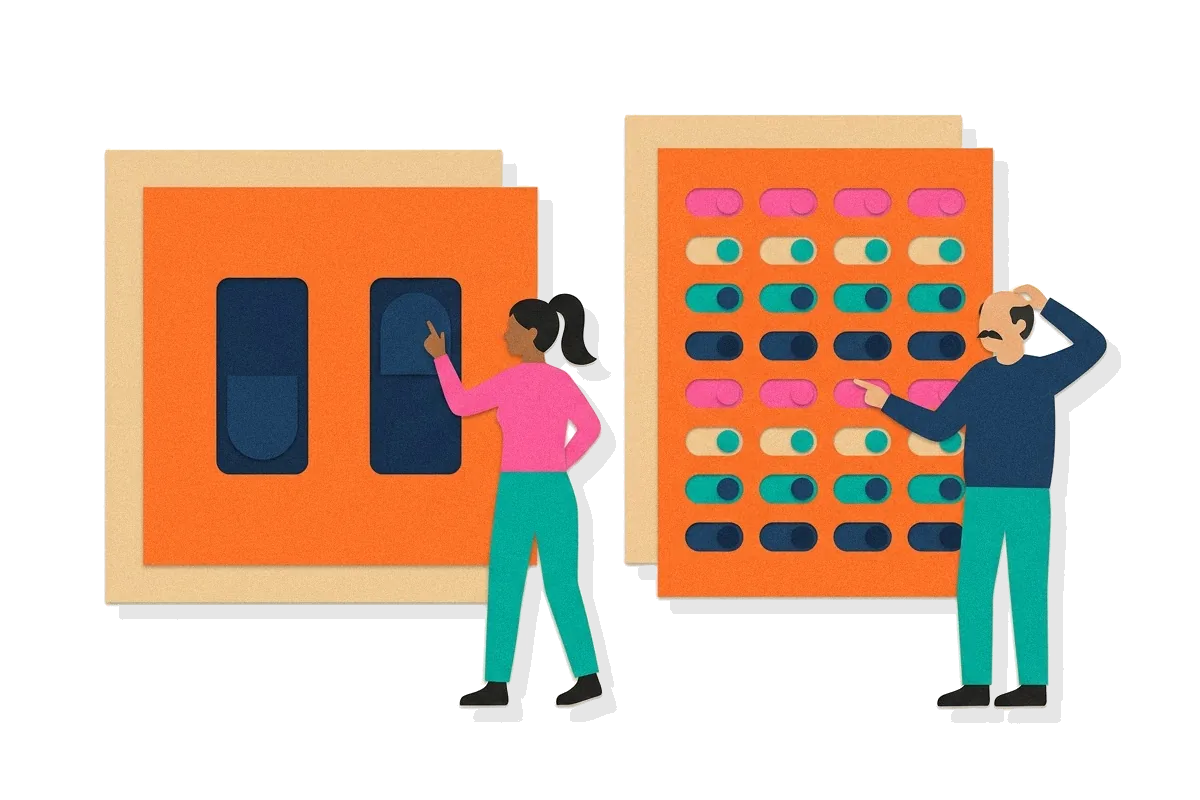
These problems connect to discoverability, which asks whether an action can be found at all. A signifier is a main way to raise discoverability. Related ideas are mapping, which links a control to its effect by layout, and conceptual models, the picture of how a system works that signifiers help people form.
061 min
How to apply signifiers
List the actions the interface supports.
Start with the real affordances: what the system can actually do.
For each action, point to the signifier.
If you cannot point at a visible cue, the action has no signifier.
Test with someone who has not seen the design.
Ask them to do the task without help and watch where they hesitate. Hesitation is where a signifier is missing or misleading.
Remove a signifier to see what it does.
Hide a label or an icon in a prototype. If people no longer find the action, the signifier was carrying it.
Use conventions people already know.
Norman noted that on screens, "cultural conventions are much more important" than physical affordances, so a familiar pattern is often the cheapest signifier.
Do not rely on one cue.
Because signifiers are of mixed reliability, a second cue, such as a label, makes a mistake less likely.
071 min
When signifiers fail
The signifier points the wrong way. A handle on a door that must be pushed tells people to pull. The signifier is clear and wrong. This is the most costly failure, because people trust the cue and do not check.
The signifier is absent. An action that exists but shows no cue is easy to miss. The opposite error is also possible: a cue with no action behind it, such as a text label styled like a button. This is the problem behind affordance blindness, where a user does not see an action that is available.
The signifier is incidental and unreliable. An empty platform could also mean that the train is late and everyone gave up. Norman's own train example comes with a warning: it works better in small towns with occasional trains than in crowded cities where many trains use the same platform.
The vocabulary is contested. Norman's use of "affordance" for perceivable actions was widely adopted in interaction design, and both his original and his revised meanings are in common use. A reader of older design writing will meet "perceived affordance" where a newer text says "signifier." The concept is the same, so check which one the author means.
Signifiers do not replace feedback. A signifier says what to do before an action. It does not say what happened afterward.
081 min
Signifiers versus affordances
The nearest neighbour is the affordance, and the confusion is built into the history of the word. The separating axis is whether the concept describes what is possible or what is perceivable.
| Affordance | Signifier | |
|---|---|---|
| What it is | An action that is possible between a person and an object | A perceivable cue about where and how to act |
| Needs to be visible? | No. In Gibson's sense it simply exists | Yes. A signifier that nobody can perceive is not a signifier |
| Who creates it? | The object's physical properties | A designer, or the world by accident |
| Example | A door can be pushed | A flat plate on the door |
Norman's own phrasing is that we need both. An affordance with no signifier is hidden. A signifier with no affordance is a false promise.
?6 questions