011 min
Why behavioral design exists
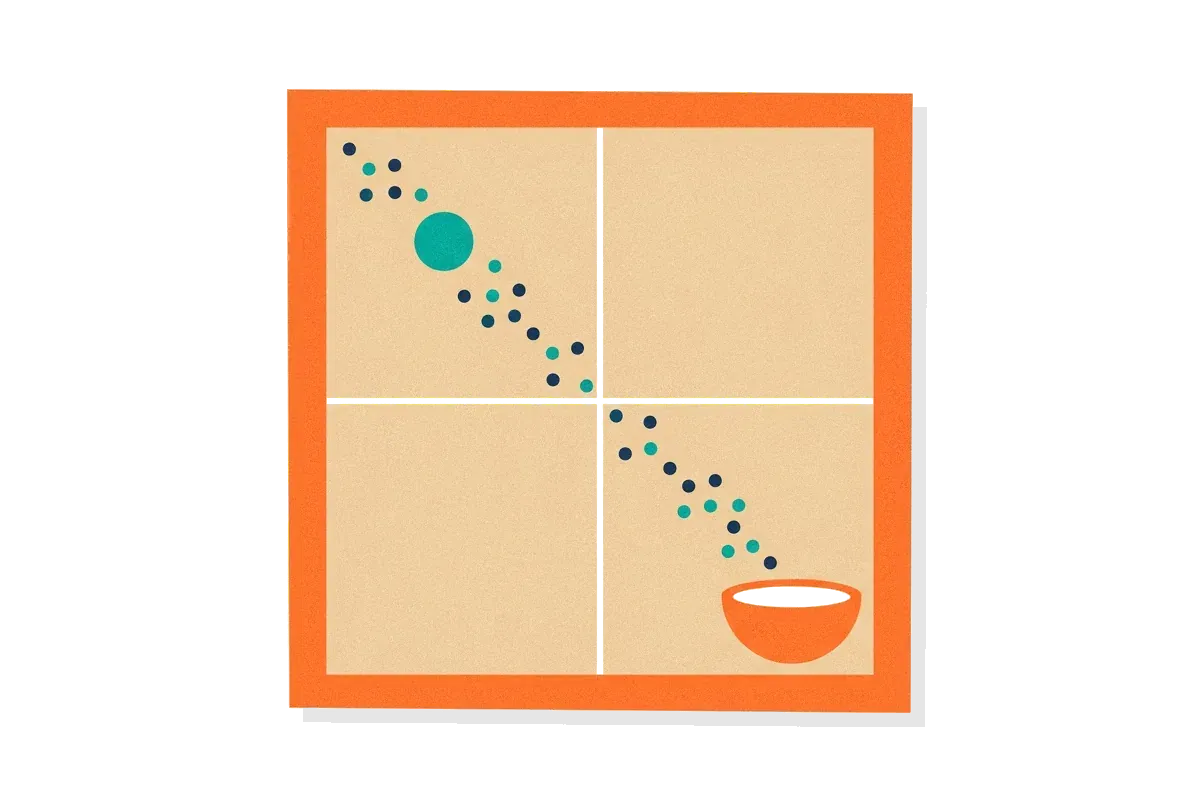
Most products are built on a hidden assumption: if people want an outcome and the feature exists, they will use it. Teams ship a savings option, a reminder setting or a privacy control, and then find that few people touch it. The feature works. The behavior does not happen.
This gap between wanting and doing is common enough to have its own name, the intention-behavior gap. It means that asking people what they plan to do predicts their actual actions poorly. A survey can say 80% of users want to save more, while the signup page shows that most never finish the form.
Behavioral design treats that gap as a design problem rather than a user failing. It asks three questions about one specific action. Does the person want to do it right now? Can they do it with the time, money, effort and skill they have at that moment? Is something in front of them that tells them to start? If the answer to any of these is no, the behavior will not happen, and no amount of extra information will change that.
The approach is closer to a diagnosis than to a style. The designer starts from an observed behavior (people abandon the checkout, people skip the medication, people never turn on two-factor authentication) and works backward to find which condition is missing.
022 min
How behavioral design works
The most used model in the field comes from BJ Fogg, who founded the Behavior Design Lab at Stanford University. Fogg's model says a behavior happens when three elements come together at the same moment: motivation, ability and a prompt. It is often written as B=MAP.
- Motivation is how much the person wants to do the behavior right now. Fogg names core motivators in pairs: pleasure and pain, hope and fear, acceptance and rejection.
- Ability is how easy the behavior is for this person at this moment. Fogg also calls it simplicity, and defines it by the scarcest resource at that moment, such as time, money or physical effort.
- Prompt is the cue that tells the person to act now. It can be an alarm, a notification, a button, or a routine such as walking past the kitchen.
Motivation and ability trade off. When motivation is high, a person will do something hard. When it falls, they will only do something easy. This is why a designer who cannot raise motivation can still get the behavior by making it smaller.
B = M + A + P: a behavior happens when motivation, ability and a prompt are present at the same time.
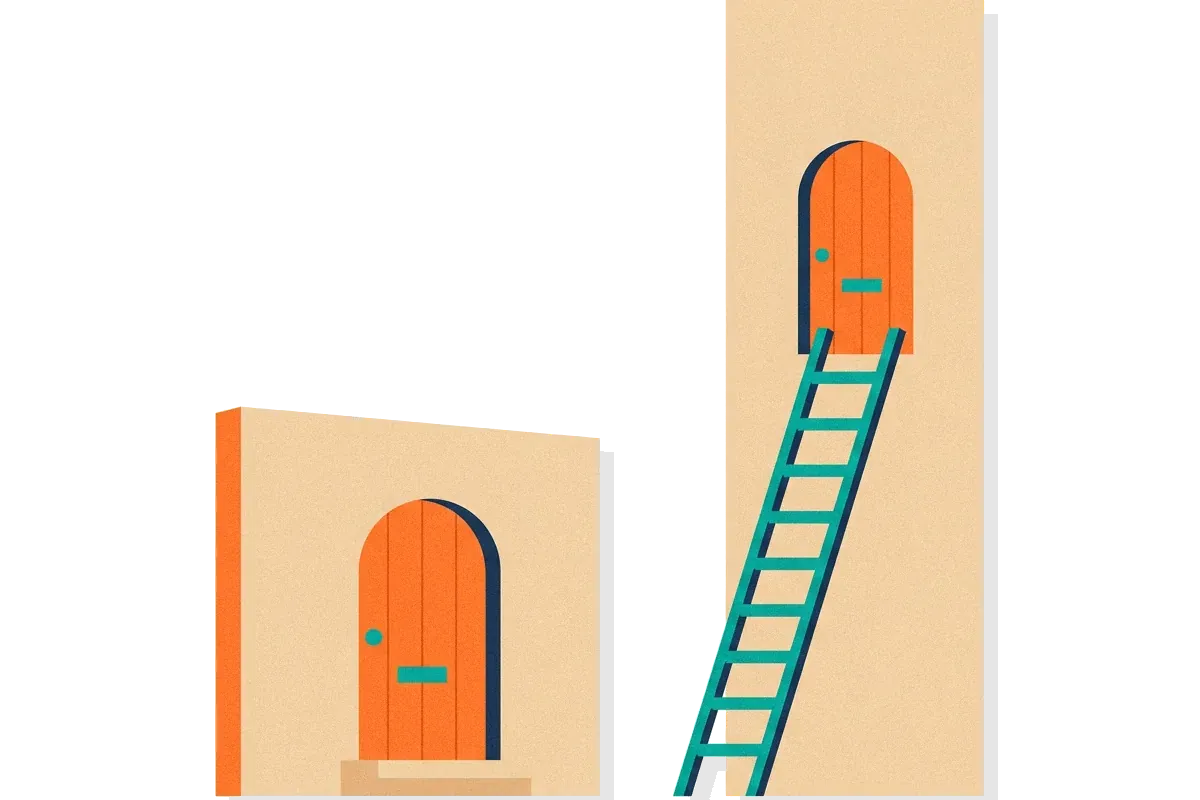
The trade-off gives the designer three ways to raise ability. Train the person, which is slow and often refused. Give them a tool or resource that makes the behavior easier. Or reduce the behavior itself so it needs less. Fogg recommends the third path in his Tiny Habits method, where the starting behavior is scaled back until it is easy to do.
Fogg names three kinds of prompt, matched to the person's state. A spark is a prompt that also adds motivation, used when motivation is low and the behavior is easy. A facilitator makes a hard behavior easier, used when motivation is high and ability is low. A signal is a plain reminder, used when both are already high. Sending a signal to someone with low motivation, or a spark to someone who lacks the ability, is a common cause of ignored notifications.
A second, broader framework comes from the Behavioural Insights Team, a unit that began inside the UK government. Its EAST framework turns behavioral evidence into four questions: is the behavior Easy, Attractive, Social and Timely? EAST is less precise than Fogg's model, but it is easy to use as a checklist when reviewing a flow.
031 min
Where behavioral design comes from
Behavioral design has no single originator. It is a practitioner field that grew where three older areas met: behavioral economics, health behavior research, and interface design for persuasive technology.
Fogg's contribution is the design side. He published his model as "A Behavior Model for Persuasive Design" at the Persuasive Technology conference in 2009. He later renamed the third element: he first called it a trigger, and changed the term to prompt in late 2017.
The economics side is better known through the idea of nudges, small changes in how a choice is presented that shift what people pick without banning any option. A related field, choice architecture, studies how the layout of a choice affects it. Behavioral design borrows both, but it is wider. A nudge changes the presentation of a choice. Behavioral design can also change whether the choice appears at all, how much effort it takes, and when it is offered.
The field has no licensing body and no shared definition. Be careful with any claim that a method is "proven" because it comes from behavioral design. What exists is a set of frameworks and a larger set of experiments, some of which hold up better than others.
042 min
The pension plan that changed its enrollment rule
The best-documented case in the field is a change in how a large company in the United States enrolled employees in its 401(k) retirement plan. Brigitte Madrian and Dennis Shea studied it in an NBER working paper published in 2000.
Before the change, employees had to take an action to join. After it, new employees were enrolled automatically and immediately unless they chose to opt out. None of the plan's economic terms changed. The authors report that participation was significantly higher under automatic enrollment.
They also found a second effect. A large share of people hired under automatic enrollment kept both the default contribution rate and the default fund. Very few employees hired before the change had picked that exact combination. The authors give two likely reasons: inertia, and employees reading the default as advice from the company.
In Fogg's terms, the change removed the ability barrier. Joining no longer needed a form, a decision or a deadline. It also removed the need for a prompt, because the system acted on the person's behalf. The default effect is the general name for this pattern.
| Design choice | What the person must do | What happened |
|---|---|---|
| Opt-in enrollment | Find the form, decide, and submit it | Lower participation |
| Automatic enrollment with opt-out | Nothing, unless they want out | Significantly higher participation |
The case is also a warning. The same default that raised participation also pulled many people toward a contribution rate that few of them would have chosen. A default sets the outcome for everyone who does not act, so the person choosing it carries responsibility for that outcome.
052 min
How behavioral design shows up in real products
Behavioral design is visible wherever a product tries to make one action easy and another harder. Three patterns cover most cases.
Applied: reducing the work of the target behavior
Automatic enrollment is the clearest case. A second is the prompt Fogg himself documents: when his demonstration account on Facebook went unused for a while, the service sent him an email whose single purpose was to get him to sign in. Signing in is the smallest first step of the larger goal, which is bringing the person back into the service.
Applied: matching the prompt to the moment
A payment app that sends a reminder the day a bill is due is using a timely prompt. The same reminder sent a week early has the right message and the wrong moment. This is the T in EAST.
Violated: aiming the same tools at the user
The same methods can serve the business at the person's expense. Arunesh Mathur and colleagues studied about 53,000 product pages from about 11,000 shopping websites. They found 1,818 instances of dark patterns, grouped into 15 types and 7 broader categories. They define dark patterns as user interface design choices that benefit an online service by coercing, steering, or deceiving users into making unintended and potentially harmful decisions.
The tools are identical in both cases: defaults, prompts, urgency, ease. What separates them is whether the person would approve of the design if they understood it. A subscription that is easy to start and hard to cancel uses the same ability asymmetry as automatic enrollment, but the outcome helps the company and costs the user.
| Aligned with the person's goal | Against the person's goal | |
|---|---|---|
| Person can see how it works | Reminder to take a prescribed medicine | Countdown timer on a sale that restarts |
| Person cannot see how it works | Pre-selected savings default they can change | Cancellation flow that hides the cancel button |
Only the top-left cell is easy to defend. The bottom-left can be defended if the person can change it freely and the design is disclosed. Both right-hand cells fail the test above.
062 min
Applying behavioral design
Use the steps below on one behavior at a time. Trying to change five behaviors in one release makes it impossible to tell which change worked.
Pick one specific behavior.
"Engage more" is not a behavior. "Add a second teammate to the project in the first week" is. A behavior is something a person does once, on a date, that you can count.
Find who is not doing it and why.
Watch session recordings or ask five people who stopped. Sort each reason into motivation, ability or prompt. Most reasons will fall under ability.
Reduce effort first.
Cut fields, pre-fill what you already know, and remove steps. Use the friction in the flow as your list of candidates: any step the person must do but does not care about is friction to remove.
Match the prompt to the person's state.
Use a spark when motivation is low, a facilitator when ability is low, and a signal when both are high. Place the prompt at the moment the behavior is possible, not at the moment that suits your schedule.
Set defaults on purpose.
Every choice has a default, even if it is empty. Decide what happens for the person who does nothing, and check that you would be comfortable explaining that outcome to them.
Measure the behavior, not the click.
Count the real outcome, such as the project with two teammates after seven days. Compare against a control group, so a seasonal change is not mistaken for your design.
If you want the behavior to repeat, plan for habit formation after the first success. A habit forms when the same prompt is followed by the same action in the same context many times. The first behavior is a trial. The design should make the second one easier than the first.
071 min
How to spot behavioral design going wrong
The failures leave marks you can check.
- A spike and then a return. A metric rises in week one and drops to the old level by week four. The prompt worked once but the behavior did not become routine, or the novelty wore off.
- Rising complaints with rising conversion. Support tickets about unexpected charges, or the question "how do I cancel", grow alongside signups. The design is moving people to an action they did not intend.
- High opt-out where a default was set. If most people change the default, it was a poor guess about what they wanted. A default that nearly everyone leaves is adding a step, not removing one.
- Notification settings turned off. If the share of users who disable prompts grows, the prompts are arriving when the person cannot or will not act.
- Success only in the measured step. The behavior you counted goes up and the outcome behind it does not. For example, more people open the savings screen and the total saved does not change.
One limit is more basic. Behavioral design works on a behavior that the person is able and willing to do. It cannot supply a service that does not exist, a price people cannot afford, or a goal the person does not hold. Removing a step from a flow that nobody wants to complete gives you a faster abandonment.
082 min
Where the evidence is contested
The strongest challenge is to the size of the effects. Maximilian Maier and colleagues re-analysed an earlier meta-analysis of nudging studies, adjusting for publication bias, which is the tendency for studies with positive results to be published more often. They report that when this publication bias is appropriately corrected for, no evidence for the effectiveness of nudges remains.
The same paper does not say that every nudge fails. The authors note that all intervention categories and domains apart from finance show evidence for heterogeneity, which implies that some nudges might be effective, even when there is evidence against the mean effect. In plain terms, the average effect may be near zero while some designs work well and others do nothing. Other researchers replied to the paper and disputed the method, and the question is not settled.
For a practitioner, this means two things. First, do not plan a product around an effect size taken from a published study. A default that raised participation in one company's retirement plan tells you the direction, not the amount, for your product. Second, treat every behavioral change as a hypothesis, and test it in your own setting before you roll it out. The Madrian and Shea result is strong because it came from a real change at a real employer. Many laboratory results do not carry over so cleanly.
There is also an ethical objection that no data can settle. A designer who shapes behavior makes a choice on behalf of the user. That is acceptable when the person would endorse the choice, and it is the problem described in the dark patterns study when they would not.
091 min
Behavioral design vs. nearby concepts
Three terms are often used as if they meant the same thing.
| Concept | What it is | How it differs from behavioral design |
|---|---|---|
| PsychologyNudge | ||
| DesignChoice architecture | ||
| Not in the library yetDark pattern | ||
| Not in the library yetPersuasive design |
The axis that separates behavioral design from the others is the target. Behavioral design starts from one measurable behavior and works backward to the conditions that produce it. The other terms describe a tool, an environment or a motive.
?7 questions
Questions people ask
What is behavioral design?
What is an example of behavioral design?
What is the Fogg Behavior Model?
How is behavioral design different from a nudge?
Is behavioral design manipulative?
Does behavioral design work?
Where should a team start with behavioral design?
▶3 videos
Watch
Understanding Behavioral Design
What is Behavioral Design?
IxDF - Interaction Design Foundation
Every BEHAVIORAL Design Pattern Explained in 16 Minutes
Serket Studios
§9 sources
Sources
Show all 9 sourcesHide sources
B. J. Fogg, Fogg Behavior Model, Behavior Design Lab, Stanford University. The model and its three elements.
B. J. Fogg, Prompts. The three prompt types and the Facebook example.
B. J. Fogg, Ability. The three paths to increase ability.
B. J. Fogg, Motivation. The core motivators and the trade-off between motivation and ability.
B. J. Fogg (2009), "A Behavior Model for Persuasive Design", Persuasive '09, ACM. doi.org/10.1145/1541948.1541999
Brigitte C. Madrian and Dennis F. Shea (2000), The Power of Suggestion: Inertia in 401(k) Participation and Savings Behavior, NBER Working Paper 7682.
Arunesh Mathur et al. (2019), Dark Patterns at Scale: Findings from a Crawl of 11K Shopping Websites, Proceedings of the ACM on Human-Computer Interaction, Vol. 3, CSCW.
Behavioural Insights Team, EAST Framework: four simple ways to apply behavioural insights, 2014, revised 2024.
Maximilian Maier et al. (2022), No evidence for nudging after adjusting for publication bias, Proceedings of the National Academy of Sciences.