011 min
Why a conceptual model matters
A product has two sets of rules. One set is how the system really works inside. The other set is what a person using it believes about how it works. When the two disagree, people make mistakes that no label can fix, because they are acting on a wrong prediction.
Most of those mistakes are not careless. A person who believes a control does one thing will use it for that thing, every time. The error is in the design, not in the person.
The Nielsen Norman Group describes the same problem from the user's side. Its article on mental models defines a mental model this way: "A mental model is what the user believes about the system (web, application, or other kind of product) at hand." Users form that belief from what they already know. Designers cannot read it directly, so they need a deliberate plan for what the product teaches.
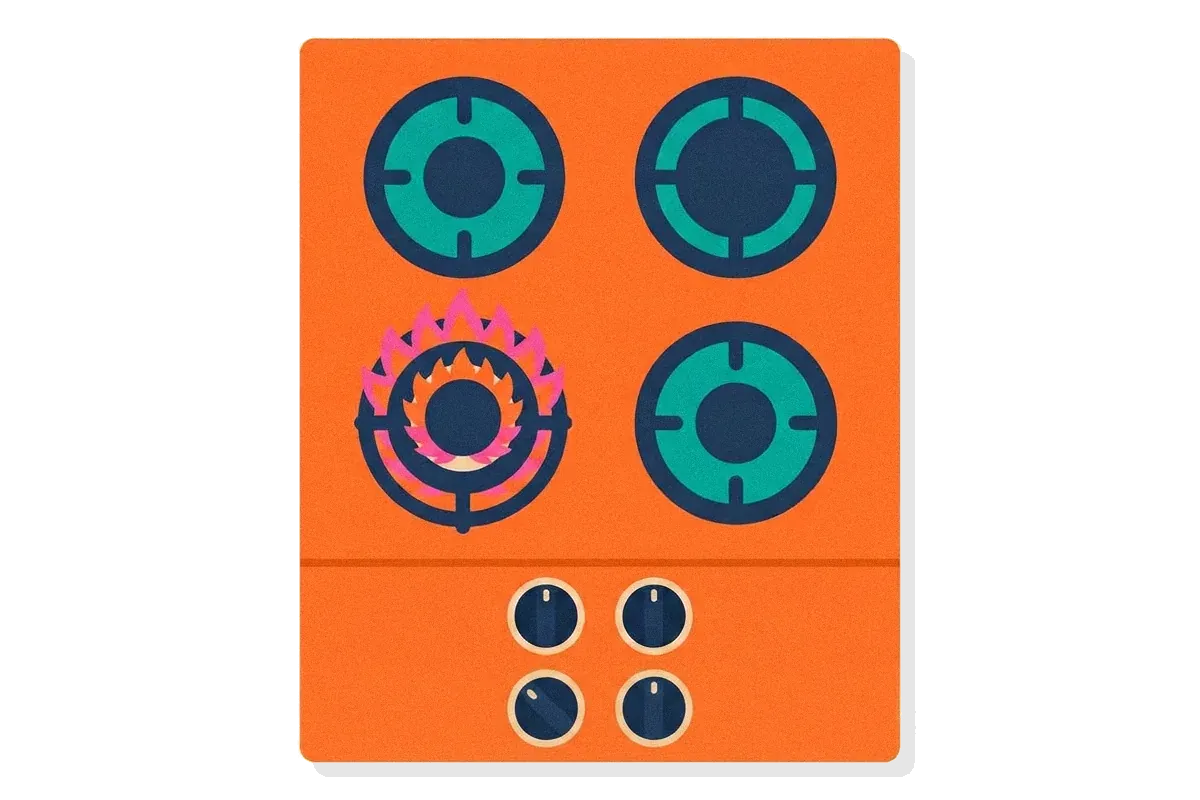
That plan is the conceptual model. It is a decision made on purpose: what is this product, to the person using it? A calendar can be a grid of days or a list of events. A questionnaire tool can be a straight list of questions or a tree of branches. Each choice changes which objects exist, which actions make sense, and what users expect next.
022 min
How a conceptual model reaches the user
Donald Norman, a cognitive scientist, gave the clearest account of how the designer's idea reaches the user. In The Design of Everyday Things (first published in 1988 as The Psychology of Everyday Things) he separates three things.
- The design model is the conceptual model in the designer's mind. It is how the designer intends the system to work.
- The system image is everything the user can actually see and touch: the screen, the controls, the labels, the sounds, the manual, the help text.
- The user's model is the mental model the user builds while using the system.
The key point is the channel. In the Interaction Design Foundation's summary of Norman's account, "the problem of ensuring that the user's mental model corresponds to the designer's model arises because the designer does not talk directly with the user." The designer is not in the room. The system image is the only message that arrives.
This gives a way to predict failures. If the system image shows the design model clearly and consistently, the user's model will be close to it. If the system image is incomplete, inconsistent, or shows a different structure, the user's model will be wrong. The user will still act on it, and will be surprised by the result.
Design model → system image → user's model. Only the middle step is visible to the user.
Two consequences follow. First, a fix that changes only the wording of one label can repair a wrong user's model without changing how the system works. Second, a change to the system's internals can break users' models even when nothing on screen changes.
032 min
Where the term comes from
The idea that people reason with small internal models is older than interface design. The Interaction Design Foundation's glossary says "the proposition that people rely on mental models was first put forward by the Scottish psychologist Kenneth Craik in 1943." Craik argued that the mind builds small-scale versions of reality to predict events.
Norman carried the idea into design. In a 1983 chapter, "Some Observations on Mental Models", he drew a line between two terms. In the glossary's quotation, "Conceptual models are devised as tools for the understanidng or teaching of physical systems. Mental models are what people really have in their heads and what guides their use of things." The spelling error is in the glossary's copy of the quotation. The distinction is the point: a conceptual model is made by a designer or teacher, and a mental model is held by a user.
The 1988 book then applied this to doors, light switches, refrigerators and telephones. Norman used the word "conceptual model" for the designer's version of the system. Later writers kept the idea but did not all keep his wording, which causes confusion that a later section covers.
In 2002 Jeff Johnson and Austin Henderson, two interface designers, turned the idea into a working method. Their article in the magazine Interactions is called "Conceptual Models: Begin by Designing What to Design". They argued that a team should write down the conceptual model before it sketches any screen.
041 min
A real case: the refrigerator with two dials
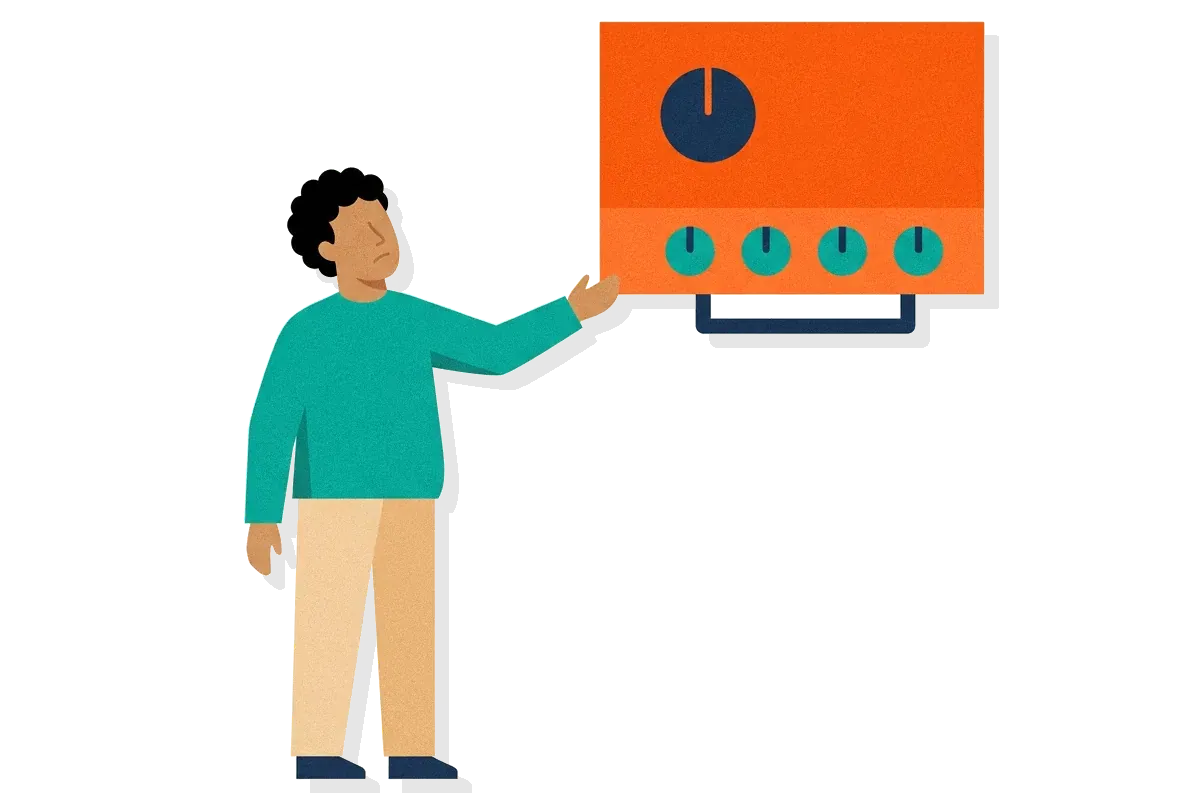
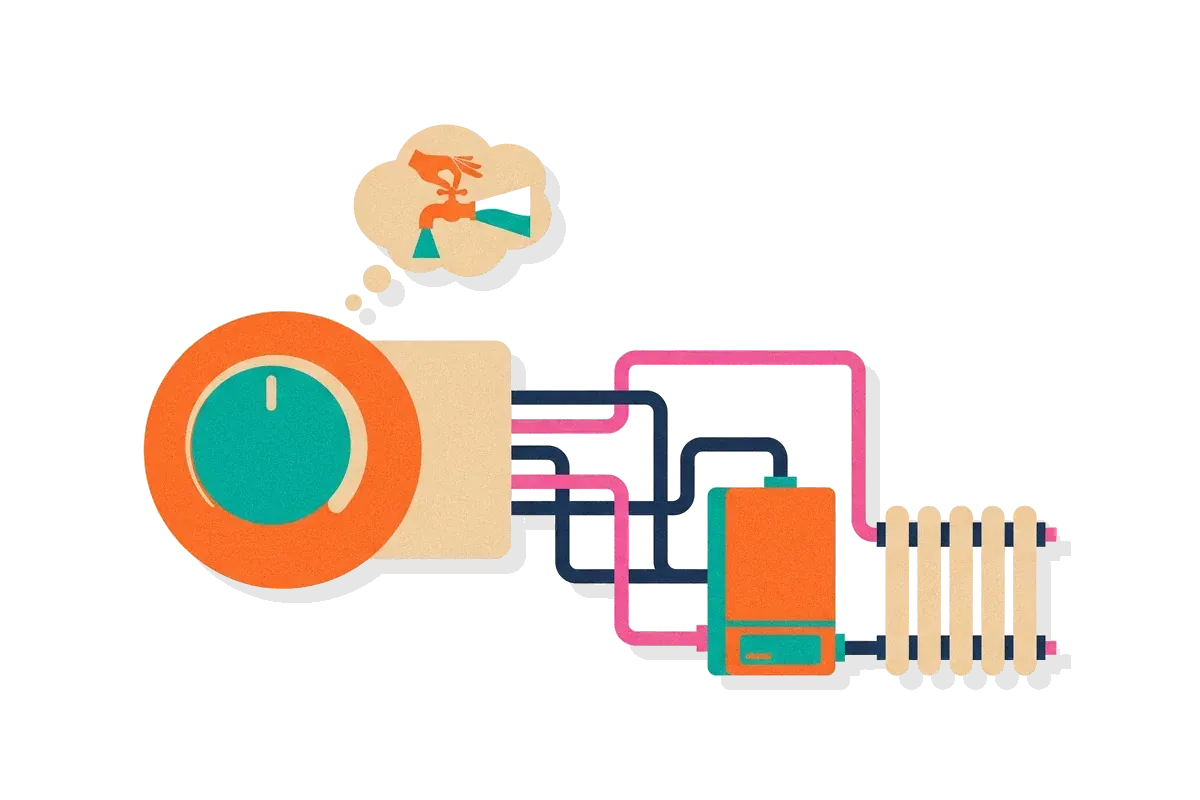
Norman's best-known example is a refrigerator in his own home. It had two dials, one for the fresh-food compartment and one for the freezer. The labels suggested two separate temperature systems, one per compartment.
The labels were misleading. A review of the book by the psychologist Dominic Massaro describes what Norman found: "In fact, the temperature was controlled by a single system with a separate control for the relative proportion of cold air sent to each unit." One dial set the cooling. The other set how the cold air was divided between the two compartments.
The user's model was reasonable, because the system image suggested it. The result was that people could not reach the temperatures they wanted. Massaro summarises the lesson: "Without the appropriate conceptual model, it was not possible to set the two compartments at the desired temperatures."
Two repairs were possible. The controls could be relabelled to match the real structure, such as "total cooling" and "share to freezer". Or the refrigerator could be rebuilt with two independent systems, so the original labels became true. Either repair brings the system image and the design model into line. This is why a conceptual model is a design decision and not just documentation.
052 min
How a conceptual model shows up in real products
Three products show the concept from different sides. Two violate users' models. One applies a model and still fails some users.
The Back button
Browsers taught users a model for Back: it returns you to the previous screen, like an undo. The Nielsen Norman Group reports that this model broke when apps arrived on phones: "in some mobile apps, Back took users up in the hierarchy of the site." A reader who followed a link from one news story to another expected to return to the first story. They arrived at the list of all stories instead. The control kept its name and changed its meaning, so the user's model, built on the web, gave a wrong prediction.
Shipping insurance in a cart
The same article describes an online store, Nomad Lane, that adds shipping insurance to the total at checkout. A shopping cart works like a basket in a physical shop: the shopper decides what goes in. The conceptual model of a cart does not include items the store adds. Users who did not notice the extra line paid for insurance they did not choose. The Nielsen Norman Group lists this as a deceptive pattern. It is also a conceptual model failure: the store used the cart's familiar structure and then broke its rules.
The elevator with no buttons inside
Elevators in large buildings now often work by destination dispatch. The Interaction Design Foundation describes the change: the user selects a floor at a panel in the lobby and is told which elevator to take. "There are no floor selection controls inside the elevators!" The system is efficient. For a first-time user it is confusing, because their model of an elevator has a floor selector inside the car. A user who enters without choosing a floor in the lobby cannot tell the elevator where to go.
| Product | The model users bring | What the system image does | Result |
|---|---|---|---|
| Browser Back | Return to the previous screen | Some mobile apps go up one level instead | Users reach the wrong page |
| Online cart | A basket the shopper fills | Store adds an item | Users pay for something unchosen |
| Destination-dispatch elevator | Call, enter, press a floor | Floor is chosen in the lobby | Novices enter and cannot choose |
The Nielsen Norman Group also states why established models are hard to change: "Users spend most of their time on websites other than yours." What people learn elsewhere sets what they expect from your product. This pattern is named Jakob's Law.
062 min
What a conceptual model contains
Johnson and Henderson define a conceptual model as a high-level description of how a system is organized and operates. They list four parts that it specifies:
- Metaphors and analogies, if the design uses any, such as a physical card catalogue for a library system.
- Concepts: the objects users create and handle, their attributes, and the actions that can be done to them.
- Relationships between the concepts. A book is one kind of item. A volume contains issues.
- Mappings between the concepts and the real task the system supports.
They also say what it is not. It is not the user interface, because it does not mention keystrokes, screen layout, controls or error messages. It is not a use case, because a use case tells a story about a task and a conceptual model describes the system. It is not the implementation architecture, which holds technical objects that users never need to understand.
Their most useful rule limits the size of the model: "If it isn’t in the conceptual model, the system should not require users to be aware of it." Each added concept costs users something to learn, and it can interact with every other concept.
Their example is an organization chart tool. A designer can model it as boxes, labels and connector lines. A designer can instead model it as organizations, sub-organizations and employees. The authors write that the second model "maps more directly to the users’ task-domain, and so will be easier for the users, who presumably already understand organizations, to master." The first model describes how the chart looks. The second describes what the chart is about.
072 min
How to build one
Johnson and Henderson's order of work is the practical method. Do these steps before sketching screens.
Choose between structures.
Write two or three ways to describe the product's main object, as in "a questionnaire is a linear list" or "a questionnaire is a branching tree". Pick one and note what you give up.
List objects, attributes and actions.
Include only what users must understand to do the task. Cut anything that exists only because of how the software is built.
Name each concept once.
Keep a list of terms and use it in screens, help text and documentation. Johnson and Henderson call this list a lexicon. It prevents two names for one thing, and one name for two things.
Write task scenarios using only those terms.
If a scenario needs a word that is not in the model, either the model is missing a concept or the scenario hides a feature.
Test against users, and listen.
The Nielsen Norman Group recommends think-aloud sessions, where users say what they believe while using the design, because that shows their mental models. Compare what they predict with what the design intends.
Two options exist when users' models and the system disagree. The Nielsen Norman Group names them: change the system to match users' models, or teach a better model through clearer labels and instructions. Moving a feature to the place where people look for it is the first option. Rewording a label is the second.
Keep this method proportionate. A small product with a familiar structure may need one page of notes, not a formal document.
082 min
Where the term is used in conflicting ways
The field does not use these words the same way, and that is the main source of confusion when reading about this concept.
Norman's usage treats the conceptual model as the designer's model. Johnson and Henderson use the same words for a design tool and warn against confusion with the user's side. Their text says: "The conceptual model is not the users' mental model of the system." The Interaction Design Foundation's topic page uses the term in a third way. Its definition opens with "Conceptual models are abstract, psychological representations of how tasks should be carried out." A few paragraphs later, the same page says "A conceptual model is a representation designers create to convey a system's functionality and behavior."
A second disagreement is about method. Johnson and Henderson write: "Users’ mental models of systems are not accessible to designers in any objective sense." They advise designers not to spend time trying to find them out. The Nielsen Norman Group takes the opposite practical position and recommends think-aloud testing specifically to learn users' mental models. The two views can both be followed. Test what users do and say, but treat any single description of their model as an estimate, since different users hold different ones.
A third limit is overuse. Designers form detailed models of their own products. The Nielsen Norman Group says this leads designers "to believe that each feature is easy to understand." A conceptual model written by the people who built the product tends to look complete to them, so it has to be checked on people who did not build it.
When you read a source, check which of the three senses it uses before you compare its advice with another.
091 min
Conceptual model versus nearby concepts
Three terms get mixed up with this one. The table separates them on a single question: whose idea of the system is it, and is it written down?
| Term | Whose idea | Where it lives | Can you inspect it directly? |
|---|---|---|---|
| Conceptual model (design model) | The designer's | In design documents and decisions | Yes |
| System image | Nobody's idea; it is the product's visible surface | On screen, in labels, in help text | Yes |
| Mental model | The user's | In the user's head | No, only through behaviour and talk |
| Implementation model | The engineer's | In code and architecture | Yes, but users need not understand it |
The Interaction Design Foundation's video on conceptual models gives a second pair, which is the engineer's view of an elevator against the user's. Both use the same concepts, such as call buttons and floors. One is arranged around how the machine works. The other is arranged around how a person uses it.
In software, "conceptual model" also appears in data and object modelling, where it means a diagram of entities and relationships for a database. That is a related tool and a different job. This article covers the design sense, where the model describes what the system is to a user.
?7 questions
Questions people ask
What is a conceptual model in UX?
Is a conceptual model the same as a mental model?
What are Norman's three models?
What is the system image?
What is an example of a conceptual model?
When should a team write a conceptual model?
Do I need a formal document for it?
▶3 videos
Watch
Understanding Conceptual Models
Conceptual Model - Introduction
Onderzoeksmethoden UvA
Conceptual Data Modeling Explained
Michael Fudge
§5 sources
Sources
Show all 5 sourcesHide sources
Jeff Johnson and Austin Henderson, "Conceptual Models: Begin by Designing What to Design", Interactions 9(1), 2002. courses.dubberly.com
Megan Chan (updating an article by Jakob Nielsen, 2010), "Mental Models", Nielsen Norman Group, 2024. nngroup.com
Interaction Design Foundation, The Glossary of Human Computer Interaction, chapter 23, "Mental models". ixdf.org
Interaction Design Foundation, "What are Conceptual Models?". interaction-design.org
Dominic W. Massaro, review of Donald A. Norman, The Psychology of Everyday Things (Basic Books, 1988). mambo.ucsc.edu