011 min
Why a planning week shows the necessity of choice
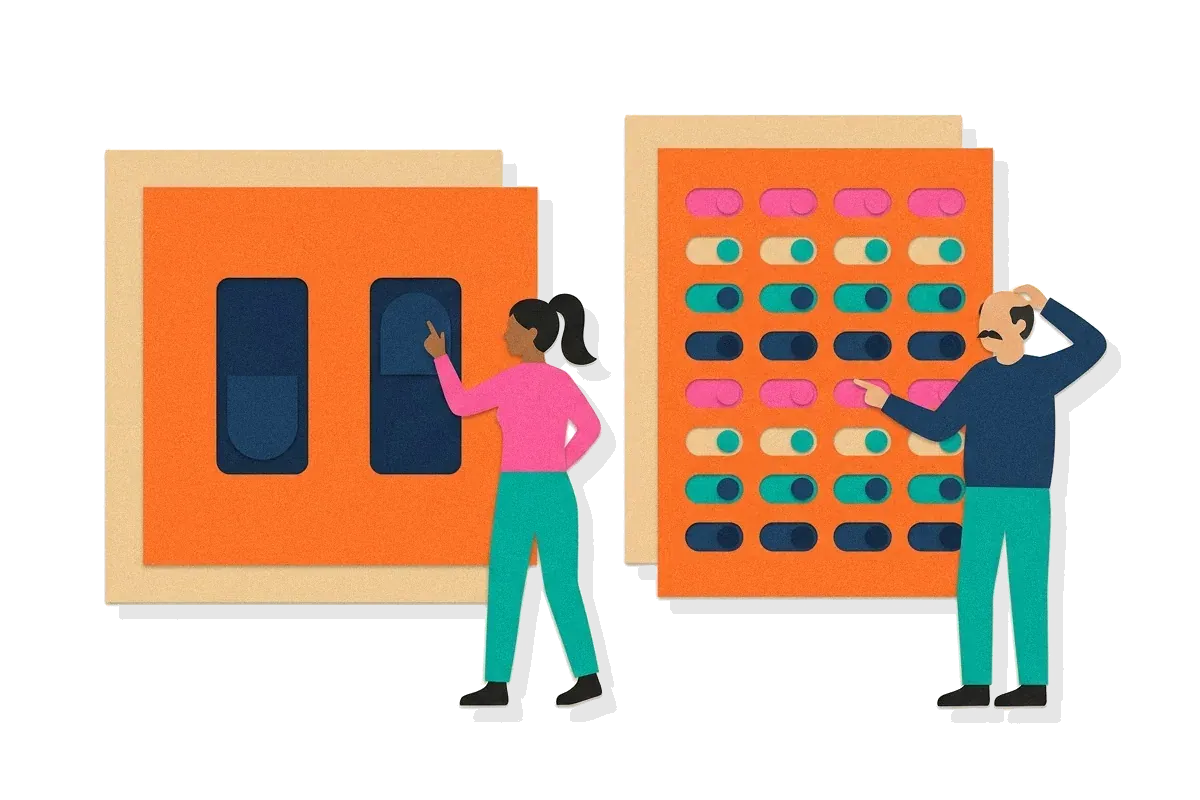
Say a designer on a product team starts a planning week with five weeks of work available and nine requests waiting. The numbers are made up, but the situation is common. Sales wants a feature that a large customer asked for. Support wants a settings page that would stop repeat tickets. The founder wants a new home screen. Every request is reasonable, and every request comes with a person who will ask later why it was not done.
The designer has two easy replies. They can say yes to all nine and plan to work evenings. Or they can say yes to all nine and let the dates move later. Neither reply changes the arithmetic. Five weeks cannot hold nine requests, so some of them will not be done. The only open question is whether someone chooses which ones, or whether the calendar chooses by ending.
022 min
How the necessity of choice works
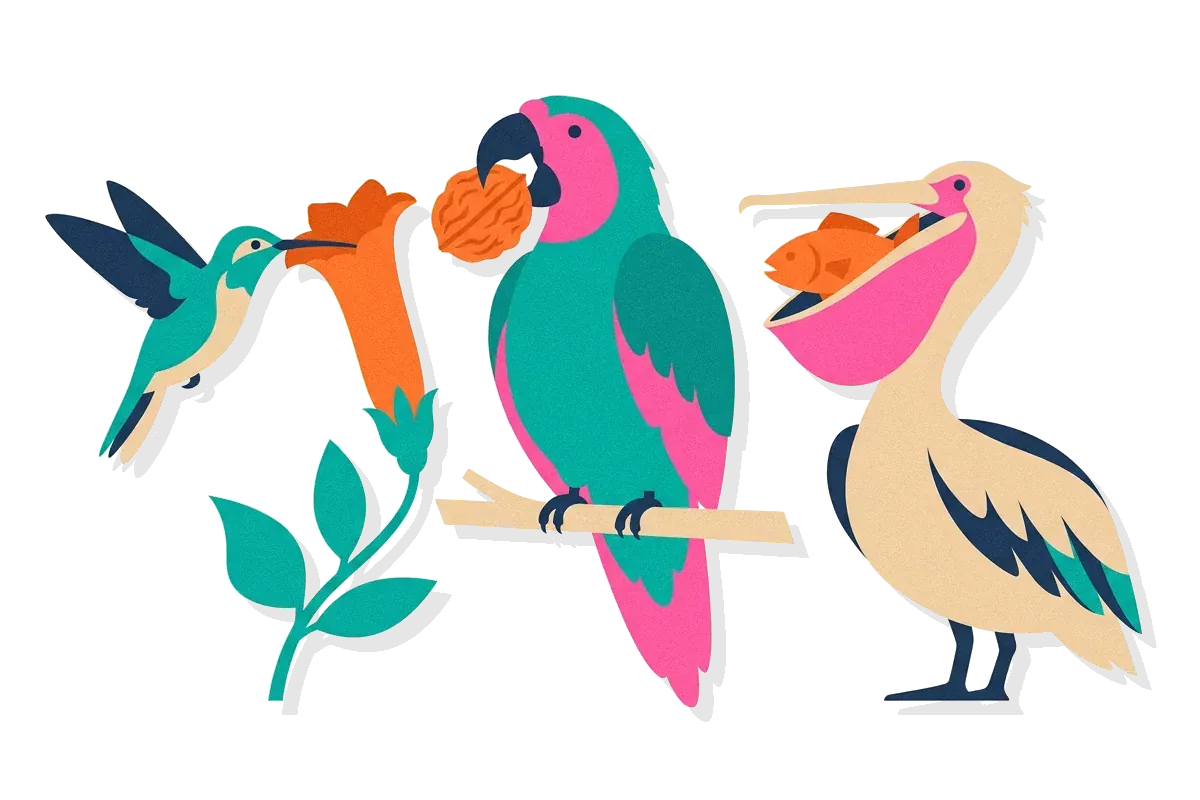
The chain is short and runs in one direction. First, the resources are limited: hours, attention, budget, and the patience of the people who use your product. Second, each resource can be used in more than one way. A day of a designer's time can go to a new feature or to fixing bugs. Third, using it one way means not using it the other way. When a designer spends the hours on the feature, those same hours cannot fix bugs. Economists call the value of the best option given up the opportunity cost.
The chain has a condition. A choice is forced only where one use excludes another. Something with no competing use is a free good. Almost everything a design team works with fails that test. A button on the home screen takes space that another button could have had. A person who does not choose on purpose still ends up with some work done and others not. The weeks end, and the work that was first, or loudest, or last to arrive tends to get the time. That is the point about chance and circumstance: the choice is made either way, only without anyone weighing it.
Why choosing well is still hard
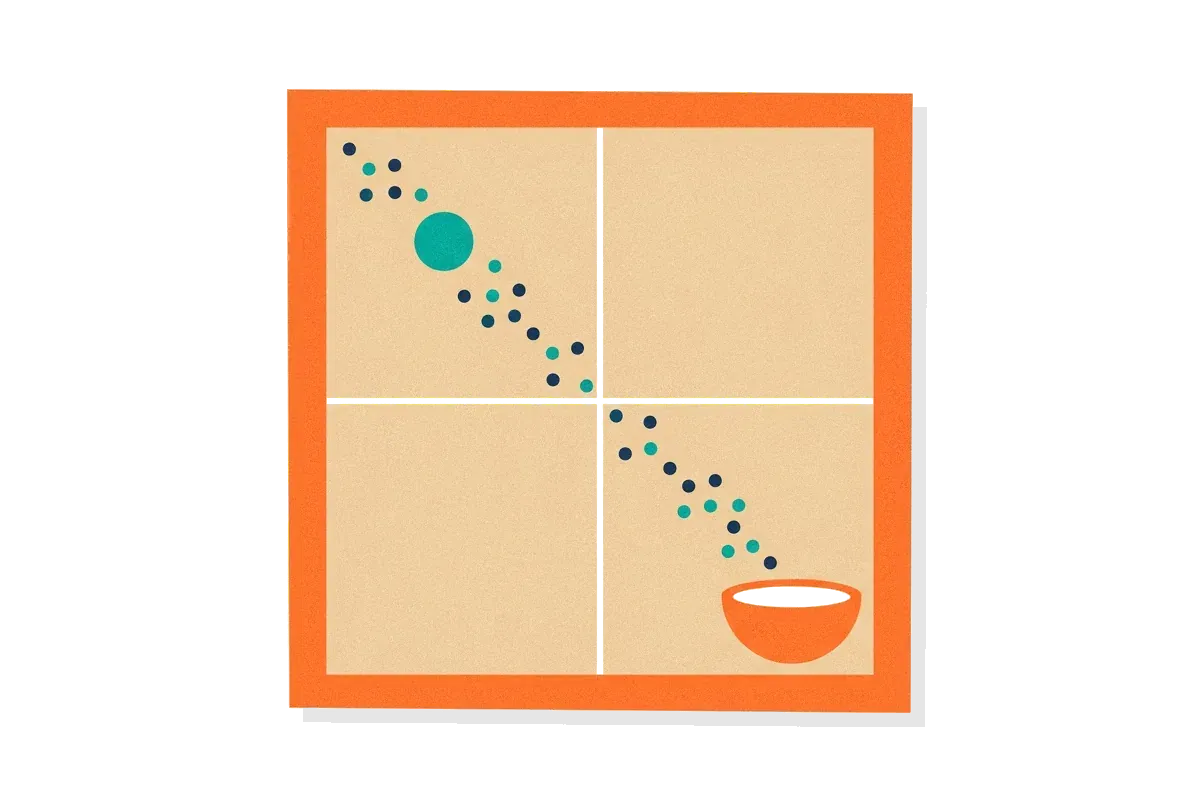
A designer who accepts the limit meets a second problem. They cannot compare nine requests perfectly. Herbert Simon, who won the economics Nobel prize for his work on how organisations decide, said in his 1978 lecture that choices fall short of perfect rationality mostly because people do not know all the alternatives, cannot be sure about outside events and cannot calculate every consequence. His answer was to set a level of good enough before searching. The decision maker takes the first option that reaches it and stops. Simon called this satisficing. It is a rule for when to stop looking, which the necessity of choice makes necessary and bounded rationality makes possible.
031 min
Where the necessity of choice comes from
The problem is old. In 1932 the economist Lionel Robbins published an essay that defined economics as the study of how people act when their goals compete for means that are limited and can be used in more than one way. For Robbins the limit is the point: if means were unlimited, or had only one use, nobody would have to give up one goal for another.
Josh Kaufman later turned this into a rule for one person's week. In his book The Personal MBA he gives it the name this entry uses. His argument has four parts. No perfect system lets you do everything without cost. Reality forces some choices on you whether you want them or not. A person who does not choose on purpose lets chance and circumstance choose. And a goal of getting everything done guarantees stress, because there is always more to do.
The economist's version and Kaufman's version are one argument at two sizes. One describes a country deciding how to use its land and workers. The other describes a person deciding how to use an afternoon. This entry follows the second, with the first as its cause.
042 min
How design teams practise the necessity of choice
Some teams have turned the planning week into a habit, and four of them show different ways to do it.
Apple cuts its directions, 1997
In 1997 a developer at Apple's developer conference asked Steve Jobs why Apple had ended OpenDoc, a software platform. Jobs apologised to the people who had worked on it. Then he gave his reason. For several years, he said, Apple had people going in 18 different directions, each doing something that looked interesting on its own. Together the projects did not form a plan, so the company had to decide which directions it was really going in. He put the lesson briefly: focus means saying no.
Basecamp sets a time budget first
Basecamp, a software company, publishes its method in a free book called Shape Up. Before design starts, the team sets an appetite, which is how much time the work is worth. The book separates this from an estimate. An estimate starts from a finished design and ends with a number of weeks. An appetite starts from a number of weeks and ends with a design. The team calls the rule fixed time, variable scope, because when time cannot grow the team must decide which parts of the work are essential. The book's own example is its writing. With one week left, the author can fix typos or add a new section to a chapter, and not both. The author picks the typos, because shipping a book with errors is worse than shipping it without the extra section.
Dieter Rams: less, but better
The industrial designer Dieter Rams wrote ten principles of good design. The tenth says a product should be built around its essential aspects and carry nothing it does not need. Vitsoe, the company that publishes the principles, puts it as "less, but better". For a designer this turns the planning week into a design rule. A kept feature is not free, because it takes room and attention from the features that matter more.
Designers already say no all day
The designer Derek Powazek made the same point about everyday work in 2006. When a designer picks a main audience, they are saying no to every other audience. When they pick one task to support, the other tasks become lower priority. A choice of font, colour or photo has the same shape: one option is taken and the rest are turned down.
051 min
Applying the necessity of choice
A designer now has what they need to choose on purpose.
Write the drop list.
Next to what the team will do, write what it will not do, and tell each person who asked. The list shows the cost of the plan and turns silent delay into a stated no.
Set the time first.
Decide how many weeks the work is worth, then design what fits, as Basecamp does. A fixed budget forces the question of what is essential.
Ask why before saying no.
Powazek advises a designer who wants to refuse a request to ask why it was made. The answer may show a real problem that the request solved badly.
Decide what good enough means before comparing.
A level agreed in advance lets the team stop at the first option that reaches it, instead of comparing all nine forever.
Give each dropped item a review date.
A no with a date is a statement about this quarter, and the requester can plan around it.
061 min
How to tell a team has not made the choice
Teams that skip the choice leave marks that anyone can check.
- A roadmap or board with no column for dropped or postponed work, only work waiting and work in progress.
- Most items marked in progress at the same time, and few finishing in any week.
- Requests that sit for more than one planning cycle with neither a yes nor a no.
- Release dates that move later more than once while the scope stays the same.
- The same request returning from sales or support in new words, because nobody told them the earlier answer.
072 min
What the necessity of choice does not say
The idea is easy to stretch past what it claims, in three directions.
It is not the claim that more options hurt
The necessity of choice says resources are limited. A separate and better-known claim, described under the paradox of choice, says that many options can make people less likely to choose or less happy with what they chose. The two are independent. The first needs no psychology at all. The second is contested. In 2010 Benjamin Scheibehenne and two colleagues reviewed 63 conditions from 50 experiments and found that the average effect of choice overload was virtually zero, with large differences between studies. A designer can accept the necessity of choice and still doubt that fewer options always help users.
Not choosing is also a choice
A person who makes no choice has not escaped the choice. Whatever is already in place stays in place. In a product, that is the default setting, and people who never open the settings get it. The default effect is the tendency to keep the default. A designer who leaves a default unexamined has chosen it by leaving it alone.
It does not say what to pick
Robbins described economics as neutral between goals: it explains what a goal costs, not which goal is right. The necessity of choice works the same way. It tells the designer that the nine requests cannot all be done. It does not say that the request from support beats the one from sales. That judgment needs the team's goals, evidence about its users and a view of which cost it can accept.
081 min
When careful choosing is wasted effort
The planning week contains two kinds of choice, and they do not deserve the same effort.
Jeff Bezos, in a letter to Amazon shareholders, split decisions into two kinds. Some are hard or impossible to undo, and he said these need slow and careful consideration. Most can be changed later, and he said these should be made quickly by one experienced person or a small group. He also wrote that large organisations tend to treat reversible decisions as if they were permanent.
In the designer's week, dropping a request costs little if it can be picked up next quarter. Rebuilding the navigation that every customer uses is much harder to undo. Spending the same effort on both slows the team and leaves less time for the choice that matters. A week spent on a decision that could be reversed in a day is a common form of analysis paralysis.
091 min
The necessity of choice vs. nearby concepts
Three neighbours are often mistaken for the necessity of choice. Each answers a different question.
| Concept | What it says | How it differs |
|---|---|---|
| BusinessOpportunity cost | ||
| Not in the library yetTrade-off | ||
| PsychologyParadox of choice |
?4 questions
Questions people ask
Is the necessity of choice a cognitive bias?
Does a larger budget remove the need to choose?
Does it apply to teams and companies, or only to individuals?
Is the necessity of choice the same as time management?
§11 sources
Sources
Show all 11 sourcesHide sources
Josh Kaufman, The Necessity of Choice, The Personal MBA:
Josh Kaufman, Tradeoffs, The Personal MBA:
Lionel Robbins, An Essay on the Nature and Significance of Economic Science (Macmillan, 1932), Mises Institute PDF of the 1932 edition:
Principles of Economics, chapter 1, Economics: The Study of Choice:
Herbert A. Simon, Rational Decision-Making in Business Organizations, Nobel Memorial Lecture, 1978:
Troy Thompson, 20 Years Ago Steve Jobs Explained the Importance of Saying No (iDropNews, a report on the 1997 WWDC question session):
Basecamp, Shape Up, Chapter 3, Set Boundaries:
Vitsoe, Dieter Rams: ten principles for good design, the tenth principle:
Derek Powazek, The Art of No (2006):
Scheibehenne, Greifeneder and Todd, Can There Ever Be Too Many Options? A Meta-Analytic Review of Choice Overload, Journal of Consumer Research, 2010:
Farnam Street, Reversible and Irreversible Decisions (quotes the Amazon shareholder letter):